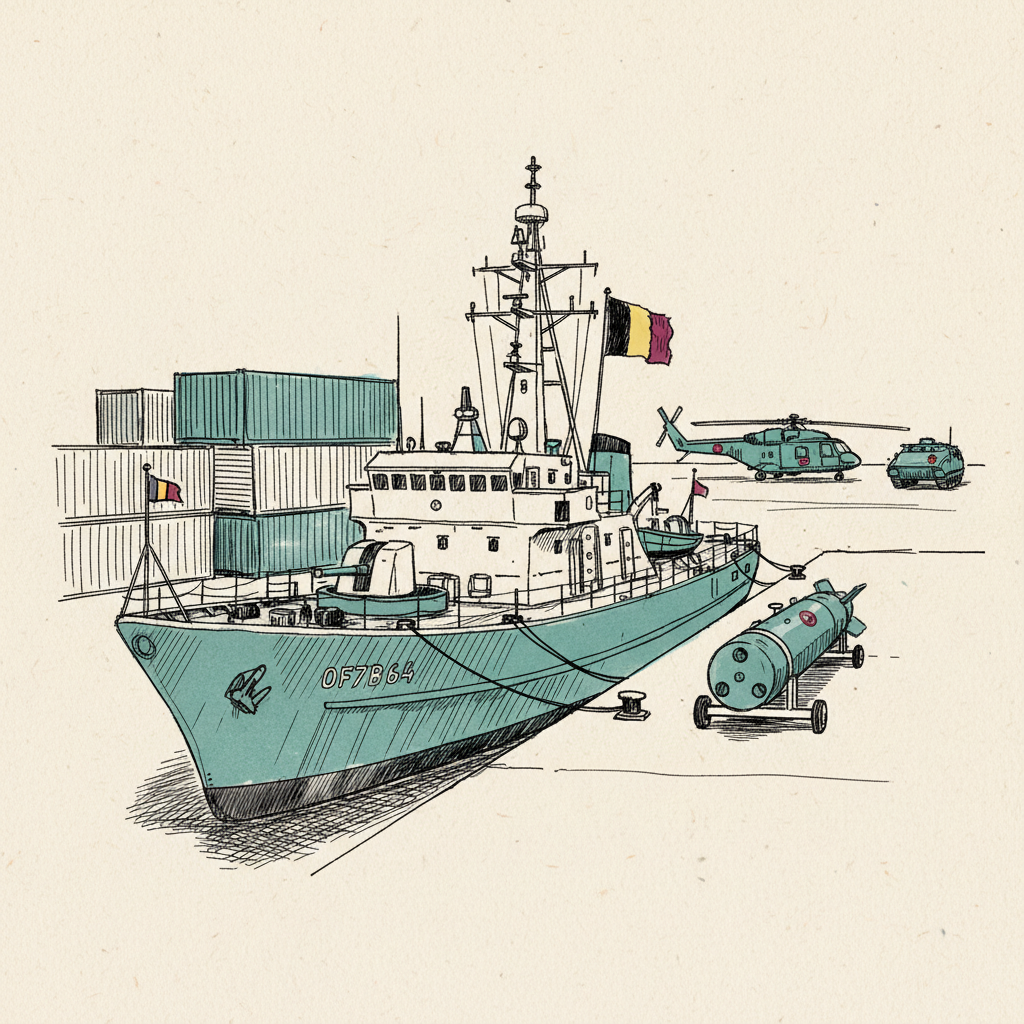
BNS Primula
Belgian Tripartite-class minehunter; redirected to Hormuz Coalition standby May 2026.
Last refreshed: 19 May 2026 · Appears in 1 active topic
Can two European minehunters actually clear the Strait if Iran mined it?
Timeline for BNS Primula
Mentioned in: Hormuz coalition: 8 days deployed, no rules published
Iran Conflict 2026CENTCOM logs 70 Hormuz vessel redirections
Iran Conflict 2026Rerouted from Baltic to Mediterranean by order of Belgian Defence Minister Theo Francken
Iran Conflict 2026: Four states add Hormuz coalition kitBackground
BNS Primula is a Tripartite-class minehunter of the Belgian Navy, one of ten vessels built to a shared Belgian-Dutch-French design during the 1980s. On 18 May 2026, Belgian Defence Minister Theo Francken rerouted her from Baltic patrol duties to the Mediterranean as Belgium's contribution to the European Hormuz Coalition standby force, giving the Coalition its first minehunter asset in theatre.
The Tripartite class was designed specifically for coastal and shallow-water mine detection and neutralisation. Primula's GRP (GLASS-reinforced plastic) hull keeps her magnetic signature low, critical for approaching influence mines. The class carries two PAP 104 mine-disposal vehicles and a sonar suite capable of identifying bottom and moored mines in water depths down to 80 metres.
The Hormuz deployment reflects a structural gap the European Coalition identified: existing MCM assets assigned to CENTCOM are insufficient for in-water mine clearance at the strait's throughput rate. Primula joins Germany's Fulda to address that gap alongside France's Charles de Gaulle strike group, though none of the Coalition forces have published rules of engagement.
What is the BNS Primula minehunter?
Why did Belgium send a minehunter to the Hormuz coalition?
What can a Tripartite-class minehunter do in the Strait of Hormuz?
Does Belgium have rules of engagement for the Hormuz coalition?



