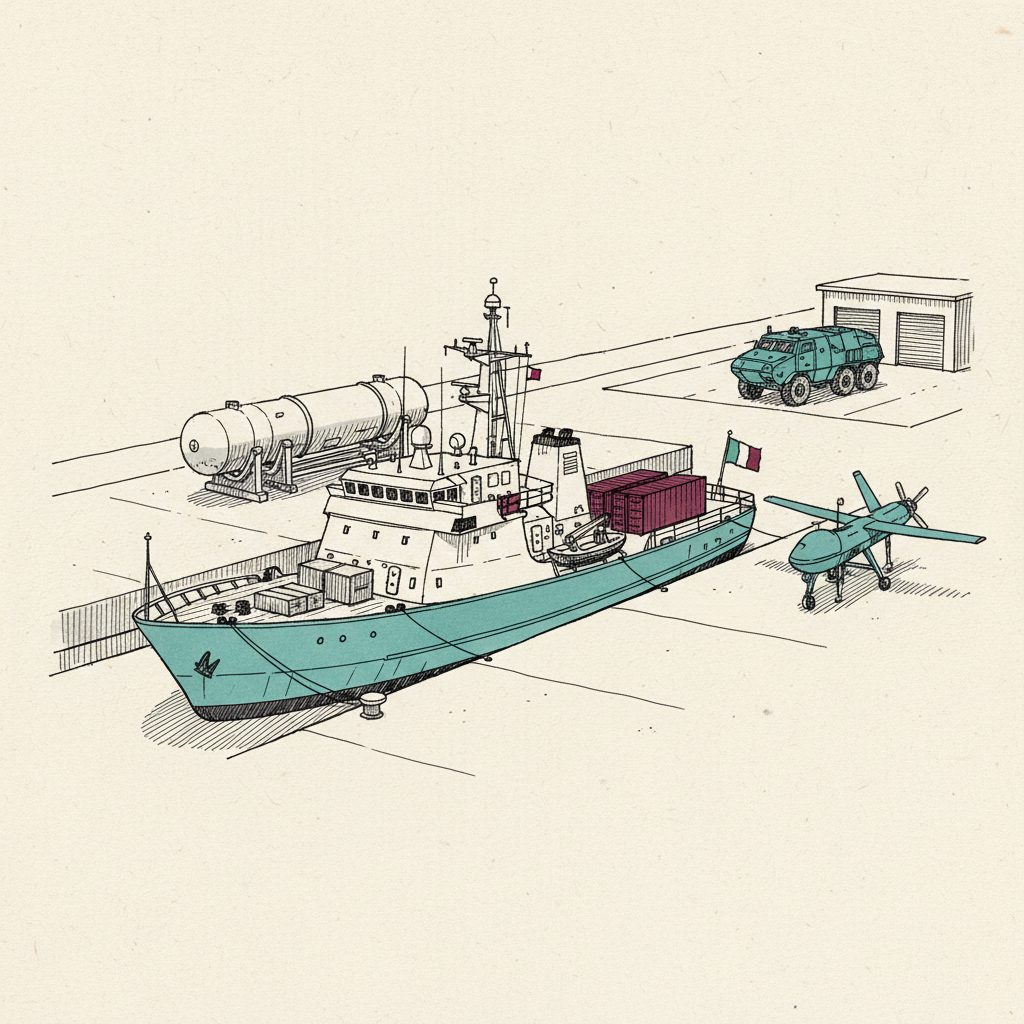
Lerici
Italian lead minehunter class; same class as Rimini and Crotone deployed to Hormuz Coalition, May 2026.
Last refreshed: 19 May 2026 · Appears in 1 active topic
Is a four-vessel European MCM cluster enough to keep Hormuz open after mining?
Timeline for Lerici
Mentioned in: Hormuz coalition: 8 days deployed, no rules published
Iran Conflict 2026CENTCOM logs 70 Hormuz vessel redirections
Iran Conflict 2026Four states add Hormuz coalition kit
Iran Conflict 2026Background
Lerici is the lead vessel of Italy's Lerici-class coastal minehunters, a series designed by Intermarine and built from the mid-1980s. The class uses a GRP monocoque hull for magnetic silence and carries a Gaymarine PLUTO mine-disposal vehicle and SQQ-14 mine-hunting sonar. Italy built ten vessels of the original Lerici class before developing the improved Gaeta class; the design was also exported to Malaysia, Nigeria, and (under licence) to the United States as the Osprey class.
The operational significance in May 2026 comes from two sister vessels: ITS Rimini and ITS Crotone forward-deployed to the European Hormuz Coalition standby force on 17 May 2026, one day before the larger four-state additions. Italy's Lerici-class vessels became the Coalition's first named MCM assets on station, preceding Belgium's BNS Primula and Germany's Fulda.
The Lerici class can operate in shallow water — a critical capability at Hormuz, where tidal and sediment conditions vary sharply between the deep main channel and the shoal approaches Iranian mining doctrine would likely target. Together with the later German and Belgian additions, Italy's two Lerici-class ships give the Coalition a four-vessel MCM cluster, though all operate without published rules of engagement.
What is the Italian Lerici-class minehunter?
Which Italian ships are in the Hormuz coalition?
Can Italian minehunters clear mines in shallow Hormuz approaches?



