Skip to content
Welcome, thoughtbot's Giant Robots listeners!Start here
Iran Conflict 2026
23JUN

Brent settles $105.30 with no fresh seizure

3 min read
11:42UTC

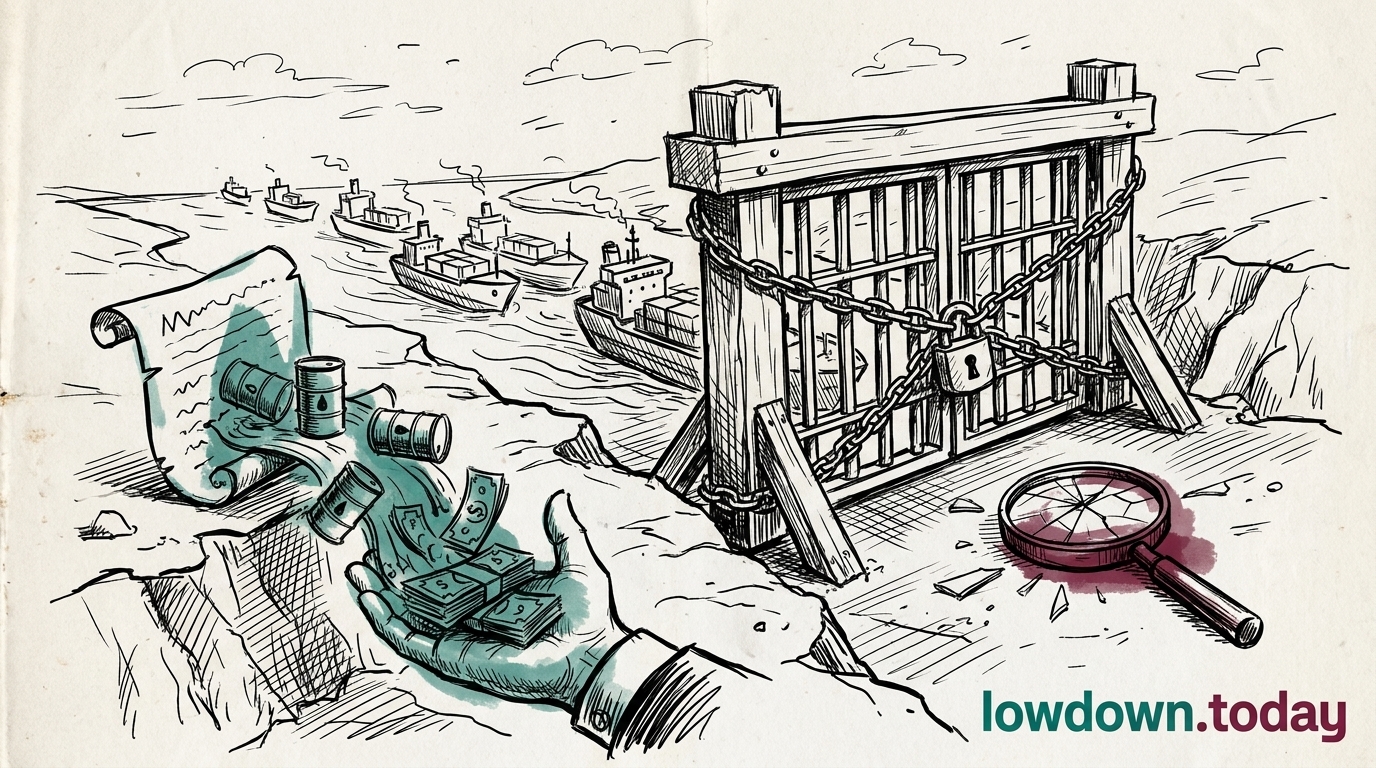
Brent crude settled at $105.30 on 25 April with intraday prints above $106 and a weekly gain of roughly 18%. The talks collapse alone is now the bullish driver, not fresh kinetics.

ConflictDeveloping
Key takeaway

Brent at $105 has been repriced as the baseline; future incidents push from there, not from $67.

Brent crude settled at $105.30 on 25 April with intraday prints above $106 and a weekly gain of roughly 18% per The National⁠1. This is the second consecutive session above $105, 57% above the $67.41 pre-war baseline and a continuation from the $105.73 close on 24 April. No new IRGC seizure occurred on 25 April, and the dark-shipping picture from the Larak-Qeshm carve-out was unchanged.

The price moved on the absence of a diplomatic resolution rather than on a fresh provocation. That is a structural shift: the market has stopped treating each diplomatic failure as a temporary setback and is pricing the absence of a resolution track as the default scenario. The repricing matters because future seizures will now push the price from $105 rather than from $67, amplifying the economic shock of any tactical escalation. UK and European pump prices follow Brent with a one-to-two-week lag.

The options curve confirms the shift. With the baseline reset, any de-escalation announcement becomes disproportionately bearish rather than merely corrective, which makes the political incentive structure for Tehran and Washington asymmetric: Iran loses revenue floor on a deal, and US consumer pump prices ease only after a deal is concrete enough to clear forwards. Brent at $105 is the new floor, not a ceiling.

Deep Analysis

In plain English

The price of oil affects almost everything: petrol at the pump, heating bills, the cost of goods moved by truck or ship. The benchmark price for much of the world's oil is called 'Brent Crude', named after a North Sea oil field. Before the Iran war began, Brent was around $67 a barrel. On 25 April it closed at $105.30. That is a rise of nearly 57%, and it happened in under two months. Oil markets usually react strongly to specific events (a ship seized, a factory bombed). What is significant about Saturday's price is that nothing new happened: no IRGC boarding, no strike, no military escalation. The price stayed above $105 purely because traders stopped believing the war would end soon. When the diplomacy collapses and traders update their expectations, prices move even without a physical event.

Deep Analysis
Root Causes

Each Islamabad channel failure narrows the oil market's probability distribution around a near-term diplomatic resolution. When Islamabad 3 collapsed via Trump's Truth Social post, traders priced the event harder than a formal diplomatic postponement would have warranted, because a social-media cancellation carries no institutional machinery for reversal.

The ceasefire is nominally in force, but CENTCOM's interdiction count reached 33 on 25 April while the naval blockade continues. Traders have concluded that a nominal ceasefire does not translate to resumed Hormuz commercial transit. Until a deal explicitly addresses the blockade, the $38/bbl structural premium over the pre-war baseline persists regardless of individual daily incident counts.

What could happen next?
  • Consequence

    European and Asian central banks running quarterly inflation assessments in May will incorporate $105+ Brent into their forecasts, likely deferring planned interest rate cuts by one to two quarters.

  • Risk

    Goldman Sachs's $120 Q3 severe scenario becomes the base case rather than the tail risk if both the Islamabad diplomatic track and the AUMF congressional track fail before 1 May.

First Reported In

Update #79 · Islamabad 3 collapses; Witkoff grounded, talks stall

Al Jazeera· 25 Apr 2026
Read original →
Different Perspectives
Office for Budget Responsibility
The OBR's 28 October forecast assumed $82 oil for 2026 and 2027, from market prices for the ten working days to 19 August, and blamed dearer wholesale energy on the war without naming Iran. It expects CPI inflation close to 4% in early 2027 even at that price.
Hengaw, Kurdish rights group
Hengaw reported the 3 November hangings of Amirhossein Maleki and Amirhossein Ebrahimi in Isfahan, saying Ebrahimi was tortured into confessing and that nine of 12 people sentenced to death in the case have now been hanged. Iran's judiciary holds that the defendants killed members of the security forces.
FINTRAC, Canada's financial intelligence unit
FINTRAC worked with the US Treasury on the 6 November designation of eight money services businesses in British Columbia, Ontario and Quebec. Treasury says the businesses still operate, some under new names, so closing them falls to Ottawa.
Abdul Qadir al-Dakhil, Governor of Nineveh
Al-Dakhil cancelled three Mosul International Airport contracts on 7 November over alleged links to armed groups, after meeting Prime Minister Ali al-Zaidi in Baghdad. He named no group or company, and said the contracts will go to international companies.
Kuwait
Kuwait
Kuwait condemned the Houthi missile fired towards the Madinah region on 5 November and restated its support for Saudi Arabia, the Qatar News Agency reported. Its state tanker company, Kuwait Oil Tankers Company, is among the Gulf state fleets on Iran's expanded Hormuz list.
Scott Bessent, US Treasury Secretary
Treasury designated an alleged Chandigarh false-flag network on 4 November and eight Canadian exchangers on 6 November, while State sanctioned alleged MANPADS intermediaries. None of the actions touches an oil buyer; they target the paper, cash and procurement around Iran's trade.

Written with AI from Lowdown's published reporting. Not individually reviewed by an editor. Editorial standards.
