Skip to content
You can now search across every topic, entity and event.What's new
Iran Conflict 2026
21JUN

Saudi crude abandons its Red Sea route

2 min read
17:51UTC

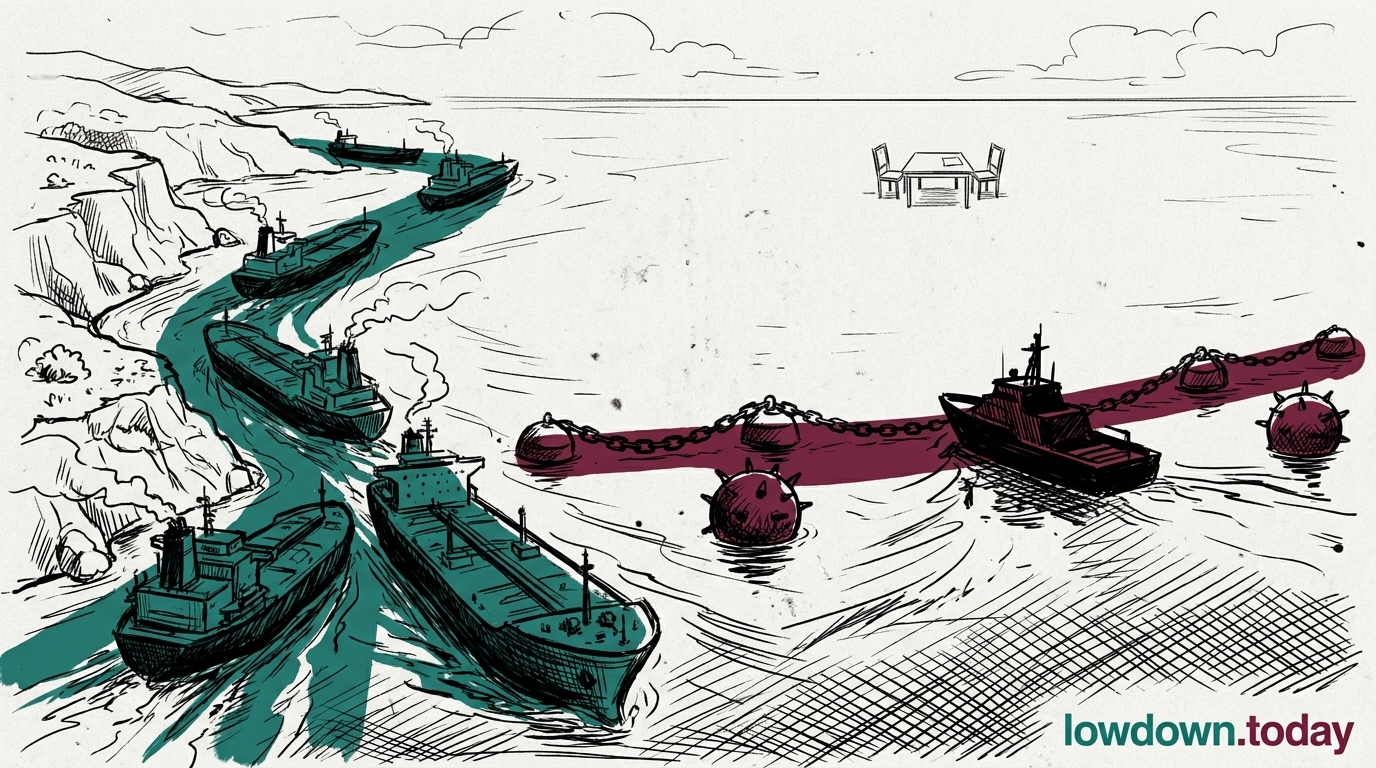
Saudi Arabia has loaded no crude through Bab el-Mandeb since the 23 July Houthi embargo, and 1.06 million barrels a day have poured into the Suez Canal instead.

ConflictDeveloping
Key takeaway

Saudi crude did not stop; it took the long way round through Suez at 106% higher canal traffic.

Saudi Arabia has loaded no crude for export through Bab el-Mandeb, the strait between Yemen and the Horn of Africa that links the Red Sea to The Gulf of Aden, since the Houthis declared an embargo on 23 July . The diverted volume has poured north into the Suez Canal, where crude traffic climbed 106% in a single week to 1.06 million barrels a day, on Kpler cargo tracking reported by AFP and carried on the AP and Reuters wires 1 2.

The Houthis are the armed movement that controls north-west Yemen and the eastern shore of the strait. Bab el-Mandeb is the southern gate for any Gulf cargo heading west toward Suez and the Mediterranean, so shutting it to Saudi loadings does not remove the barrels from the market; it reroutes them. Every cargo that once cleared the strait quickly now takes the long way round, and the arbitrage against Asian buyers resets with it.

To a spreads desk the position sits not in the flat price but in the physical shift. The reroute concentrates tonnage demand on the Yanbu-Suez leg, pulls crude north through a single contested corridor, and leaves the direction of Brent to swing on diplomatic headlines while the routing cost accrues on every barrel. Where that cost sits, and why the freight screens most desks read cannot see it, is the trade this week.


Deep Analysis

In plain English

Saudi Arabia normally ships crude oil out of Red Sea ports two ways: south through the Bab el-Mandeb strait near Yemen, or north through the Suez Canal towards Europe. When Yemen's Houthi rebels declared a blockade of the southern route on 23 July, tankers stopped using it completely, and traffic through Suez jumped 106% in a week to 1.06 million barrels a day. This matters because there is no easy third route; oil has to go one way or the other.

Deep Analysis
Root Causes

Saudi Red Sea crude has no third export corridor. Yanbu and Jeddah loadings must transit either Bab el-Mandeb south or the Suez/SUMED corridor north; a full Cape of Good Hope diversion adds roughly three weeks and was not attempted even during the 2024 Houthi campaign's worst weeks.

The binary nature of the route choice, rather than the Houthi threat itself, explains why the shift from partial bypass to total abandonment happened within days of the 23 July declaration instead of the gradual reallocation seen after the March peak documented by Wood Mackenzie.

What could happen next?
  • Consequence

    Suez Canal transit capacity, untested at this volume since March, becomes the binding constraint on Saudi Red Sea export flow rather than the Houthi blockade itself.

  • Risk

    A second chokepoint incident on the Suez/SUMED corridor would leave Saudi Red Sea crude with only the multi-week Cape of Good Hope diversion as a fallback.

First Reported In

Update #20 · Saudi crude reroutes to Suez, freight bites

The National· 27 Jul 2026
Read original
Different Perspectives
Hengaw
Hengaw
The Norway-based monitoring group reported the Urmia executions of Omid Behzad and Pouria Safvat, the only source to do so, consistent with its documented pattern of recording far more executions than the Iranian state acknowledges. Iran's government has not confirmed either execution.
Shipping and insurance underwriters
War-risk premiums price the Houthi campaign because the group announces its targets in advance, but a reopening Trump has promised without a published text gives underwriters no benchmark to reprice Hormuz cover against. Insurers want a text before they move rates, not a promise.
Houthi movement
Houthi movement
Spokesman Yahya Saree claimed strikes on two tankers in the Red Sea and Gulf of Aden on 5 August, only one of which UKMTO could confirm. The group's campaign against shipping continues on its own schedule, independent of any Hormuz arrangement further north.
Oman
Oman
Muscat has brokered the coordinates both Tehran and Washington's wire sources now describe differently, but has published no account of its own. Oman's position depends on treating Hormuz as a shared route, which is not what Iran is currently describing.
United States Central Command
CENTCOM raised its interdiction tally from 35 to 44 redirected vessels and disclosed its first boardings on 3 August, the day before Trump promised a reopening. The command's own enforcement record does not yet reflect the release the President has described.
Iran's Foreign Ministry
Spokesman Esmaeil Baghaei described the agreed Hormuz coordinates as a wholly new corridor under Iranian management, not a split of the existing route, days after his own deputy rejected Oman's lane proposal. Tehran wants the arrangement read as a change of ownership, not a compromise on access.



