Skip to content
You can now search across every topic, entity and event.What's new
Iran Conflict 2026
21JUN

The freight bill VLCC indices can't see

2 min read
17:51UTC

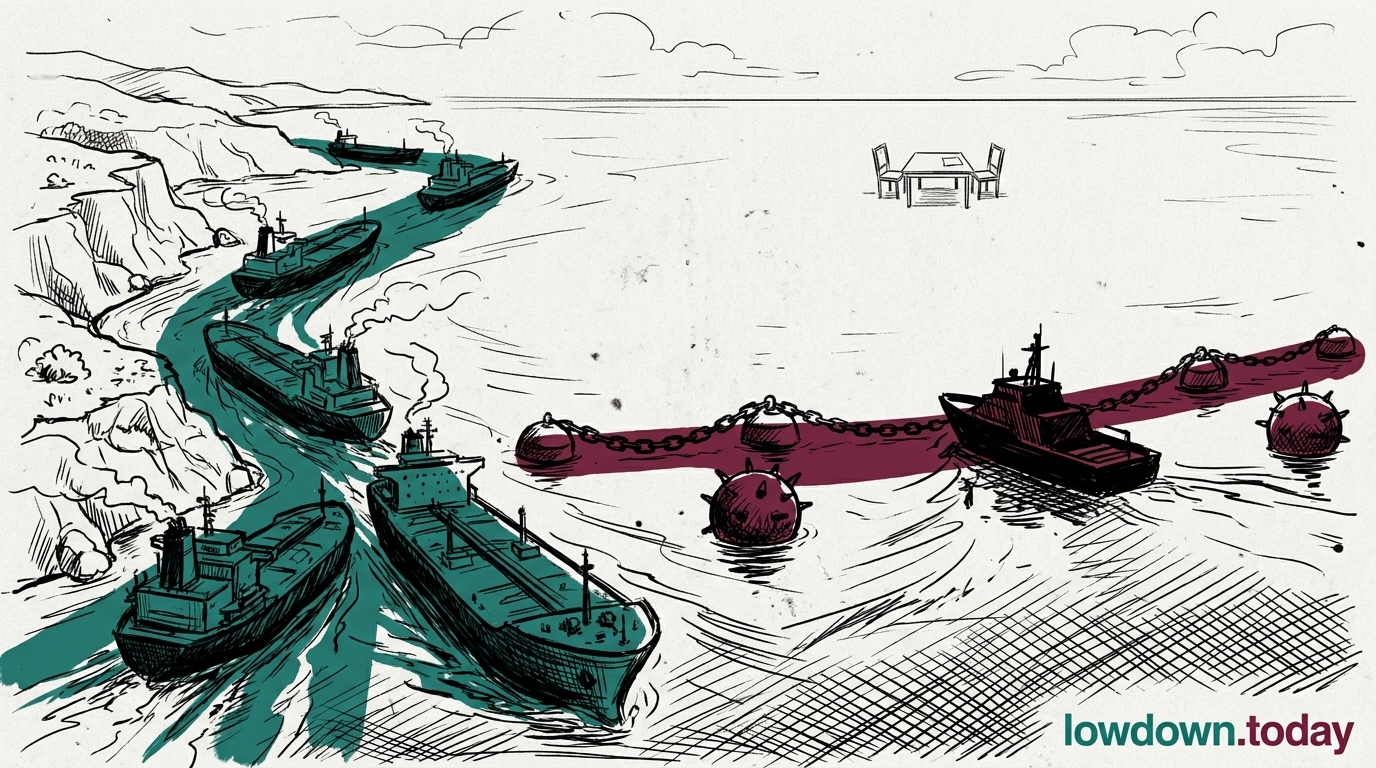
Substituting two Suezmax tankers for one VLCC on the abandoned Bab el-Mandeb run costs roughly $2 million more per voyage and stretches transit to 54 days, a cost the Baltic's headline VLCC benchmark never prints.

ConflictDeveloping
Key takeaway

The Baltic's VLCC benchmark prices the wrong ship, hiding the Suezmax cost Saudi shippers now pay.

Chartering two Suezmax tankers to stand in for one VLCC on the Bab el-Mandeb run costs roughly $2 million more per voyage, and the passage stretches from 24 days to 54 by way of Suez or the Cape 1. A VLCC, or Very Large Crude Carrier, hauls about two million barrels; a Suezmax carries around a million, so replacing one with two roughly doubles the vessels tied up per barrel moved.

TD3C, the Baltic Exchange assessment for The Gulf-to-China VLCC route that most desks read for this conflict, captures none of that cost, because it prices a different ship on a different stretch of water. When the Baltic assessed TD3C at WS372 on 17 July , it was quoting the direct VLCC voyage, not the Yanbu-Suez Suezmax pair-up that Saudi shippers now pay for. The marginal freight on the rerouted flow never reaches the screen the market watches.

That gap is the structural point. Mediterranean aframax rates had already jumped 198% month-on-month to $151,308 a day , so the freight complex was tightening before the reroute added a second Suezmax leg on top. A desk hedging its landed cost on VLCC indices alone is left exposed to a Suezmax basis it cannot see moving, on the majority of Saudi export volume now leaving through the Red Sea. The cost is small against a large flat-price swing, but it is durable and route-specific, and it accrues on every cargo for as long as the strait stays shut.


Deep Analysis

In plain English

Big oil tankers called VLCCs are too large to use some alternate routes easily, so when the direct route through Bab el-Mandeb closes, shippers use two smaller Suezmax tankers instead. That costs about $2 million more per trip and takes over twice as long. The trouble is that the market's main price gauge for this shipping route, called TD3C, was built to track the old direct route and doesn't count this extra cost at all, so traders relying on it may be underestimating true shipping expenses.

Deep Analysis
Root Causes

TD3C prices a single VLCC on the direct Gulf-to-China route; it was built before Bab el-Mandeb closures were a standing feature of the market and has no mechanism to price a two-vessel Suezmax substitution.

Rebuilding a benchmark requires enough historical fixture data to backtest a new route definition, which takes the Baltic Exchange months to assemble and certify, so the pricing gap persists structurally even after the physical rerouting becomes routine.

What could happen next?
  • Risk

    Freight desks hedged purely against TD3C carry unrecognised basis risk on cargo actually moving via the Suezmax substitution route.

  • Opportunity

    A Baltic Exchange sub-index for the Suezmax substitution route would close the pricing gap once enough fixture data accumulates.

First Reported In

Update #20 · Saudi crude reroutes to Suez, freight bites

The National· 27 Jul 2026
Read original
Different Perspectives
Hengaw
Hengaw
The Norway-based monitoring group reported the Urmia executions of Omid Behzad and Pouria Safvat, the only source to do so, consistent with its documented pattern of recording far more executions than the Iranian state acknowledges. Iran's government has not confirmed either execution.
Shipping and insurance underwriters
War-risk premiums price the Houthi campaign because the group announces its targets in advance, but a reopening Trump has promised without a published text gives underwriters no benchmark to reprice Hormuz cover against. Insurers want a text before they move rates, not a promise.
Houthi movement
Houthi movement
Spokesman Yahya Saree claimed strikes on two tankers in the Red Sea and Gulf of Aden on 5 August, only one of which UKMTO could confirm. The group's campaign against shipping continues on its own schedule, independent of any Hormuz arrangement further north.
Oman
Oman
Muscat has brokered the coordinates both Tehran and Washington's wire sources now describe differently, but has published no account of its own. Oman's position depends on treating Hormuz as a shared route, which is not what Iran is currently describing.
United States Central Command
CENTCOM raised its interdiction tally from 35 to 44 redirected vessels and disclosed its first boardings on 3 August, the day before Trump promised a reopening. The command's own enforcement record does not yet reflect the release the President has described.
Iran's Foreign Ministry
Spokesman Esmaeil Baghaei described the agreed Hormuz coordinates as a wholly new corridor under Iranian management, not a split of the existing route, days after his own deputy rejected Oman's lane proposal. Tehran wants the arrangement read as a change of ownership, not a compromise on access.



