Skip to content
You can now search across every topic, entity and event.What's new
Iran Conflict 2026
21JUN

Yanbu funnels nine-tenths of Saudi crude

2 min read
17:51UTC

Yanbu, the Red Sea terminal that handled 92% of Saudi seaborne crude in June, is now shipping about 3.75 million barrels a day, with 62% of it bound for Asian refiners.

ConflictDeveloping
Key takeaway

Yanbu now carries most of Saudi seaborne crude, sending 62% east and leaving the Atlantic basin dry.

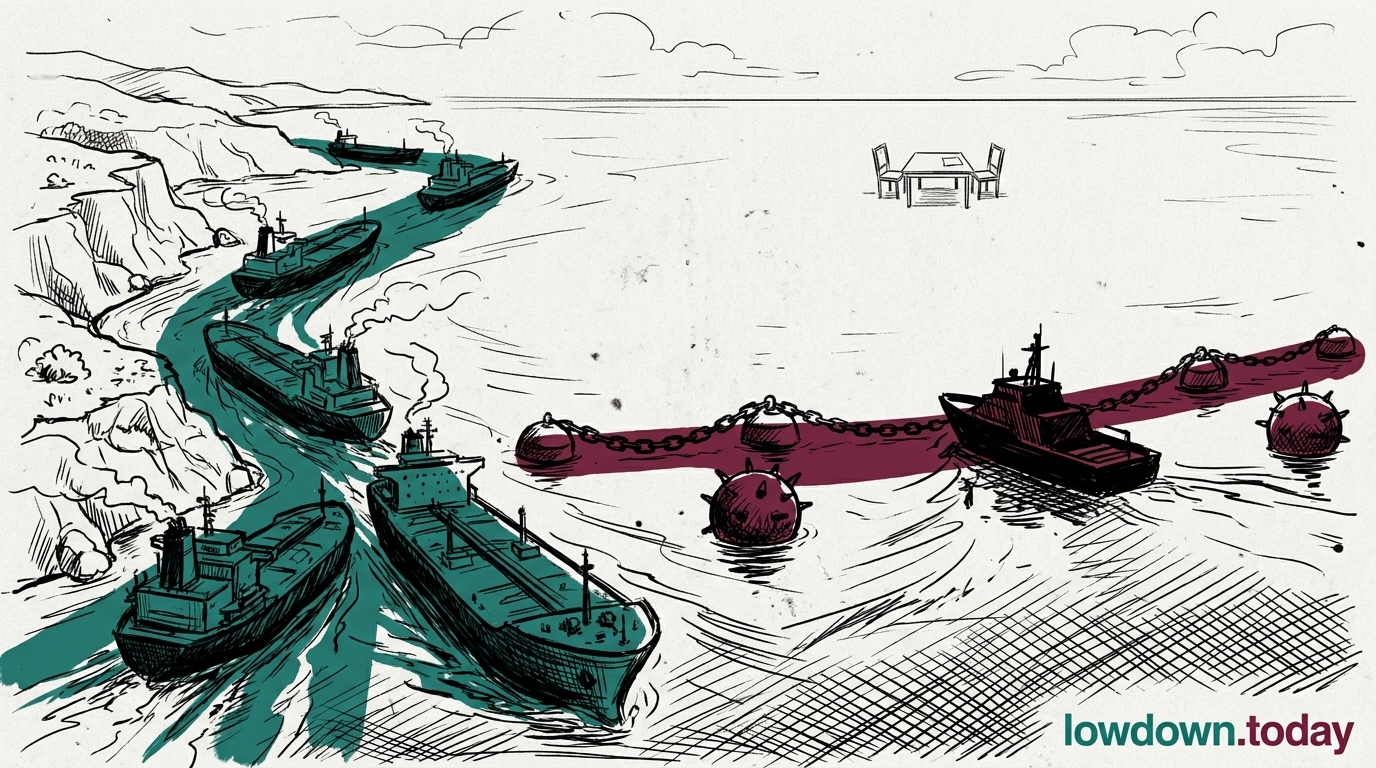
Yanbu, the Saudi Red Sea port that handled 92% of The Kingdom's seaborne crude exports in June, is now shipping about 3.75 million barrels a day of crude and condensate, Vortexa estimates, with 62% bound for India, Japan, China and South Korea 1. Yanbu sits on the western coast, north of the Bab el-Mandeb chokepoint the 23 July embargo closed to Saudi loadings , which is why the reroute has funnelled so much flow through it.

A single terminal carrying that share of a major exporter's crude concentrates the risk. It puts an entire seaborne supply chain behind one port and one corridor, so any further disruption to the Red Sea approach hits nine-tenths of the flow at once rather than a slice of it.

For desks pricing Brent-Dubai relative demand, the split between Atlantic and Middle Eastern grades, the destination mix matters more than the raw volume. The barrels are clearing east into Asian refiners while the Atlantic basin sees almost none of them. The reroute therefore tightens Suez tonnage without loosening European crude supply, so the tension shows up in freight and in the East-West arbitrage rather than in the Brent flat price.


Deep Analysis

In plain English

Saudi Arabia has several ports it can ship oil from, but right now almost all of it, 92% in June, goes through one terminal called Yanbu on the Red Sea coast. That is because a pipeline crosses the country specifically to feed Yanbu, letting oil skip the risky Strait of Hormuz. With the southern sea route also blocked, Yanbu has become the kingdom's near-only export point, which means any problem there, a fire, an equipment fault, bad weather, would hit a much bigger share of Saudi oil exports than it normally would.

Deep Analysis
Root Causes

The Petroline pipeline crosses Saudi Arabia east to west specifically so crude can bypass Hormuz; that design choice means any Hormuz-related routing pressure funnels disproportionately onto Yanbu, the pipeline's Red Sea terminus, rather than distributing across the kingdom's other ports.

With Bab el-Mandeb now closed as well, Yanbu has become the only viable outlet for both the pipeline's normal flow and the crude previously exported via the southern route, concentrating risk at a single physical point that has no operational twin.

What could happen next?
  • Risk

    A single operational disruption at Yanbu now threatens a much larger share of Saudi export capacity than it would under normal multi-terminal routing.

  • Consequence

    Asian refiners receiving 62% of Yanbu's flow become more exposed to any Yanbu-specific outage than they were when Saudi exports were split across the Red Sea and Gulf coasts.

First Reported In

Update #20 · Saudi crude reroutes to Suez, freight bites

AFP / AP / Reuters (Kpler and Vortexa data)· 27 Jul 2026
Read original
Causes and effects
This Event
Yanbu funnels nine-tenths of Saudi crude
One terminal moving the overwhelming share of the kingdom's export crude puts an entire seaborne supply behind a single stretch of contested water, and sends most of it east rather than into the Atlantic basin.
Different Perspectives
Hengaw
Hengaw
The Norway-based monitoring group reported the Urmia executions of Omid Behzad and Pouria Safvat, the only source to do so, consistent with its documented pattern of recording far more executions than the Iranian state acknowledges. Iran's government has not confirmed either execution.
Shipping and insurance underwriters
War-risk premiums price the Houthi campaign because the group announces its targets in advance, but a reopening Trump has promised without a published text gives underwriters no benchmark to reprice Hormuz cover against. Insurers want a text before they move rates, not a promise.
Houthi movement
Houthi movement
Spokesman Yahya Saree claimed strikes on two tankers in the Red Sea and Gulf of Aden on 5 August, only one of which UKMTO could confirm. The group's campaign against shipping continues on its own schedule, independent of any Hormuz arrangement further north.
Oman
Oman
Muscat has brokered the coordinates both Tehran and Washington's wire sources now describe differently, but has published no account of its own. Oman's position depends on treating Hormuz as a shared route, which is not what Iran is currently describing.
United States Central Command
CENTCOM raised its interdiction tally from 35 to 44 redirected vessels and disclosed its first boardings on 3 August, the day before Trump promised a reopening. The command's own enforcement record does not yet reflect the release the President has described.
Iran's Foreign Ministry
Spokesman Esmaeil Baghaei described the agreed Hormuz coordinates as a wholly new corridor under Iranian management, not a split of the existing route, days after his own deputy rejected Oman's lane proposal. Tehran wants the arrangement read as a change of ownership, not a compromise on access.



