Skip to content
You can now search across every topic, entity and event.What's new
Iran Conflict 2026
11JUN

OFAC signs GL 134C, third Russia bridge

3 min read
09:17UTC

Bradley T. Smith signed General License 134C at 14:05 EDT on Monday 18 May, reinstating Western vessel services on Russian crude loaded by 17 April and reversing the cliff the market had priced two days earlier.

ConflictDeveloping
Key takeaway

GL 134C reopened insurance and classification cover, not a price number, so Urals stabilises rather than rallies.

OFAC Director Bradley T. Smith signed General License 134C at 14:05 EDT on Monday 18 May, authorising in-transit completions on Russian-origin crude loaded on or before 17 April and running through 12:01 a.m. EDT on 17 June 1. This is the third consecutive 30-day bridge, and it reverses the read that Treasury had ruled out a successor after GL 134B lapsed on 16 May . The licence reinstates the full vessel-services umbrella, insurance, crewing, bunkering, piloting, classification and salvage, while paragraph (b)(1) holds the Cuba, Iran and DPRK carve-out in place 2.

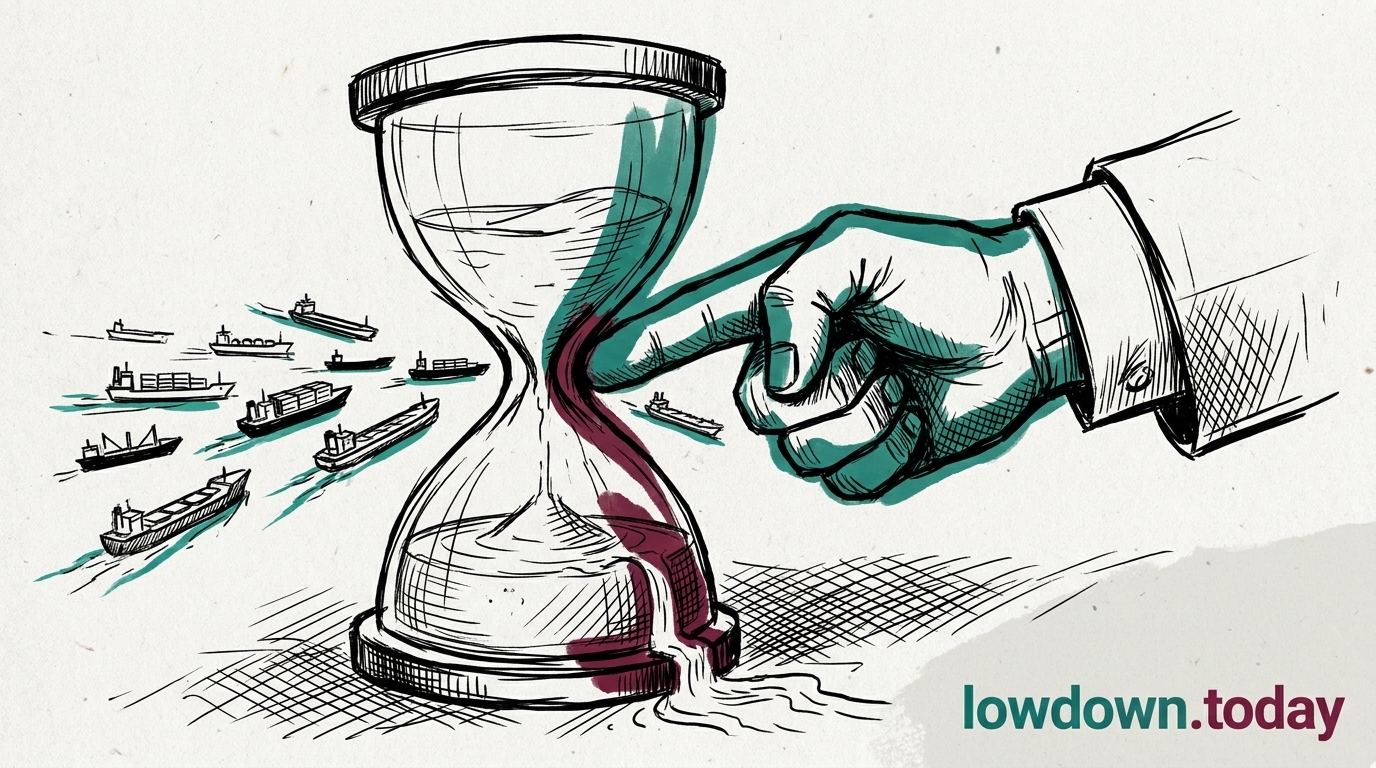
The P&L moves straight off that paragraph. The cliff that priced as an exit-or-face-OFAC binary on 16 May is now an insurance-rate normalisation problem for KEBCO and Urals term holders. Cover runs through commercial vessel services, not a price-cap number, so it is the insurance and classification chain that reopens, not the discount math. Urals-Brent is stabilising on the news rather than rallying, because the variable that moved is P&I availability for pre-17-April cargoes.

Set that against the Druzhba southern leg , where MOL and Slovak refiners keep roughly 175-200kbd of exempt pipeline barrels at a feedstock advantage that has touched $40/bbl. Seaborne cargoes carry a freight-and-insurance compliance cost the pipeline crowd never pays, so 134C narrows the gap without closing it. The 17 June expiry now becomes the next binary: a fourth bridge, or the first hard cliff the freight desk has had to price.

Deep Analysis

In plain English

The US government allows companies to temporarily move Russian oil even while Russia is under sanctions ; using a legal permit called a General Licence. When the previous permit (GL 134B) expired in May, there was confusion about whether a new one would be issued. On 18 May, a new one called GL 134C was signed, giving companies until 17 June to complete oil shipments that were already in progress. Think of it like an extension on a moving deadline: the rules are getting stricter over time, but companies get a window to finish what they started. Cuba was specifically excluded ; any shipment that passed through Cuba loses the protection entirely.

Deep Analysis
Root Causes

GL 134C's existence reflects a structural trilemma: the US wants Russian oil revenue curtailed, but abrupt vessel-services withdrawal would simultaneously spike European energy costs (at current Brent above $96), expose allied refineries to supply disruption, and push marginal Russian barrels fully into shadow-fleet channels that Western sanctions cannot reach.

The 30-day rolling structure is a product of this trilemma. Each extension reduces the waiver window (loading cutoffs predate the waiver by 31 days) while maintaining the fiction of a wind-down ; the pre-17 April loading cutoff in GL 134C means the eligible cargo universe is already shrinking without Treasury having to announce a formal termination.

What could happen next?
  • Consequence

    Without a GL 134D by 17 June, term holders of pre-17 April Urals and KEBCO cargoes face the same forced-exit or compliance-risk binary that GL 134B's expiry created on 16 May.

    Short term · Reported
  • Precedent

    The Adani $275m settlement on the same day as GL 134C establishes simultaneous carrot-and-stick enforcement as an explicit OFAC template for commodity sanctions.

    Medium term · Assessed
  • Risk

    Each successive loading cutoff (17 April for GL 134C) shrinks the eligible cargo universe; at some iteration the waiver covers so few barrels that terminal expiry becomes economically painless for Washington but logistically disruptive for NWE refiners.

    Medium term · Assessed
First Reported In

Update #2 · GL 134C reverses the cliff, Brent -$14

OFAC· 26 May 2026
Read original
Causes and effects
This Event
OFAC signs GL 134C, third Russia bridge
The 16 May exit-or-face-OFAC binary becomes an insurance and classification re-rating, not a forced unwind of Russian term positions.
Different Perspectives
Hormuz shipping and insurance market
Kpler, Lloyd's List and S&P Global each independently put Strait of Hormuz transits at a seventh to a sixth of pre-war levels, against CENTCOM's own position that the strait remains open for transit. War-risk premiums rose from 0.25% to 3-10% of hull value in mid-July and have held steady since.
Pakistan (with China)
Iran's interior minister met Pakistan's army chief in Islamabad on 25 July, his second visit in ten days, with China separately pushing the same track; Islamabad's stated precondition, a halt to Gulf attacks, broke within hours when the Houthis struck Yanbu and Jazan. The channel inherits Baghdad's opening without yet fixing what broke it.
Saudi Arabia
Saudi Arabia
Saudi Arabia absorbed Houthi strikes on Aramco-linked sites at Jazan and Yanbu on 25 July without confirming them, while holding a 30-year civil nuclear agreement Trump made conditional on joining the Abraham Accords two days after signing it. Riyadh is fighting on one front while being asked to concede on another.
Iran (state security leadership)
Iran's security chief said strikes continue until the enemy's "total surrender", and no IRNA, Tasnim or Fars report carries any stand-down language to match Washington's pause. Tehran reads the halt as "strategic decision-making fatigue", not a restraint it needs to reciprocate.
Washington (Pentagon and White House)
A Defense Department source called the bombing halt "on a hold", Pentagon spokesman Sean Parnell insisted the US "retains a deep arsenal of capabilities", and the White House credited "successful sanctions" and thirteen days of strikes for the same pause. Three explanations from one government suggest none of them is the whole one.
Oil traders
Oil traders
Sent Brent down 2.29 per cent to $98.38 a barrel on reports that mediation was reviving, moving the price on CENTCOM's quiet night rather than on Trump's same-day promise of a bigger operation with no deadline attached.