Skip to content
You can now search across every topic, entity and event.What's new
Iran Conflict 2026
9JUN

US strikes four Iranian sites near Hormuz

3 min read
10:36UTC

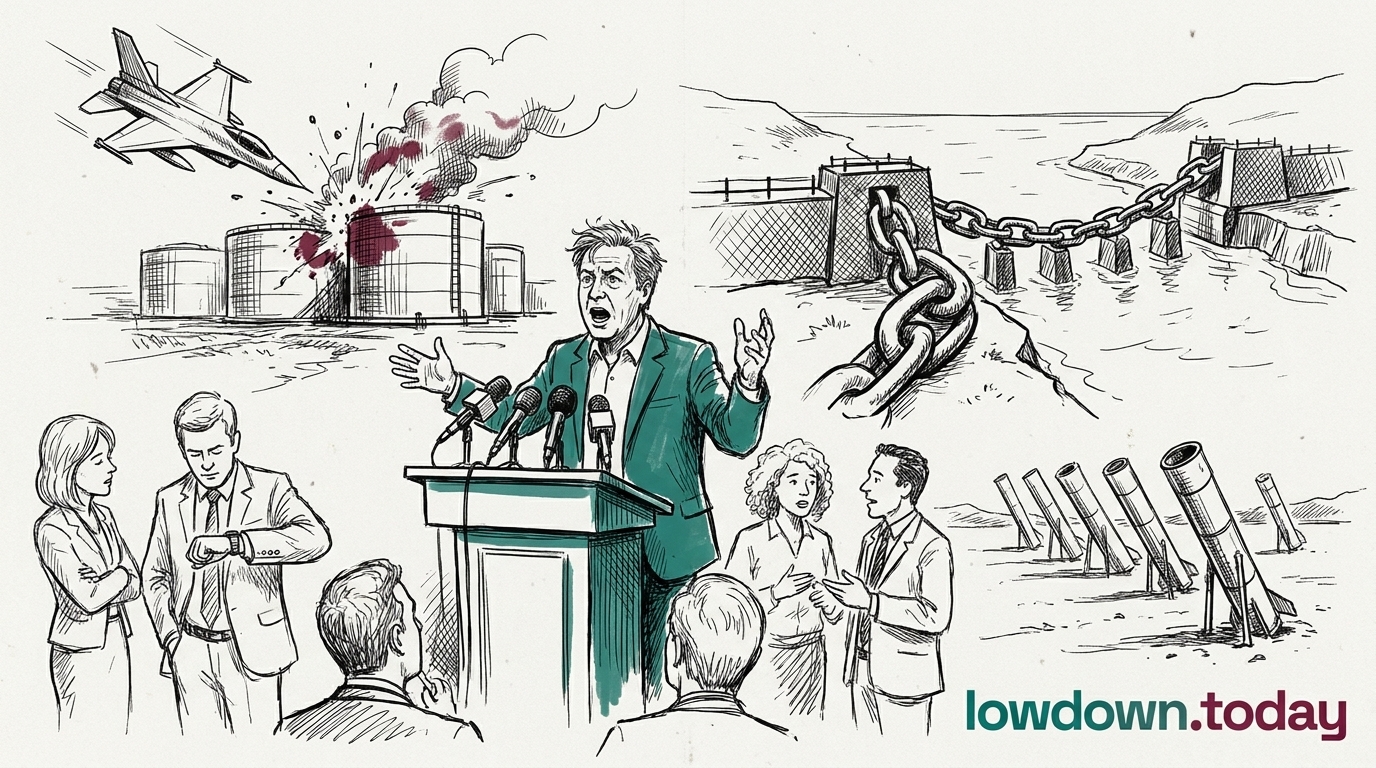
Donald Trump ordered CENTCOM onto Iranian soil for the first time in 100 days of war, hours after telling reporters a deal was in its 'final throes'.

ConflictDeveloping
Key takeaway

Trump's first decisive Iran act in 100 days was a missile strike, not the deal he keeps promising.

CENTCOM (US Central Command) struck Iranian air-defence, radar and ground-control sites at Qeshm Island, Bandar Abbas, Sirik and Jask between 22:00 GMT on Tuesday 9 June and 01:00 GMT on Wednesday 10 June, at Donald Trump's direct order 1. For 100 days the US-Iran front had been sanctions and the Strait of Hormuz blockade while Israel did the kinetic work; this was the first American ordnance on Iranian soil since the war began 2. CENTCOM called it a "proportional response" and "self-defence", citing Iran's downing of a US AH-64 Apache helicopter, the aircraft logged "cause unknown" a day earlier and now resolved .

The strike package hit four named sites, yet Al Jazeera, citing Iranian accounts, reported the damage ran to a single telecoms tower at Sirik and two water tanks 3. The kinetic footprint stayed small while the political signal ran large. A target set of coastal air-defence and radar, not Fordow or Natanz, reads as a deliberately survivable strike: Washington demonstrated reach without forcing the all-out nuclear exchange that hitting an enrichment site would compel.

Trump had told reporters on 9 June that an Iran deal was in its "final throes" ; he ordered missiles onto Iranian territory within hours of saying it. The president who signed nothing across 100 days, no AUMF, no Article 51 notice, no nuclear memorandum, answered a stalled negotiation with ordnance rather than paper. What closed the war's defining action-versus-words gap was a missile order, not a signature, which means every legal instrument remains unsigned even now.

Deep Analysis

In plain English

The United States military launched air strikes on Iran overnight on 9-10 June 2026. The targets were radar stations and air-defence equipment near the Strait of Hormuz, the narrow waterway through which a fifth of the world's oil travels. The stated reason was that an American military helicopter, a type called an AH-64 Apache, had gone down near the strait earlier that day. The US President ordered the strikes as retaliation, calling it self-defence. Iran says the radar sites were protecting its own coast. No new permission from the US Congress was sought; the President argued he already had the authority.

Deep Analysis
Root Causes

The casus belli chain runs from the Apache downing through CENTCOM's 'self-defence' doctrine, but the structural precondition was set earlier: CENTCOM had already struck Iranian radar at Goruk and Qeshm Island in late May and on 31 May to 1 June , establishing a pattern of airspace-denial strikes that Iran had not yet answered with ordnance on American aircraft.

When the Apache went down, CENTCOM's existing strike precedent meant the only doctrinal response it had available was another radar-suppression package.

The deeper root cause is the 100-day gap between the start of hostilities and any signed US legal authority. Defence Secretary Hegseth's May Senate testimony converted Article II self-defence from a fallback into a named policy.

Once it became stated doctrine that no AUMF was required, the threshold for ordering strikes fell to whatever Trump defined as necessary at the moment of decision, with no congressional gate and no UN notification requirement in the administration's own legal theory.

What could happen next?
  • Precedent

    CENTCOM's 9 June strike package marks the first American ordnance on Iranian sovereign territory since the war began on 28 February, establishing a new threshold Iran now must decide whether to accept or escalate above.

    Immediate · Assessed
  • Risk

    With no Article 51 notification filed and no AUMF in place, the US legal position on the strikes rests entirely on Trump's Article II self-defence assertion, leaving the action vulnerable to challenge in any subsequent war-powers litigation or allied diplomatic forum.

    Short term · Assessed
  • Consequence

    Degrading Iranian radar and ground-control at four Hormuz-proximate sites reduces Tehran's situational awareness around the strait's chokepoint, potentially increasing Iran's reliance on IRGC missile salvos rather than air-defence coordination as its primary deterrent posture.

    Medium term · Suggested
First Reported In

Update #123 · Trump orders strikes on Iranian soil

Al Jazeera· 10 Jun 2026
Read original
Different Perspectives
Oil markets / Lloyd's of London
Brent fell to near $87.33 on 80 per cent deal-probability pricing, but Lloyd's has not de-listed Hormuz from its war-risk register and shipping diversions continue at 139 vessels. Insurance markets are lagging futures: physical risk remains while financial markets have spent the good news before the paper exists.
India
India
Modi is expected to raise the deaths of three Indian sailors in the 11 June CENTCOM strike on the MT Settebello with Trump at G7 sidelines, the first non-party leader to put the blockade's human cost into a formal bilateral. New Delhi is also a major Iranian oil buyer whose import volumes the sanctions-relief terms will govern.
Israel (Netanyahu)
Israel (Netanyahu)
Netanyahu stated Israel is not party to the deal on 12 June; Defence Minister Katz ruled out the Lebanon withdrawal Iran's draft demands, inserting a third blocker the US-Iran negotiating channel cannot resolve. Israel's position tethers Hormuz reopening to a Lebanon settlement Washington has not brokered.
Pakistan (mediator, Sharif/Naqvi)
Sharif declared a final agreed text on 12 June before either principal confirmed it, running two Tehran visits in under a week without securing a written IRGC or Khamenei response. Islamabad's incentive to claim a diplomatic win outpaces its standing to deliver either capital's signature.
Iran foreign ministry (Araghchi)
Araghchi declared digital signing within days while setting dilute-in-Iran as a non-negotiable red line on the 440.9 kg HEU stockpile, a standing Tehran position he cannot override without authorisation from Khamenei, reachable only by courier. The FM track is sprinting to close before the IRGC reasserts control.
Trump administration / CENTCOM
Vance called the deal still TBD on 12 June while CENTCOM downed Iranian drones over Hormuz for a second consecutive night and the White House register stayed blank. Washington holds the ship-out position on HEU and has not signed an Iran instrument in over 100 days of conflict.