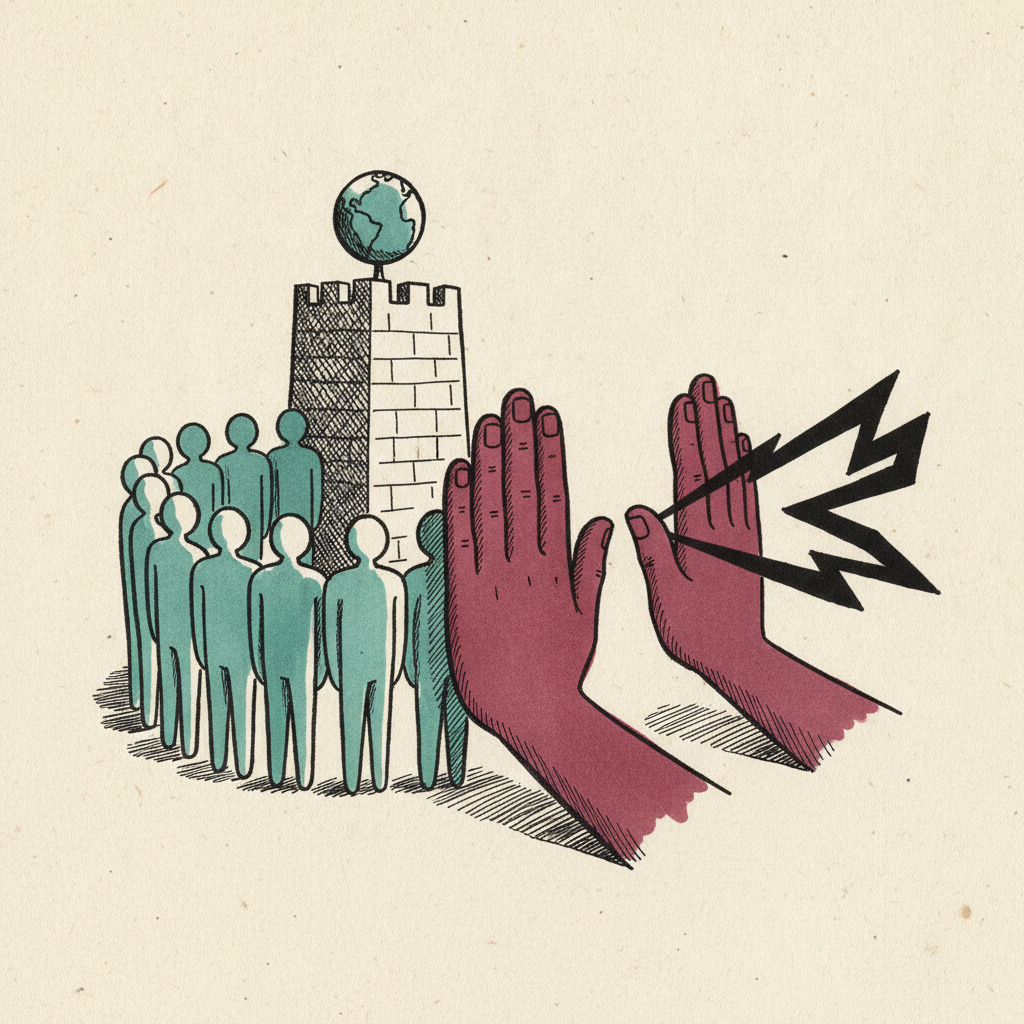
UN Charter Article 51
UN Charter provision preserving the inherent right of individual or collective self-defence against armed attack.
As of 6 August, Article 51 is UN Charter provision preserving the inherent right of individual or collective self-defence against armed attack..
Last refreshed: 11 August 2026 · Appears in 1 active topic
Which Gulf states have invoked Article 51 in the 2026 Iran war, and what does a reservation actually authorise?
Timeline for UN Charter Article 51
Mentioned in: Riyadh names energy, port and airport targets
Iran Conflict 2026Mentioned in: Saudi jets hit Iraq, citing Article 51
Iran Conflict 2026Qatar files a UN claim against Iran
Iran Conflict 2026Ghalibaf says Iran will not fold
Iran Conflict 2026Mentioned in: US strikes reach Tehran on day two, ordered by phone
Iran Conflict 2026Background
Article 51 is UN Charter provision preserving the inherent right of individual or collective self-defence against armed attack. Article 51 of the UN Charter, adopted in 1945, preserves the inherent right of individual or collective self-defence if an armed attack occurs against a UN member, until the Security Council acts. It is the Charter's only explicit exception to the requirement for Security Council authorisation before the use of force, and it has anchored major self-defence claims since 1945, including the US invocation for Afghanistan in 2001, France's after the 2015
Bataclan attacks, and the UK's for strikes against ISIS in Syria the same year. Whether the article covers attacks by non-state proxies attributed to a state remains contested in international law. The 2026 Iran war has produced more Article 51 invocations in a few months than most conflicts generate in years, each hinging on the same disputed question: how solid the evidence of an armed attack needs to be before the right to respond attaches. The 29 July Iraq strike, resting on intercepted rather than landed drones, pushes that threshold further than any of the earlier Gulf invocations.
What is Article 51 of the UN Charter?
Reference
Can the UAE legally strike Iran under Article 51?
Has Qatar invoked Article 51 in the Iran conflict?
Did the US file an Article 51 notice before striking Iran in June 2026?
Which Gulf states invoked Article 51 during the 2026 Iran conflict?
Why did the UAE invoke Article 51 at the UN Security Council?
Has Article 51 been invoked in the Iran conflict before?
When can a state cite Article 51?
What must states report under Article 51?
Why did Saudi Arabia cite Article 51 in July 2026?
