Skip to content
You can now search across every topic, entity and event.What's new
Iran Conflict 2026
6JUN

Saudi Arabia left off the Patriot list

4 min read
12:17UTC

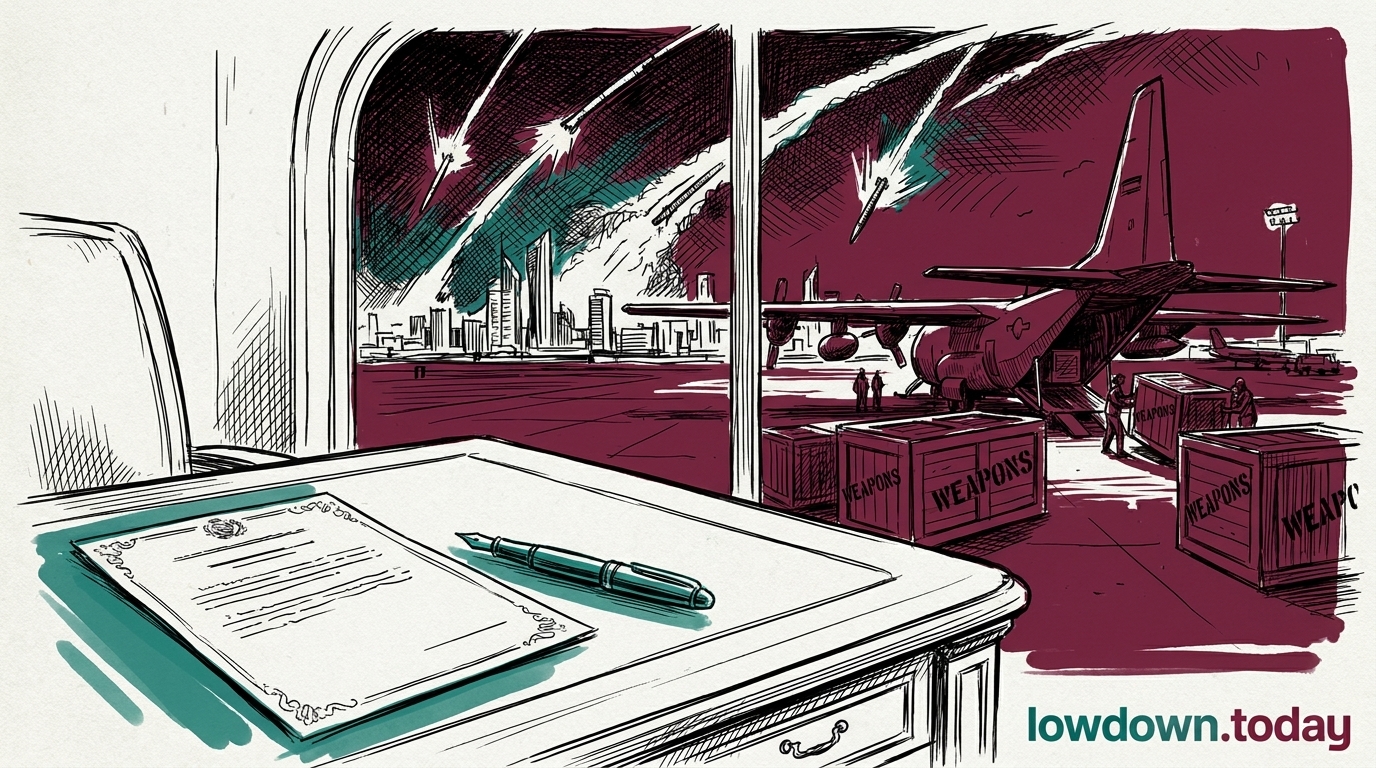
Qatar received a $4.01 billion emergency Patriot waiver on 2 May; Saudi Arabia was left out as its own interceptor stocks ran near empty. The plant that builds more is booked through 2030.

ConflictDeveloping
Key takeaway

Saudi Arabia missed the emergency Patriot waiver Qatar got, leaving its oil terminals thinly defended.

Qatar received a $4.01 billion emergency Patriot Foreign Military Sale waiver on 2 May for 300 PAC-3 MSE and 200 GEM-T interceptors, and Saudi Arabia was not in that emergency package 1. PAC-3 (Patriot Advanced Capability-3) is the US Army's hit-to-kill interceptor for ballistic and cruise missiles, and the waiver moves a buyer up the production queue ahead of the standard 18-month wait.

Across the Gulf, the states absorbing IRGC salvoes have been firing interceptors faster than they can replace them. Bahrain reached 87% PAC-3 depletion with an 18-month resupply gap after the 5 June two-country salvo , barely a salvo or two of interceptors before its magazine runs dry. Saudi Arabia, by open-source depletion estimates circulating this week, sits near the bottom of its own magazine after the largest absolute losses of any Gulf state. No confirmed government or contractor figure for Saudi stocks was on the record by 9 June, so that estimate should be read as an estimate, not a measured count.

The factory, not the paperwork, sets the binding constraint. Lockheed Martin's Camden plant in Arkansas delivered roughly 620 PAC-3 MSE interceptors in 2025, and a US Army contract has booked that line through 2030 2. A waiver buys queue position; it cannot conjure rounds the plant has not yet built. That is why the gap between Qatar's emergency waiver and Saudi Arabia's standard filing is timing, not bureaucracy: one buyer jumps the line, the other waits behind a sold-out run.

Washington has moved fast for other Gulf partners. On 6 June the State Department approved a $1.98 billion Anduril counter-drone sale to Kuwait , an arms decision it could make and did. The interceptor allocation that would refill Saudi magazines is the one it has not made for its largest Gulf partner. The next sustained IRGC salvo against Saudi targets would meet a near-empty defence over the world's largest oil export terminals.

Deep Analysis

In plain English

The Patriot PAC-3 is the missile that knocks down ballistic rockets in the final seconds before impact , the last layer of defence. It is manufactured at a single factory in Camden, Arkansas, which builds roughly 620 units per year. Qatar received an emergency order of 300 of them in May; Saudi Arabia received no equivalent waiver. Open-source analysis suggests Saudi Arabia's existing PAC-3 supply is nearly exhausted from intercepting Iranian missiles over the past three months. The Camden factory is fully booked until 2030. Saudi Arabia is on a standard 18-month waiting list behind a queue it cannot jump, which means it has less air defence than it needs at the moment it needs it most.

Deep Analysis
Escalation

A near-empty Saudi PAC-3 magazine changes Iran's cost-benefit calculation on future missile launches. If Riyadh cannot reliably intercept a sustained IRGC salvo, Saudi Arabia faces a choice between accepting missile strikes or retaliating , neither outcome is in Washington's interest during active deal negotiations.

What could happen next?
  • Risk

    Saudi Arabia's near-empty PAC-3 reserves, combined with an 18-month resupply lag, create a window in which Iran could conduct a sustained ballistic salvo against Saudi infrastructure , including Aramco facilities , with a higher probability of penetrating terminal defences than at any point since the 2019 Abqaiq attack.

  • Consequence

    The asymmetric treatment of Qatar (emergency waiver granted) versus Saudi Arabia (excluded) will complicate US-Saudi security relationship discussions and may accelerate Riyadh's domestic AFAD programme as an alternative to dependence on US FMS timelines.

First Reported In

Update #122 · Trump warns Bibi as Israel strikes anyway

Defense News· 9 Jun 2026
Read original
Different Perspectives
International Group of P&I Clubs
The Group has kept its Hormuz war-risk exclusion in force through the entire shipping recovery, even as London hull war-risk premiums fell to about 2% of vessel value. A burning LNG carrier off Limah is now the fresh case for holding that line, with mutual pooling meaning one hit reprices the strait for every owner at once.
Jordan
Jordan
Jordan's government said no threats existed at Aqaba hours before Iranian missiles landed there, and has not addressed the IRGC's claim that Jordanian civilians and soldiers supplied targeting intelligence for the strike. Amman hosts forces it does not command and is saying as little as it can.
United States (CENTCOM)
The Pentagon named two of the seventeen American dead, 1st Lieutenant Tyler Feehan and Private Isabella Gonzales, both killed at Jordan's Muwaffaq Salti Air Base, days after its Amman embassy had warned citizens away from Aqaba's airport and seaport. Washington is naming its own cost while flagging threats it declines to attribute publicly.
Iran
Iran
Iran said on Monday it disabled two oil tankers crossing the Strait of Hormuz without its permission, asserting a right to license passage through the strait it borders. Tehran named neither vessel, and CENTCOM had already denied a comparable Iranian claim on 18 July.
Qatar
Qatar
Qatar moved from summoning Iran's deputy ambassador on 8 July to a dated written claim at the UN Security Council thirteen days later, citing Resolution 2817 and reserving its Article 51 right of self-defence. Doha is building a permanent record while still hosting CENTCOM's forward headquarters and mediating with Tehran.
CENTCOM
CENTCOM
CENTCOM confirmed a third American service member died in northern Iraq on 19 July clearing unexploded ordnance from a downed Iranian drone, and recovered unidentified remains at Muwaffaq Salti Air Base in Jordan. The Pentagon has framed its Khuzestan strikes as degrading IRGC capacity, a rationale that stretches to explain a reactor foundation with no nuclear material in it.