Skip to content
Briefings are running a touch slower this week while we rebuild the foundations.See roadmap
Iran Conflict 2026
6JUN

Bahrain runs low on Patriot interceptors

2 min read
12:17UTC

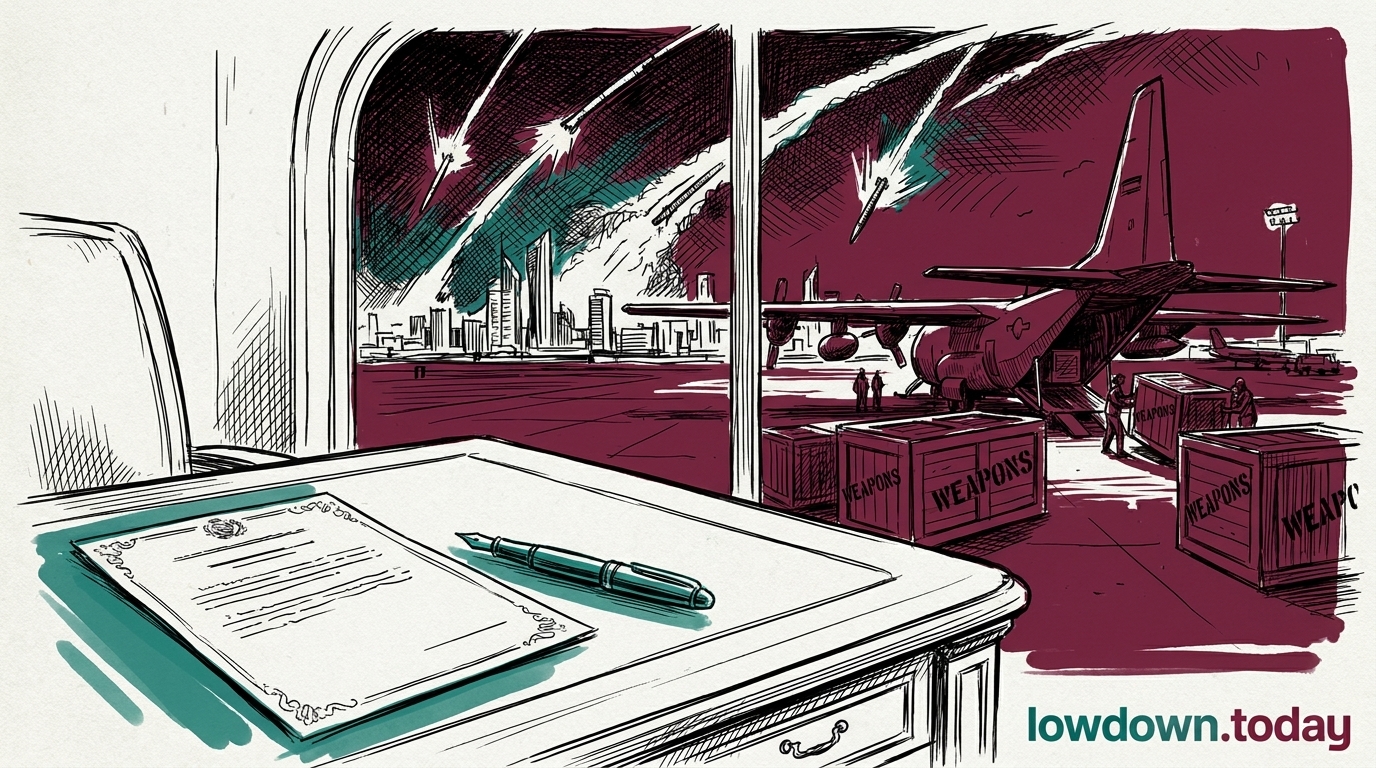
Bahrain's stock of PAC-3 interceptors is an estimated 87% depleted, leaving roughly eight rounds, and its 50-round resupply runs on an 18-month timeline that leaves the gap open now.

ConflictAssessed
Key takeaway

Bahrain's air-defence shield is nearly out of interceptors with replacements 18 months off, so Iranian strikes keep landing.

Bahrain's stock of Patriot Advanced Capability-3 (PAC-3) interceptors is an estimated 87% depleted, leaving roughly eight rounds, according to inventory analysis drawn from US Federal Register notices 1. PAC-3 rounds are single-use missiles that destroy incoming ballistic and cruise missiles, and every interception spends one from that count.

Marco Rubio's 2 May emergency resupply authorisation covered Qatar, Kuwait, the UAE and Israel; Bahrain was excluded . A 1 June Federal Register notice added 50 PAC-3 Missile Segment Enhancement (MSE) rounds for the island, but on a standard procurement timeline of roughly 18 months. New missiles ordered now do not arrive in time to matter for this barrage.

The IRGC struck Bahrain on 3 June even as its sirens sounded, part of the same Gulf campaign that hit Sirik Island and Kuwait on 1 June . The IRGC is probing a magazine it knows is emptying. A defender rationing eight rounds against an 18-month wait has to let some inbound threats through, which is the quiet arithmetic behind why the Kuwait International Airport terminal and the wider Gulf barrages get through. Bahrain hosts the US Fifth Fleet headquarters, putting the most prized target in the region under the thinnest cover.

Deep Analysis

In plain English

Bahrain is a small Gulf island state that hosts the US Navy's Fifth Fleet headquarters. Iran has been attacking it regularly throughout the 2026 conflict. Bahrain's main defence against incoming missiles is the Patriot PAC-3 system, American-made interceptors that shoot down attacking rockets. Based on analysis of publicly available US government procurement documents, Bahrain had used up about 87% of its PAC-3 interceptors before the 3 June Iranian barrage, leaving only around eight rounds. The problem is that replacement missiles take about 18 months to produce and deliver through normal channels, and Bahrain was left out of an emergency resupply package the US Secretary of State approved in May for Qatar, Kuwait, UAE, and Israel. A 1 June notice shows 50 replacement rounds were ordered for Bahrain, but at standard timelines they would not arrive until late 2027. With just eight rounds left and Iran probing with repeated strikes, Bahrain's air defences are running on fumes.

Deep Analysis
Root Causes

Bahrain's PAC-3 gap has two structural causes. First, Bahrain was specifically excluded from Rubio's 2 May emergency resupply authorisation, which covered Qatar, Kuwait, UAE, and Israel. No public explanation was given for the exclusion; the most plausible operational reading is that CENTCOM assessed Bahrain's Fifth Fleet headquarters as covered by carrier-based defence rather than ground-based PAC-3. That assessment predated the 3 June barrage tempo.

Second, the 18-month standard procurement pipeline reflects a production-capacity constraint at Lockheed Martin's facility in Lufkin, Texas, which produces PAC-3 and PAC-3 MSE at approximately 240 rounds per year across all customers. That facility was already backlogged by Ukrainian HIMARS-adjacent component orders and South Korean PAC-3 upgrades. Emergency production surge would require Congressional authorisation of an accelerated multi-year contract, which has not been requested.

What could happen next?
  • Risk

    With approximately eight PAC-3 rounds remaining, a sustained IRGC barrage on NSA Bahrain over two days could exhaust Bahrain's terminal-phase ground-based intercept capacity entirely, leaving the Fifth Fleet headquarters reliant on carrier-based AEGIS or undefended.

  • Consequence

    Bahrain's exclusion from the 2 May emergency resupply creates a public accountability record: if Fifth Fleet sustains damage from a missile that PAC-3 would have intercepted, the exclusion decision is on record as the proximate cause.

First Reported In

Update #117 · Iran's drone finds Kuwait's arrivals hall

Fortune· 4 Jun 2026
Read original
Causes and effects
This Event
Bahrain runs low on Patriot interceptors
Interceptor economics, not missile-defence capability, set the ceiling, and Bahrain hosts the exposed US Fifth Fleet headquarters.
Different Perspectives
Israel
Israel
The IDF struck a Lebanese army unit on 6 June, killing a colonel, and privately told Moscow that shelling near Bushehr was accidental, per Putin's SPIEF disclosure. Israel is advancing in Lebanon past an unenforced ceasefire text while maintaining a back-channel to Russia on nuclear-site deconfliction.
Lebanon
Lebanon
President Aoun told CNN on 5 June that Iran uses Lebanon as a bargaining chip and urged Hezbollah toward diplomacy; on 6 June an IDF strike killed a Lebanese army colonel on the Khardali-Nabatieh road. The Lebanese state is publicly rejecting Iranian tutelage while the army sustains casualties from Israeli fire and the Washington framework remains unenforced.
Bahrain
Bahrain
Bahrain's US Fifth Fleet headquarters was among the targets in the 5-6 June two-country salvo; its PAC-3 magazine stands at 87 per cent depletion with an 18-month resupply gap and no comparable arms sale has been announced. The state is defending a critical US regional command on a thinning interceptor stock.
Kuwait
Kuwait
Kuwait received a $1.98bn US counter-drone sale approval on the same day IRGC missiles targeted its bases; it expelled two Iranian diplomats on 4 June and filed a formal protest. The arms approval gives Kuwait a future capability but leaves a 6-18 month delivery gap that the salvo tempo is already pressing.
Russia
Russia
Putin reaffirmed Russia's offer to hold Iran's 440.9 kg HEU at SPIEF on 6 June, said Russia is not arming Iran, and disclosed that both the US and Israel privately told Moscow that shelling near Bushehr was accidental. The restatement casts Moscow as the only remaining mediator both sides call, a position serving Russian interests whatever the nuclear file produces.
Iran
Iran
The IRGC, per Iranian state media, fired seven ballistic missiles at US bases in Kuwait and Bahrain, the largest two-country salvo of the war, and framed the launches as lawful retaliation; Foreign Minister Araghchi rejected Aoun's bargaining-chip accusation and Velayati warned Beirut against diplomatic naivety. Tehran has sent no HEU counter-proposal since Araghchi confirmed no progress on 4 June.