Skip to content
Briefings are running a touch slower this week while we rebuild the foundations.See roadmap
Iran Conflict 2026
21MAY

Day 83: Three days to Hengli

3 min read
09:55UTC

OFAC General Licence V on Hengli Petrochemical expires 24 May; Chinese banks face their first hard-dated MOFCOM-OFAC standoff. The Senate advanced an Iran war-powers resolution 50-47 on 20 May after Bill Cassidy lost his Louisiana primary. Brent fell 5.16% to $105.54 on 20 May; only two vessels transited Hormuz the same day.

Key takeaway

Two fixed legal clocks, OFAC's Hengli deadline and the WPR wind-down, converge on a conflict that has produced no signed instrument in 82 days.

This briefing mapped
Loading map…
Economic
Legal
Humanitarian
Diplomatic
Domestic
Regulatory

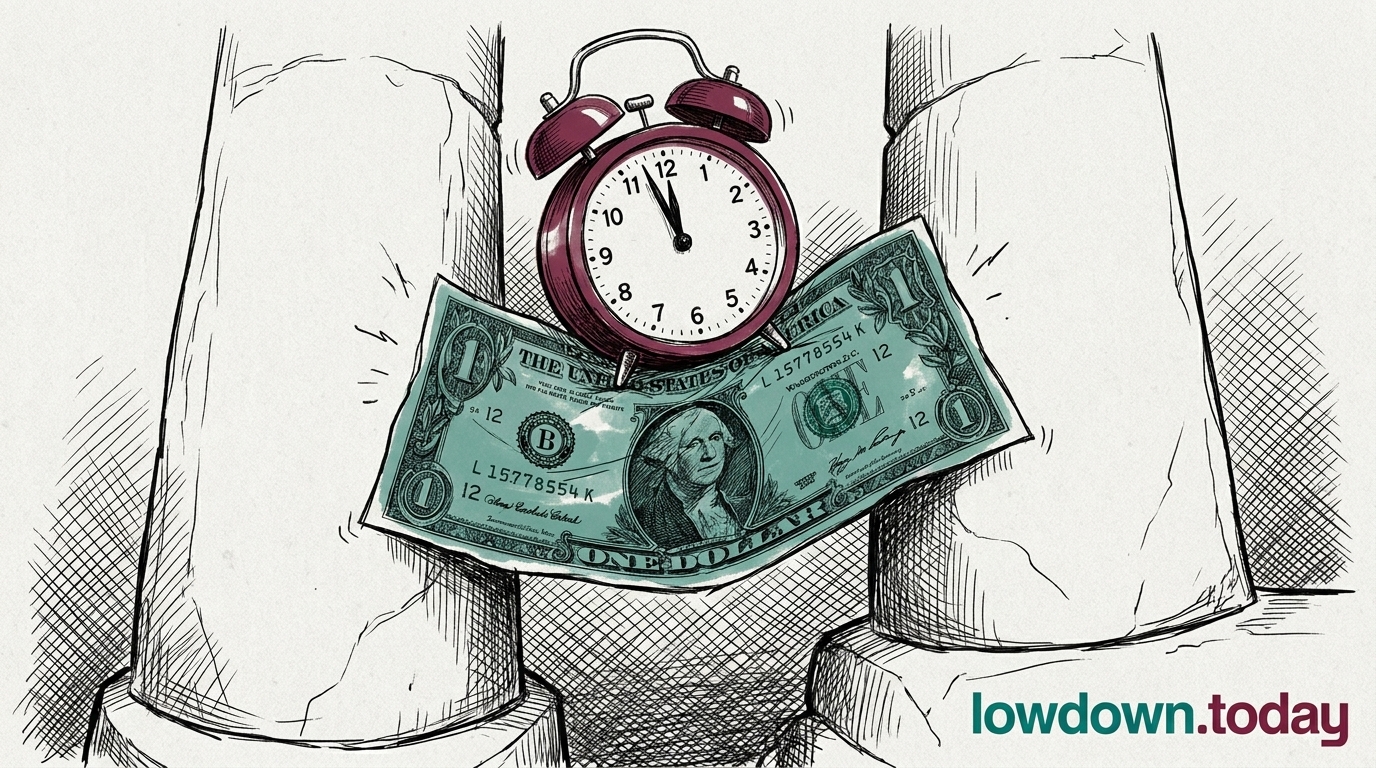
OFAC General Licence V on Hengli expires end of Sunday 24 May; from Monday, any dollar payment to China's second-largest independent refinery costs the clearing bank its US access.

Sources profile:This story draws on neutral-leaning sources
Briefing analysis

Primary parallel: OFAC's April 2018 designation of Russian aluminium producer Rusal under EO 13662 produced a 30-day wind-down window structurally similar to General Licence V on Hengli. Within weeks the dollar-clearing freeze collapsed Rusal's global trading book and forced a settlement that removed Oleg Deripaska's controlling stake. Aluminium prices spiked 35% before settlement.

Counter-parallel: Iran's own 2018-2020 oil-sanctions cycle showed that with concerted state backing, sanctioned commodities can route around dollar clearing through yuan, rouble, and barter arrangements. MOFCOM Announcement No. 21 is engineered for exactly this purpose. The Rusal precedent is the upside case for OFAC enforcement; the Iran-2018 case is the downside case for Beijing's blocking statute.

Four Republicans crossed on the eighth war-powers attempt. Bill Cassidy, freshly defeated in his Louisiana primary, was the missing margin.

Sources profile:This story draws on centre-left-leaning sources from Qatar
Qatar

The US Senate voted 50-47 on 20 May 2026 to advance a war-powers resolution. Four Republicans crossed: Rand Paul, Susan Collins, Lisa Murkowski and Bill Cassidy. Cassidy voted yes for the first time, days after losing his Louisiana primary on 16 May.

The vote marks the eighth attempt and the first to clear procedural blockage. The binding deadline falls on 1 June, the War Powers Resolution wind-down cliff for hostilities that began 28 February. 

Sources:Al Jazeera

Iran's Majlis passed an 11-article Hormuz bill mandating rial-only fees; Brent fell 5.16% to $105.54 the same day Windward logged only two commercial transits through the strait.

Sources profile:This story draws on mixed-leaning sources from Iran and United States
IranUnited States
LeftRight

Iran's Majlis national security committee passed an 11-article Hormuz bill on 20 May 2026. The bill mandates rial-only passage fees and bans hostile-nation vessels. It directly contradicts the Persian Gulf Shipping Authority portal that accepts yuan and Bitcoin.

Brent Crude settled at $105.54 the same day, down 5.16 per cent from $111.22 on 19 May. The International Energy Agency's $106 projection met the market in a single session. Windward logged only 2 Hormuz transits against a pre-crisis baseline near 95. 

Hengaw documented two secret executions at Naqadeh on 21 May; two Iraqi nationals were executed on espionage charges the day before, and a Turkish citizen faces imminent execution on the same charge.

Sources profile:This story draws on neutral-leaning sources from Iran
Iran

Norway-based monitor Hengaw documented two secret executions at Naqadeh Central Prison on 21 May 2026. Iranian authorities killed Kurdish political prisoners Ramin Zaleh and Karim Maroufpour. The double execution marks the sharpest escalation since the 13 May five-prison cluster.

On 20 May, Iran executed two Iraqi nationals on espionage charges. Baghdad's nationals became the first foreigners executed in the conflict. Turkish national Gholamreza Khani Shakarab faces imminent execution on the same charge while Ankara mediates. 

Pakistan's Interior Minister met Pezeshkian, Ghalibaf and Momeni across 18-19 May; Baghaei confirmed two days later that Islamabad had relayed Iran's 'corrective points' to Washington.

Sources profile:This story draws on centre-left-leaning sources from Qatar
Qatar

Pakistan's Interior Minister Mohsin Naqvi flew to Tehran on 18 May 2026 for a two-day rescue visit. He met President Pezeshkian, Speaker Ghalibaf, and Interior Minister Momeni. Iran transmitted a response to the latest US proposal via Islamabad during the trip.

Foreign ministry spokesman Esmaeil Baghaei confirmed on 20 May the channel had relayed 'corrective points' to Washington. It was the third documented Pakistan-mediated exchange of the sub-cycle. Neither side has yet produced a shared written text. 

Sources:Al Jazeera

Euronews documented Iran's wartime internet on 20 May as a three-tier system: free for senior officials, 40,000 tomans per GB for licensed professionals, 500,000 tomans for the public.

Sources profile:This story draws on centre-leaning sources from France
France
LeftRight

Euronews documented Iran's wartime internet on 20 May 2026 as a three-tier system. Senior officials and select journalists access 'White Internet' free of charge. Licensed professionals pay 40,000 tomans per gigabyte on 'Internet Pro', roughly €0.20.

The general public pays 500,000 tomans per gigabyte for commercial virtual private networks, around €2.50. That figure represents 12.5 times the professional rate. Cumulative economic cost since the 28 February blackout has passed $1 billion. 

Sources:Euronews

The 19 May Treasury action hit Amin Exchange and UAE, Turkey, Hong Kong and China-registered shells routing IRGC oil; no mainland Chinese refinery joined the SDN list.

The US Treasury's sanctions office issued action sb0502 on 19 May 2026. The action designated more than 50 entities and 19 vessels for Iran oil-routing and sanctions evasion. Treasury named Amin Exchange alongside Hong Kong, Emirati, Turkish and Chinese-registered shells.

No mainland Chinese refinery joined the Specially Designated Nationals list. The calibration continues the pattern from the 11, 12 and 15 May rounds. General Licence V on Hengli remains the only hard-dated enforcement moment. 

The Persian Gulf Shipping Authority promised a formal fee schedule on 18 May and four days later has published nothing, blocking Lloyd's from underwriting Hormuz war-risk cover.

Sources profile:This story draws on mixed-leaning sources from Iran and United States
IranUnited States
LeftRight

Iran's Persian Gulf Shipping Authority launched its vessel-submission portal on 18 May 2026. It promised a formal fee schedule that same day. Four days later the schedule remains unpublished, with yuan and Bitcoin channels clearing payments in its absence.

The withholding preserves the case-by-case leverage the Majlis legislated on 16 May. It also blocks Lloyd's of London's Joint War Committee from underwriting Hormuz war-risk cover. Hull rates currently price at 110-125 per cent of vessel value. 

Closing comments

Sideways, with three hard uptick triggers on a sub-two-week timeline. First: if OFAC enforces secondary sanctions against a Chinese bank clearing Hengli dollar transactions from Monday 26 May, the Rusal precedent of a 35% commodity-price spike in three weeks would reprice the Iran war as a US-China financial confrontation rather than a bilateral Iran pressure campaign. Second: the execution of Turkish national Gholamreza Khani Shakarab, flagged as imminent by Hengaw, would force Erdogan to suspend Ankara's mediating role, narrowing the active diplomatic channels to Pakistan alone. Third: a Senate floor vote passing before 1 June on the War Powers Resolution forces the White House to absorb a recorded majority against an unauthorised war or veto it, with the override tally documenting how many of the 50 Republican senators are prepared to formally break with a wartime president on paper. All three triggers converge before the IEA's Q4 2026 supply-deficit projection materialises.

Different Perspectives
United Arab Emirates
UAE signed the 26-nation Hormuz coalition paper and blocked the BRICS joint statement condemning Iran on Gulf-state drone strikes. Its primary concern is the Lloyd's war-risk cover suspension, which keeps its Fujairah expansion strategy dependent on a PGSA fee schedule that has not appeared.
Pakistan (Naqvi channel)
Interior Minister Naqvi's 18-19 May Tehran rescue visit produced Iran's 'corrective points' confirmation but no shared text. Pakistan is operating a relay function, not settlement-style mediation; the decision to send Naqvi rather than Foreign Minister Dar preserves deniability if talks collapse.
White House
White House
Signed zero Iran-touching presidential actions across 18-21 May while two Truth Social threats demanded Iran dismantle its missile arsenal. The verbal architecture has run 82 days without producing a signed instrument; the Hengli deadline and 1 June WPR cliff are now the two written tests of whether that method holds.
Iran (Pezeshkian and Baghaei)
Baghaei confirmed on 20 May that the Pakistan channel had relayed 'corrective points' to Washington. The civilian foreign ministry is signalling the channel is open while the Majlis legislates a rial-only Hormuz system its own PGSA cannot implement.
China (MOFCOM)
China (MOFCOM)
MOFCOM Announcement No. 21 directs Hengli to disregard OFAC sanctions, but cannot immunise the dollar-clearing layer where Hengli's Singapore arm operates. Beijing's de-dollarisation infrastructure is not yet complete enough to make the blocking order operational at the clearing-bank level.
Saudi Arabia
Saudi Arabia
Issued its first formal war protest on 10 May after Iranian drones struck three Gulf states. Riyadh's posture on the Hengli expiry and the WPR advance has not been made public; its primary exposure remains through Brent pricing and Hormuz transit disruption to its own export routes.

