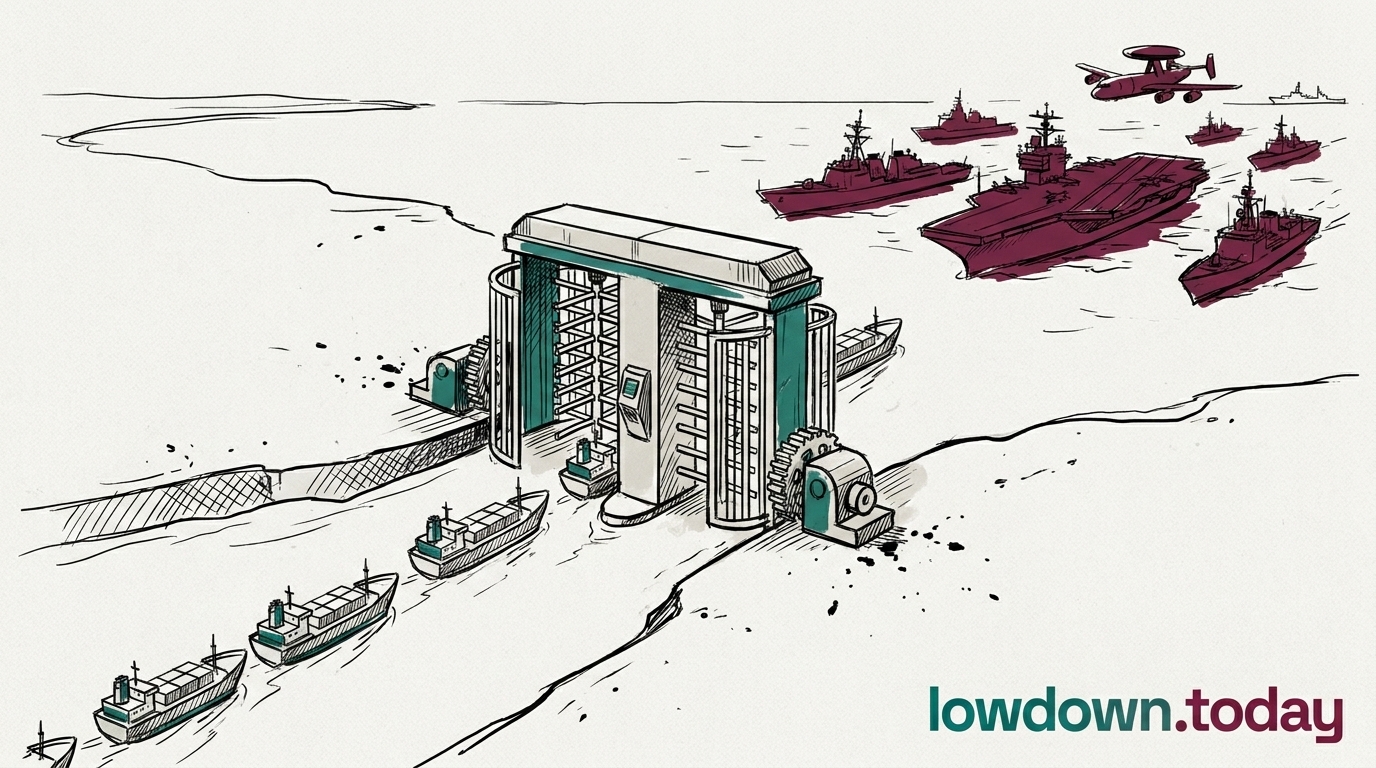
Iran's Persian Gulf Strait Authority (PGSA) made insurance compulsory for every Strait of Hormuz transit on Saturday 20 June, supplied free for now by Iranian-approved underwriters1. The authority reserved the right to charge fees once the Islamabad Memorandum of Understanding (MoU) 60-day window closes, around 17 August. The PGSA is an Iranian maritime body operating under IRGC oversight; readers should hold one earlier fact in view, that Donald Trump ordered the strait reopened with no tolls when he declared the war over.
This charge is that banned toll rebuilt as a maritime-services fee. the MOU's own text reframed transit charges as United Nations Convention on the Law of the Sea (UNCLOS) Article 26(2) service fees rather than tolls, and that is the legal door the PGSA has now walked through. The distinction is not cosmetic: UNCLOS bars a coastal state from charging vessels for the right of transit passage, but permits fees for specific services rendered. Calling compulsory insurance a service lets Iran charge for the strait in a form Washington finds harder to object to than a dollar per barrel.
The mandate carries a sanctions trap. Office of Foreign Assets Control (OFAC) designations still cover the PGSA and its affiliated insurers, so a shipowner who buys Iranian-approved cover transacts with a sanctioned entity without a US licence. The two lanes split the bind. Ships on the Oman route sidestep the PGSA's jurisdiction but cannot obtain its cover; ships on the TSS lanes could buy the cover but would be paying a sanctioned body. Lloyd's List reported the mandate "defies UNCLOS" for vessels routing through Oman's waters2.
The design borrows Washington's own enforcement logic. The US polices Russian crude through P&I insurance rather than customs, denying cover to force ships out of the trade. Iran has copied that architecture and pointed it back across the strait, with the fee landing on charterers as a premium that feeds through to freight rates rather than the oil price. The first real test arrives in mid-August, when the window closes and the PGSA can switch the fee on.


