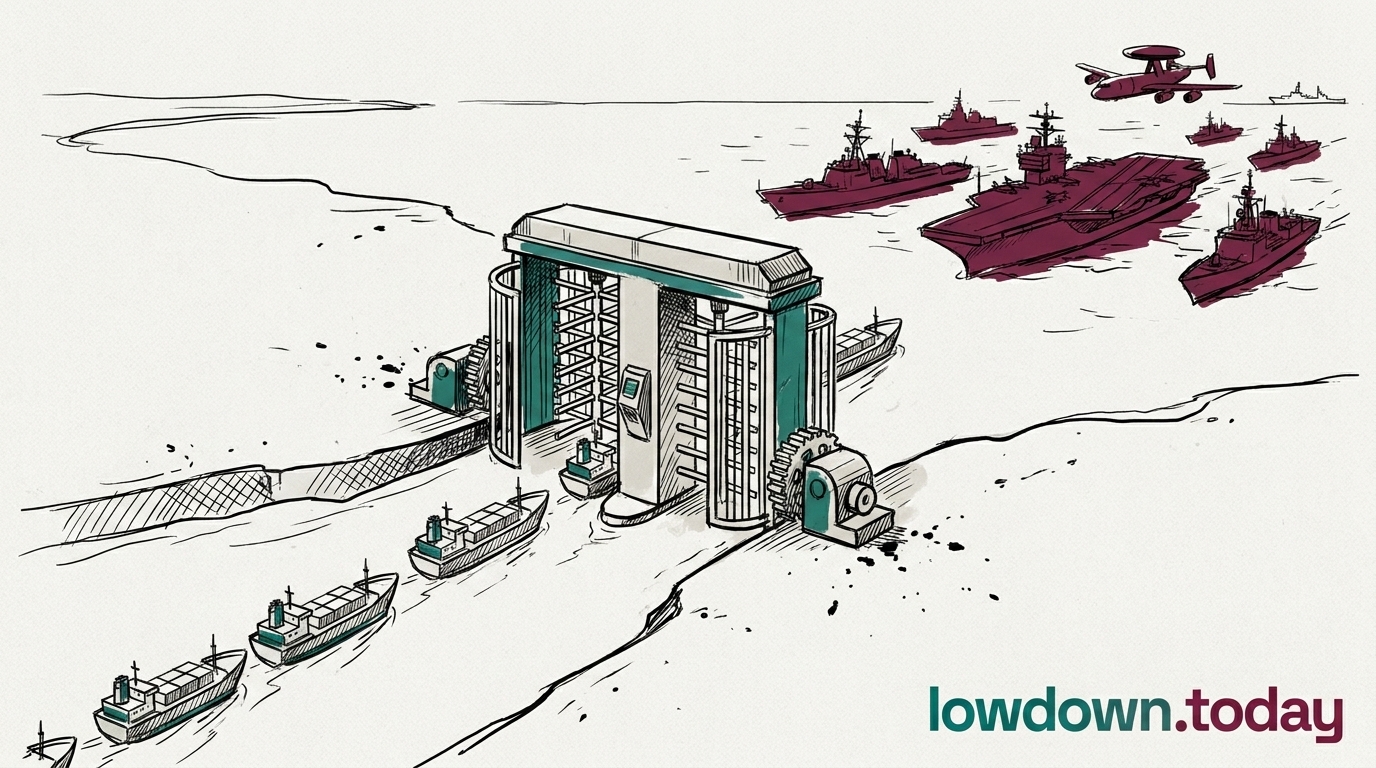
London hull war-risk premiums halved over six days to around two per cent of vessel value, down from a five per cent peak but still 20 times the 0.1 per cent charged before the conflict1. That war-risk premium is the surcharge underwriters add for sailing a vessel into a designated danger zone, and at two per cent of hull value it remains punishing. London underwriters cut the price without restoring the cover, and the US Development Finance Corporation's $40 billion Chubb-backed reinsurance facility, built specifically to underwrite Hormuz crossings, has recorded zero uptake. Not one ship has used it.
The plumbing explains the refusal. A Protection and Indemnity (P&I) club, the mutual body that insures a shipowner's liabilities, will not reinstate cover until the navigable channels are swept. Iran's Persian Gulf Strait Authority (PGSA) requires every transit to register through an Iranian-sanctioned system, which collides head-on with the Office of Foreign Assets Control (OFAC) compliance that binds London P&I clubs. OFAC is the US Treasury sanctions bureau whose rules reach any insurer clearing dollars or touching US-connected firms.
The IRGC's Channel 16 demand sharpens the bind. Coordinating with the corps to satisfy Iranian rules breaches the sanctions exposure of the other regime, so an underwriter cannot comply with both authorities at once. The Lloyd's-Chubb $400 million consortium launched on 19 June and has reinstated nothing. Until the channels are swept and the PGSA-OFAC conflict is resolved, the price of cover is academic because the cover itself does not exist.


