Skip to content
Briefings are running a touch slower this week while we rebuild the foundations.See roadmap
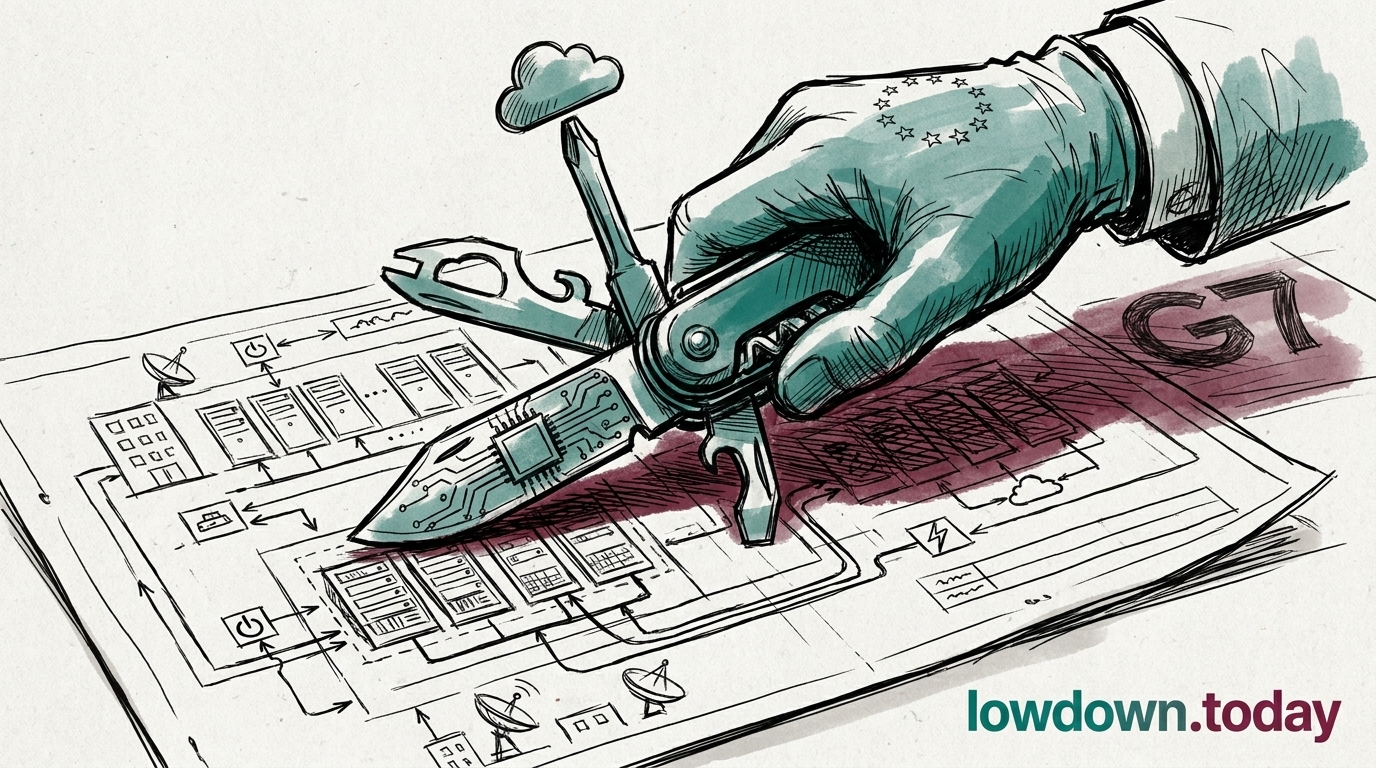
European Tech Sovereignty
17MAY

Araghchi reaches Muscat after Salalah strike

3 min read
14:28UTC

Iran's Foreign Minister met Sultan Haitham bin Tariq in Muscat on Sunday 26 April, six days after the IRGC drone-struck Salalah port in Oman's south.

TechnologyDeveloping
Key takeaway

Sultan Haitham held Muscat open as the only Gulf Arab back-channel both sides currently trust.

Abbas Araghchi, Iran's Foreign Minister, was received by Sultan Haitham bin Tariq of Oman in Muscat on Sunday morning 26 April 1. The Muscat stop is the second leg of a three-capital tour Araghchi confirmed to Tasnim late on Saturday 25 April: Islamabad, Muscat and Moscow. Oman is the small Gulf monarchy that has hosted indirect US-Iran talks across multiple administrations since the 2011 backchannel that produced the JCPOA framework.

The meeting carried an unresolved precedent. Six days earlier, on 19-20 April, the Islamic Revolutionary Guard Corps drone-struck Salalah port in Oman's south . Sultan Haitham received Iran's chief diplomat through the strike on his own infrastructure, which is the choice that preserves the only Gulf Arab back-channel both sides currently trust. Riyadh and Abu Dhabi remain outside the live mediation track, leaving the Gulf Cooperation Council split between an active mediator and two states still asking for missile and nuclear guarantees.

The Muscat leg also follows Trump's cancellation of the Witkoff and Kushner Pakistan trip on Saturday 25 April after Araghchi met Pakistan's Prime Minister Shehbaz Sharif and Chief of Defence Staff Asim Munir but never the US envoys . Pakistan loses its monopoly mediation status earned at the Islamabad rounds; the next plausible venue list now reads Muscat and Moscow alongside Islamabad. The counter-reading is that the Muscat leg is preparation for a US return that Trump's "call us" Truth Social post was meant to provoke.

Deep Analysis

In plain English

Oman is a small Gulf country that shares a maritime border with Iran and has never joined the international coalitions trying to pressure Tehran with sanctions. That unusual position has made it the only Arab country Iran trusts enough to use as a go-between with the United States. When Iran's Foreign Minister flew to Muscat this weekend, he was visiting the one Arab head of state who kept the phone line open even after Iranian forces struck an Omani port six days earlier. Think of it as the one neighbour on your street who still talks to both sides of a family dispute, even after one side broke a window.

Deep Analysis
Root Causes

Muscat has never joined any US-led Iran sanctions coalition and has maintained continuous diplomatic and economic ties with Tehran since 1979, giving it credibility with both the civilian government and the IRGC. No other Gulf Arab state shares both conditions simultaneously.

Oman's **Vision 2040** economic diversification programme depends on transit trade through the Gulf of Oman. That gives Muscat a direct material interest in ending the blockade that **Saudi Arabia** and the **UAE**, which are absorbing Iranian missile strikes but not blockade costs in the same way, do not share. The Salalah drone strike on 19-20 April raised the cost calculus for Muscat without changing the structural logic.

What could happen next?
  • Meaning

    Oman's continued mediation despite the Salalah strike preserves the only Gulf Arab channel through which a US return to talks could be signalled without requiring either side to announce direct engagement publicly.

    Short term · Assessed
  • Meaning

    If Araghchi leaves Muscat without a concrete position shift, the three-capital circuit becomes evidence of Iranian stalling rather than diplomacy, giving Washington political cover to escalate enforcement.

    Short term · Assessed
  • Meaning

    Saudi Arabia's and the UAE's absence from the live mediation track leaves the GCC institutionally divided at the moment when a coordinated Gulf position could carry the most weight in US-Iran negotiations.

    Short term · Assessed
First Reported In

Update #80 · Three carriers, zero instruments

PressTV· 26 Apr 2026
Read original
Different Perspectives
OpenForum Europe / open-source community
The EUR 350m Sovereign Tech Fund has no Commission host, no budget line, and no commissioner's name attached six weeks after the April conference, while Germany is already paying maintainers to staff international standards bodies. The CRA open-source guidance resolves contributor liability but leaves the financial-donations grey area open with the 11 September reporting clock running.
ASML / Christophe Fouquet
ASML's Q2 guidance miss of roughly EUR 300m below consensus reflects DUV revenue compression set by US export controls, not European policy. Fouquet said 2026 guidance accommodates potential outcomes of ongoing US-China trade discussions; a bipartisan US bill to tighten DUV sales further would accelerate the cross-subsidy thinning Chips Act II's equity authority is designed to address.
Anne Le Henanff / French G7 Presidency
Le Henanff chairs the 29 May Bercy ministerial two days after Brussels adopts the Tech Sovereignty Package, making the G7 communique the first international read of the Omnibus enforcement split and CAIDA's scope. France's Cloud au Centre doctrine is already operational via the Scaleway Health Data Hub contract.
German federal government
Berlin operationalises sovereignty through procurement mandates (the ODF requirement and the Sovereign Tech Standards programme) rather than waiting for Commission legislation. The Bundeskartellamt has still not received the Cohere-Aleph Alpha merger filing, leaving Germany's flagship AI champion in structural limbo six weeks after the deal resolved.
US Trade Representative
The USTR Section 301 investigation into EU digital rules closes with a 24 July 2026 final determination. CAIDA's public-sector cloud restriction sits within the criteria that triggered the 2020 Section 301 action against France's digital services tax, and the US has not signalled whether the Thales-Google S3NS arrangement resolves CLOUD Act jurisdiction concerns.
CISPE / Valentina Mingorance
CISPE shipped its own pass-fail sovereignty badge in April to establish an industry-auditable floor the Commission could adopt. Whether CAIDA inherits the CISPE binary or the multi-tier SEAL approach will determine whether certification is enforceable by public contracting authorities or requires Commission discretion.
