Skip to content
Briefings are running a touch slower this week while we rebuild the foundations.See roadmap
Iran Conflict 2026
25APR

Trump posts "call us" as new US condition

3 min read
20:34UTC

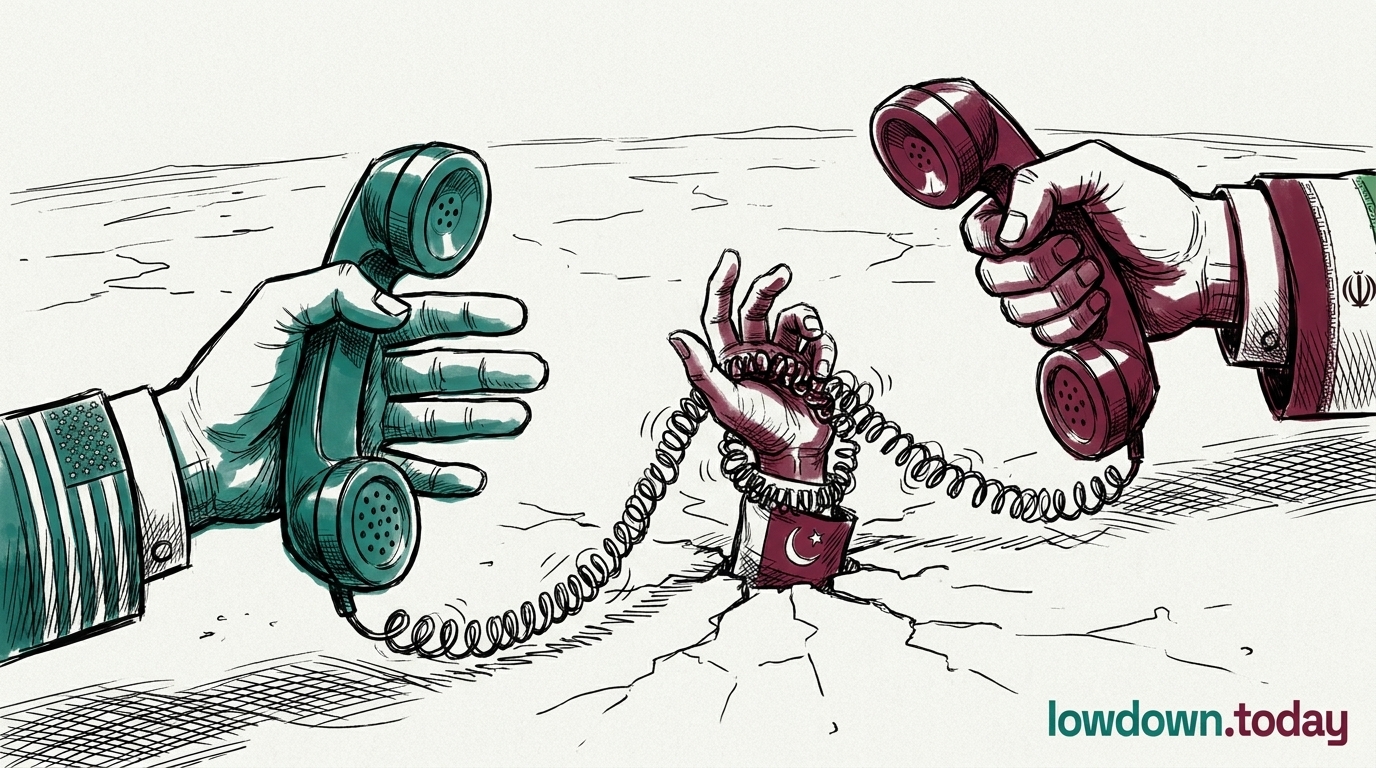
Donald Trump told Iran on Truth Social that talks require a phone call, not a delegation. Tehran's procedural floor is Pakistani mediation; the two conditions are opposite, not adjacent.

ConflictDeveloping
Key takeaway

Trump's "call us" demand makes the modality dispute, not the substance gap, the binding obstacle to talks.

Donald Trump posted to Truth Social on 25 April: "If they want to talk, all they have to do is call!!!" 1 The post followed his Fox News statement that he would not authorise an 18-hour flight for Steve Witkoff and Jared Kushner to meet Iran's foreign minister in Pakistan. As an operational fact, the Truth Social line establishes direct phone contact as the new US procedural condition for any engagement with Tehran.

Iran's stated condition runs in the opposite direction. Spokesperson Esmaeil Baqaei has confirmed "no meeting is planned", and Tehran continues to route through Pakistani mediation. Iran has been publicly clear it will not accept direct US contact as the modality; Washington has now been publicly clear it will not pay to send envoys. A modality dispute is categorically harder to resolve than a substance gap because each side's procedural condition is also a domestic political signal: Tehran accepting a Trump phone call concedes the supplicant framing, and Washington dispatching envoys to Pakistan concedes Iran's parity claim.

The "call us" line follows the cancellation of the Witkoff and Kushner mission that had been prepared in coordination with the Vance Islamabad 2 track now postponed . With six days remaining on the WPR clock, neither side has a face-saving exit because both have committed in public.


Deep Analysis

In plain English

In most conflicts, before the big negotiations start, diplomats first agree on the basic logistics: who talks to whom, where, and through what channel. Trump wants a direct phone call; Iran will only talk through Pakistan as a go-between. Neither side will budge on how first contact happens, so there has been no first contact. This matters because Trump has conducted this war's diplomacy via social media posts: the ceasefire extension, orders to the Navy, the cancellation of the delegation. Iran's government cannot respond to a Truth Social post through its own formal channels, which deepens the format mismatch.

Deep Analysis
Root Causes

Across 57 days of war, the White House presidential-actions index recorded zero Iran executive instruments. Trump's operational preferences, including the ceasefire extension, mine-clearing orders, and delegation cancellations, were issued via Truth Social posts with no legal standing as executive instruments. Iran's government, which operates through formal written instruments, cannot respond to a social media post in its own decision-making framework.

A direct telephone call between a US president and an Iranian foreign minister would be the first senior US-Iranian contact since 1979. For Trump, a call carries low political cost: Iran called him. For Iran's civilian government, a direct call without Pakistani mediation exposes ministers to domestic accusations of capitulation, given the IRGC's stated position that negotiation under blockade is unacceptable.

What could happen next?
  • Risk

    The format deadlock extends directly to the 1 May WPR deadline: with no channel agreed, no substantive talks can happen in the remaining six days.

  • Consequence

    Pakistan's role as mediator is weakened each time Trump publicly bypasses it, reducing Islamabad's leverage with Tehran to deliver any US concessions via the channel.

First Reported In

Update #79 · Islamabad 3 collapses; Witkoff grounded, talks stall

NPR· 25 Apr 2026
Read original
Causes and effects
This Event
Trump posts "call us" as new US condition
The two governments have now publicly committed to incompatible modalities six days before the 1 May War Powers Resolution deadline.
Different Perspectives
Gulf shipping and insurance markets
With Hormuz and Bab el-Mandeb both hostile at once, war-risk underwriters face their first dual-chokepoint pricing problem; the rerouting hedge that absorbed one closure is gone for Israeli-linked hulls. Any deal that reopens Hormuz without a Houthi stand-down clause delivers only partial shipping relief.
Russia and China
Russia and China
Russia and China met IAEA chief Grossi jointly in Geneva on 5 June to coordinate an advance blocking position against Washington's censure resolution, the first documented instance of proactive pre-session obstruction rather than reactive post-vote dissent. Beijing's move came four days after OFAC designated Shanghai Qianye Energy under Iran energy sanctions.
Saudi Arabia
Saudi Arabia
Saudi Arabia was left out of the emergency $4.01 billion Patriot waiver Qatar received on 2 May as its own PAC-3 stocks ran near-empty from intercepting Iranian salvoes over Aramco facilities. Riyadh is on a standard 18-month FMS queue behind a production line booked through 2030, with no equivalent priority to Qatar's Al Udeid basing role.
Houthis (Ansar Allah)
The Houthis declared a complete ban on Israeli Red Sea navigation on 8 June and struck Jaffa, their first attack on Israeli territory since April, seven days after the Tasnim authorisation to activate other fronts including Bab el-Mandeb. The declaration put both chokepoints under hostile authority simultaneously.
Iran
Iran
Iran agreed the 9 June mutual halt after the Mahshahr exchange and coordinated with Russia and China to block Washington's IAEA censure resolution, using the Board as a second front while the bilateral pause held on the military one. Tehran's acceptance of the Lebanon carve-out contradicts the linkage position it stated on 1 June.
Benjamin Netanyahu and the IDF
Israel struck the Karun Petrochemical plant at Mahshahr on 8 June over Trump's explicit objection, then agreed a halt with Iran the following day scoped on Israeli terms with Lebanon carved out. Netanyahu's posture is that the IDF will not accept Iranian missile factories as off-limits regardless of US diplomatic timelines.



