Skip to content
You can now search across every topic, entity and event.What's new
European Oil Markets
15JUN

OFAC rolls the gas, not the crude

4 min read
11:33UTC

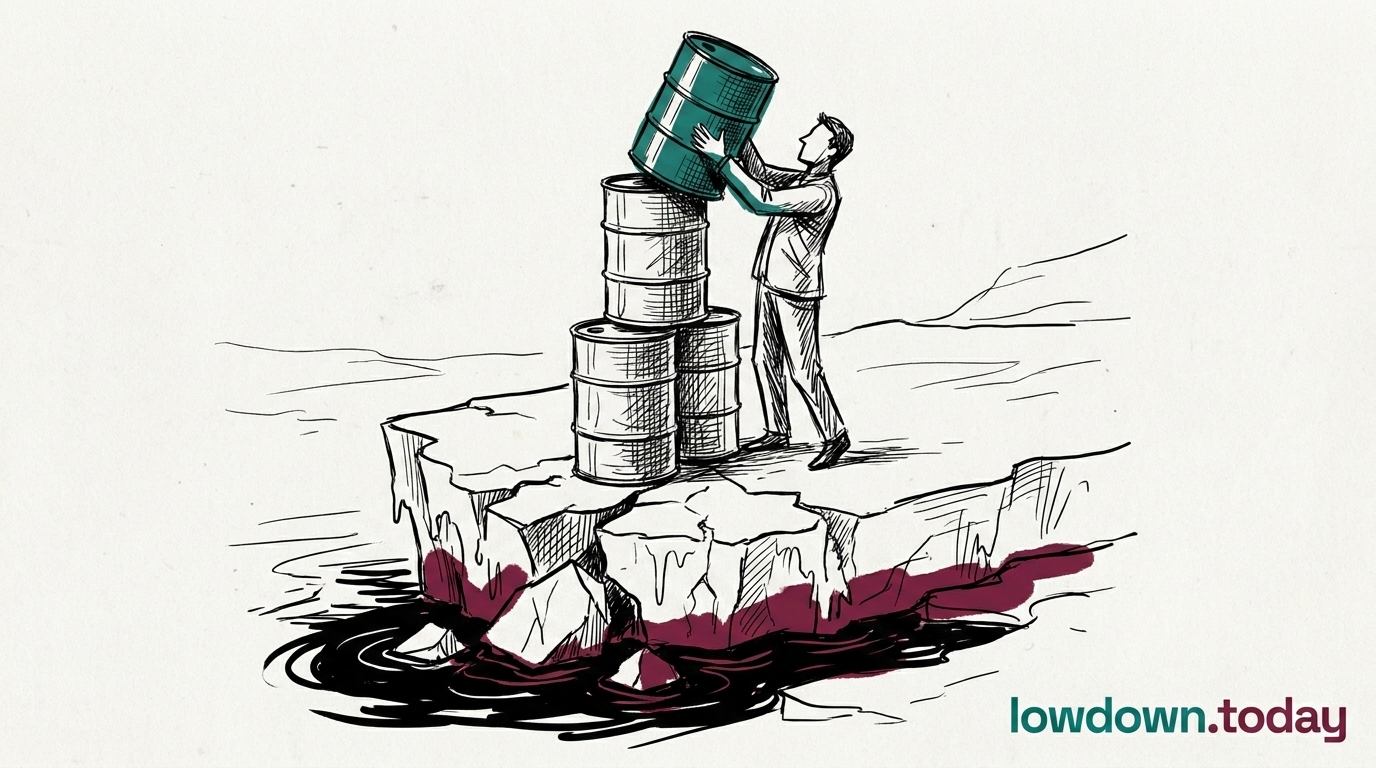
OFAC issued Russia General License 55F on Thursday 11 June, extending Sakhalin-2 LNG services for Japan. The licence it chose to roll, and the crude bridge it did not, signals which Russia tracks Washington will keep open.

EconomicDeveloping
Key takeaway

OFAC extended a Russian gas licence for Japan while declining to roll the crude cover lapsing days later.

OFAC, the US Treasury's sanctions bureau, issued Russia General License 55F on Thursday 11 June, extending the services authorisation for Sakhalin-2, the Russian liquefied natural gas project in the Far East where Japan is a primary off-take customer 1. The licence runs on the Russia programme but a separate track from the GL 134 series that covers Russian-crude vessel services, and it is not a bridge or rollover for the crude cover that lapses days later.

The signal sits in what OFAC rolled versus what it left. Treasury extended a gas licence for an allied buyer at the same moment Rubio had set the crude waivers on a path to end . Each Russia track now carries its own calendar and its own political weight: Sakhalin-2 LNG stays inside the perimeter because Japan needs the molecules, while the seaborne-crude cover is allowed to run to its edge. The contrast turns the crude lapse into a deliberate choice rather than a paperwork stumble, which is what the desk needs when it prices the marginal Russian barrel into Mediterranean refining margins.


Deep Analysis

In plain English

Sakhalin-2 is a large natural gas project on an island off Russia's east coast, called Sakhalin. Japan buys a big share of the gas it produces, because Japan has almost no domestic energy sources and relies heavily on imports. After Russia's invasion of Ukraine, the US applied broad sanctions on Russian energy, but it repeatedly made an exception for Sakhalin-2, because cutting off Japan's supply abruptly would cause serious problems: power cuts and economic disruption in one of the world's largest economies. The latest version of that exception, called General License 55F, was issued on 11 June 2026. What made this notable is what it was not: a replacement for the expiring waiver covering Russian crude oil shipments (called GL 134C), which expires on 17 June. Some market participants wondered if the Sakhalin-2 renewal was a signal that the crude-oil waiver would also be extended. It was not. The two licences cover completely different products and different sets of companies. The US extended the gas exception for Japan but appears to be letting the oil-shipping exception expire on schedule.

Deep Analysis
Root Causes

Japan's structural energy dependency on Sakhalin-2 traces to the 2011 Fukushima disaster. The nuclear shutdown that followed eliminated roughly 30% of Japan's baseload electricity capacity overnight, forcing a pivot to LNG-fired gas-turbine generation.

Japan signed long-term Sakhalin-2 off-take contracts through its major utilities (JERA, Tokyo Gas, Osaka Gas) on 20-year tenors in the 2013-2015 window, precisely because post-Fukushima demand made them price-takers. By 2026, those contracts still represent roughly 8-9% of Japan's total LNG import volume, with no alternative supply at equivalent delivered cost available on the timeline a hard lapse would require.

The legal distinction between GL 55 (Sakhalin-2 services) and GL 134 (Russian crude vessel services) runs through the definition of the sanctioned activity. GL 134's bite rests on covering vessel insurance, brokerage, and port services on crude shipments: a broad and commercially critical set of services.

Sakhalin-2's GL 55 carve-out covers equity-participation services and LNG cargo services for a specific project, a narrower authorisation that OFAC can defend as project-specific rather than commodity-class. The UK's Starmer government used an analogous narrow framing in May 2026 when it eased sanctions to permit third-country-refined Russian crude imports, a pattern of narrow product-specific exemptions that protect a specific supply node without conceding the broader principle.

The absence of GL 134D is therefore not contradicted by GL 55F: one is a programme-specific renewal in a track that has never faced wind-down pressure; the other is the end-stage of a tightening series where the political signal (Rubio, ) and the structural logic both point to lapse.

What could happen next?
  • Precedent

    GL 55F's renewal alongside GL 134C's lapse confirms OFAC's multi-track enforcement architecture: programme-specific carve-outs for energy-security dependencies survive while commodity-class waivers tighten. Any G7 partner with a documented alternative-supply gap can in principle negotiate a GL 55-style exemption, weakening the uniform-pressure intent of the broader Russia sanctions regime.

    Medium term · Assessed
  • Consequence

    Japan retains Sakhalin-2 access under GL 55F but gains no crude-service cover from it. Japanese refiners importing Russian crude on shadow-fleet vessels remain outside the GL 134C umbrella and face the same enforcement exposure as any other buyer after 17 June.

    Immediate · Reported
  • Risk

    Sinopec Research Institute's coalition-asymmetry reading, if adopted by Chinese policymakers, could reduce Beijing's cooperation on Iran nuclear talks (where China holds material leverage), if Beijing concludes the G7 applies maximum pressure on China-adjacent trade flows (crude) while protecting Japan-adjacent ones (LNG).

    Medium term · Suggested
First Reported In

Update #8 · Longs rebuilt into an 8-week Brent low

OFAC· 15 Jun 2026
Read original
Causes and effects
This Event
OFAC rolls the gas, not the crude
OFAC's willingness to extend an adjacent gas licence while declining a crude rollover shows the 17 June lapse is a deliberate choice, not a procedural gap.
Different Perspectives
Money managers
Money managers
Managed money rebuilt a dual crude net-long in the week to 9 June at entries $5-6 above the 12 June close; the 20 June print will show whether the flush ran. The RBOB long (+64,125 contracts) adds crack-compression exposure if crude overshoots lower before the product position unwinds.
OPEC+ / Saudi Arabia
OPEC's June MOMR cut 2026 demand growth to 970kbd for a third successive month; the 7 June ministerial added a third 188kbd July increment into a 37-year output low. Saudi Arabia's $108-111 fiscal breakeven sits above both the current Brent screen and the EIA's $79 2027 forecast, meaning Riyadh absorbs revenue pain to hold market share.
United States / OFAC
OFAC's 11 June issuance of GL 55F for Sakhalin-2 while declining to publish GL 134D signals a deliberate commodity-class split: gas licences for allied energy dependencies renewed; crude-vessel services allowed to run to lapse. Secretary Rubio's earlier statement (ID:4009) set the political intention; GL 55F confirms the architecture rather than contradicting it.
European Commission
European Commission
Brussels proposed the 21st package on 9 June to lock the $44.10 cap before the 15 July formula review auto-lifts it; Malta and Greece's block on the maritime-services ban risks delaying adoption past that deadline. A failed freeze converts the EU's primary revenue constraint on Russian oil into a decorative mechanism for H2 2026.
Russia
Russia
GL 134C's lapse on 17 June removes Western insurance cover from the fraction of Russian seaborne crude still routed through European P&I clubs, tightening placement at commercial terms. A 15 July cap review lifting the ceiling from $44.10 toward ~$75 would restore ~$93 million per day in export earnings at 3mbd, partly offsetting the vessel-services squeeze.
European Commission / EU energy regulators
The EU 21st sanctions package, announced 26 May, targets shadow-fleet tankers and banks but has not accelerated a resolution of the ISAB ownership question. A 27 June GL 131F lapse without OFAC issuing a transaction licence creates a supply-security problem for Med products that Brussels cannot solve unilaterally.



