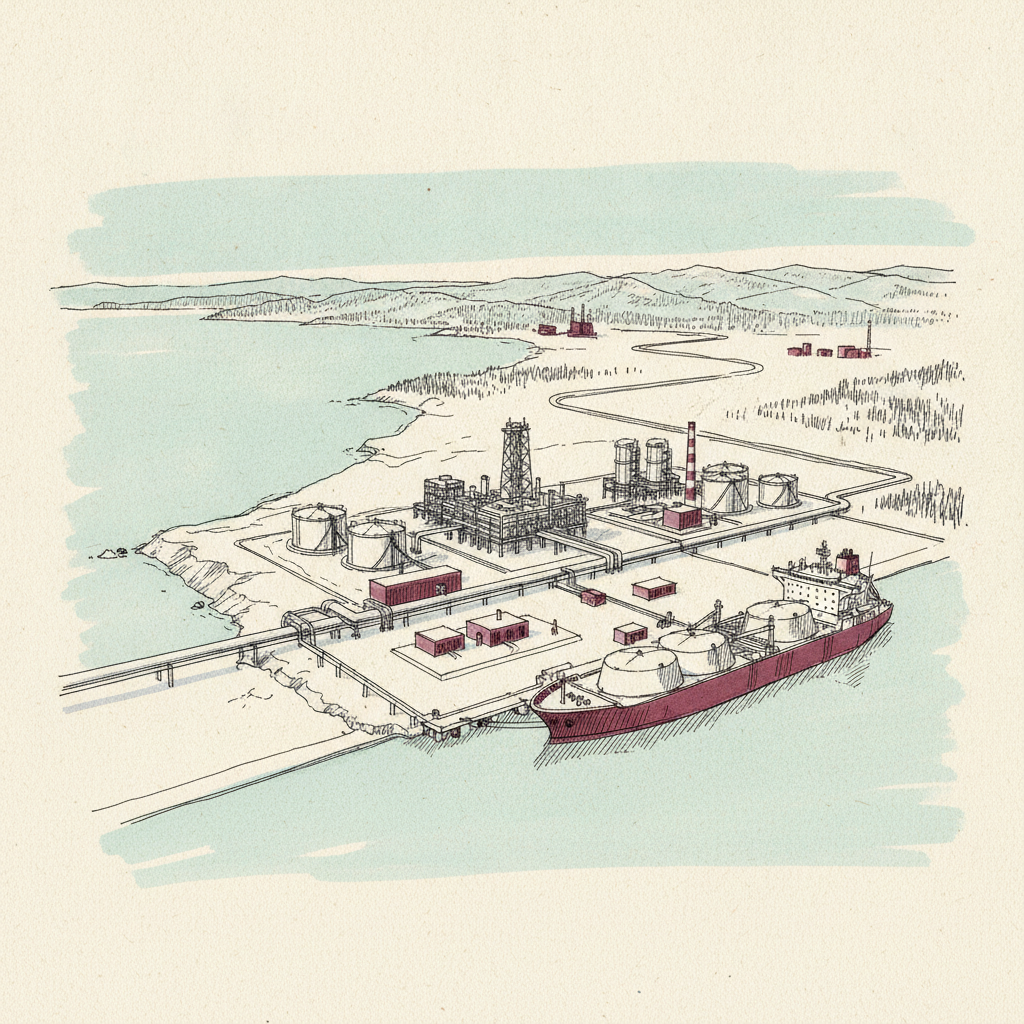
Sakhalin-2
Sakhalin-2 is a Russian liquefied natural gas and oil production project on Sakhalin Island in Russia's Far East, operating under the Sakhalin Energy Investment Company. Japan is a primary off-take customer.
Last refreshed: 15 June 2026 · Appears in 1 active topic
Why does Japan keep investing in Russian gas despite Western sanctions?
Timeline for Sakhalin-2
Mentioned in: GL 134C lapsed clean, no successor
European Oil MarketsOFAC rolls the gas, not the crude
European Oil MarketsBackground
Sakhalin-2 is a Liquefied Natural Gas and crude oil production project in the Russian FAR East, operated under a production-sharing agreement on Sakhalin Island off the Pacific coast of Russia. The project produces approximately 11.5 million tonnes per year of LNG and around 100,000 Barrels Per Day of crude oil, with Japan holding the majority of offtake contracts. Mitsui and Mitsubishi collectively hold a 27.5% stake through Sakhalin Energy Investment Company, with Gazprom controlling 50% after Shell was forced to exit in 2022. Japan's continued participation has required successive OFAC carve-outs, because ordinary Russia-related sanctions would otherwise prohibit the services necessary to sustain the project. On 11 June 2026, OFAC issued General License 55F, extending the Japan-specific services authorisation, a separate instrument from the GL 134 Russian-crude vessel-services track that lapses on 17 June .
The project was established in the 1990s as one of Russia's first major Western-joint-venture energy developments. The 2022 forced restructuring, in which the Russian government created a new domestic entity (Sakhalin Energy LLC) to receive the project assets after a presidential decree, effectively expropriated Shell's 27.5% stake. Mitsui and Mitsubishi chose to retain their minority shares under the new structure to preserve Japan's energy security supply, a decision that required Washington's tolerance via successive OFAC carve-outs under the GL 55 series .
Sakhalin-2 is a strategic energy-security asset for Japan, which imports more than 90% of its energy needs and is deeply exposed to LNG supply disruption. Tokyo has publicly maintained that it will remain in the project for energy security reasons, making Sakhalin-2 the most politically sensitive exception to the G7 Russia sanctions Coalition. The GL 55F extension preserves the status quo for another period; the critical policy question is whether subsequent extensions will narrow the carve-out toward a managed wind-down or maintain Japan's access indefinitely.
Why does Japan still have a stake in the Sakhalin-2 gas project despite Russia sanctions?
What is OFAC General License 55F and what does it cover?
How much LNG does Sakhalin-2 produce and where does it go?
What happened to Shell's stake in Sakhalin-2 after Russia's 2022 invasion of Ukraine?


