Skip to content
You can now search across every topic, entity and event.What's new
European Oil Markets
4JUN

Trump floats leaving NATO after rebuff

3 min read
10:20UTC

After every ally he named for a Strait of Hormuz escort coalition formally refused, Trump said leaving NATO is 'something to think about.' Germany's foreign minister answered for the continent: 'We will not participate in this conflict.'

EconomicDeveloping
Key takeaway

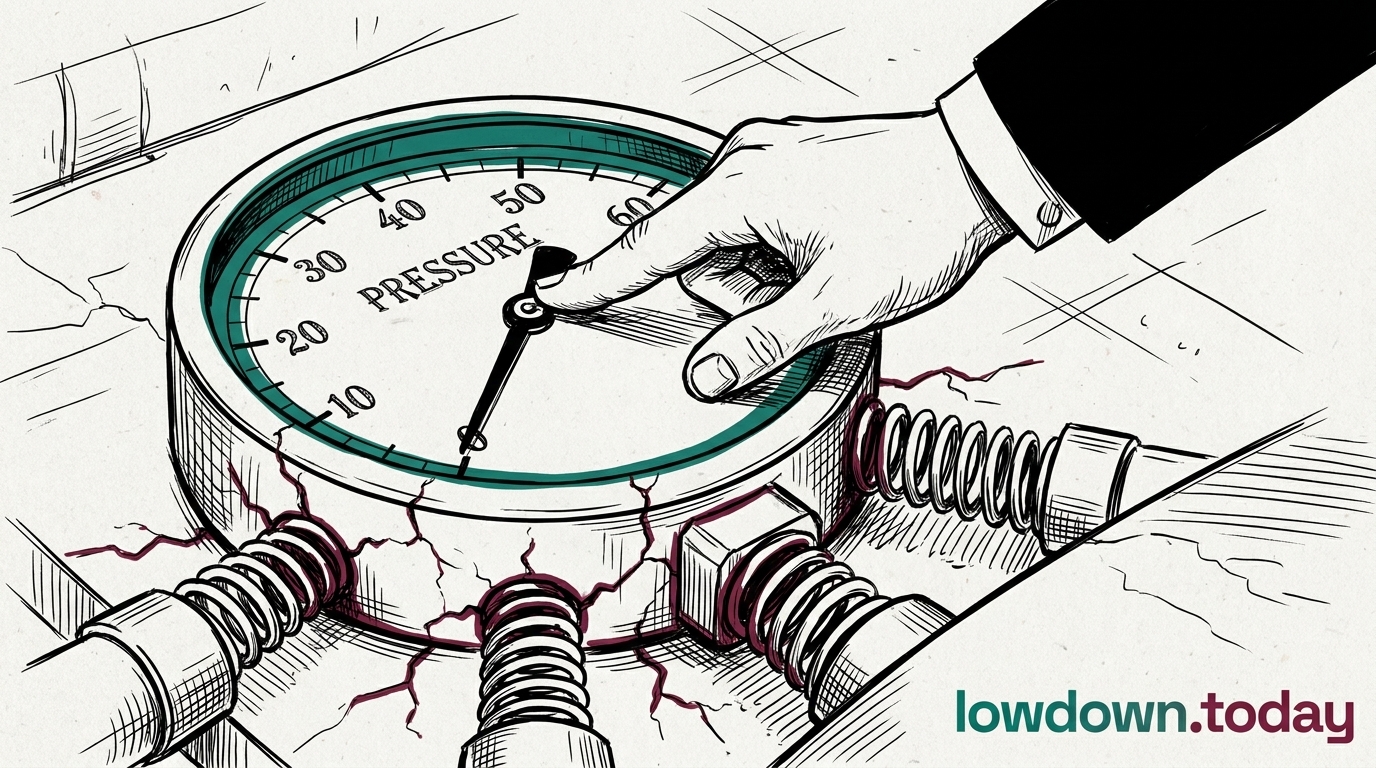
Trump has exhausted both the NATO lever and the China lever without producing compliance, leaving no visible diplomatic middle option.

Trump said leaving NATO is "something to think about" after Australia, Japan, the United Kingdom, Germany, and France — every country he named for a Strait of Hormuz escort coalition — formally declined to send warships 1. He warned the Alliance faces a "very bad future." Germany's foreign minister responded: "We will not participate in this conflict" 2.

The threat came one day after Trump warned he might delay his summit with Xi Jinping over Hormuz , and three days after all five named allies formally refused his escort call . Three leverage attempts — against European allies, against China, against NATO as an institution — have produced zero warship commitments.

Trump questioned NATO's value during his first term, but those threats concerned burden-sharing within a shared strategic framework. Allied capitals are refusing Hormuz duty not out of free-riding but because they regard the campaign against Iran as an American choice they had no part in making. Five of them said as much when they jointly opposed Israel's ground offensive in Lebanon — the sharpest Western diplomatic break with Israel since the war began.

The practical consequence: the strait of Hormuz stays closed. US Navy officials described it as an Iranian "kill box" with more than 300 ships stranded . Energy Secretary Wright acknowledged the US is "simply not ready" for escorts . Without allied warships, Washington must degrade Iran's maritime threat enough to escort tankers alone — on no stated timeline — or accept that 20% of the world's seaborne oil stays blocked. Threatening to leave NATO does not produce frigates.


Deep Analysis

In plain English

The US asked its European NATO allies to join a naval patrol protecting oil tankers in the Strait of Hormuz — a critical chokepoint for global energy supplies. Every ally refused. Trump responded by suggesting the US might leave NATO entirely. NATO is the 75-year military pact that guarantees European security. The threat is partly frustration, partly negotiating tactic. But even an idle threat reshapes how European governments plan: they now have to build defences assuming US backing may not be permanent, which costs money and changes how the whole Western security system works.

Deep Analysis
Synthesis

The simultaneous failures of the NATO lever and the Xi/China lever — Trump has now publicly threatened both relationships without extracting compliance — suggests the administration has exhausted its primary coercive diplomatic tools. Having made both threats publicly, the next move is either concession or further unilateral action; there is no face-saving middle diplomatic option remaining without one of the threatened parties reversing course.

Root Causes

The structural divergence is rooted in treaty scope: European economies depend on Gulf energy stability but face no Article 5 obligation to support offensive operations in third-party conflicts. Allies calculate that participation exposes them to Iranian retaliation — port closures, cyber attacks, energy disruption — with no binding legal requirement to follow the US into an elective war it launched without NATO consultation.

What could happen next?
1 precedent1 consequence2 risk1 opportunity
  • Precedent

    First explicit presidential threat to leave NATO during an active military operation the alliance formally declined to join.

    Immediate · Assessed
  • Consequence

    European governments will accelerate autonomous defence planning regardless of whether Trump follows through, as the threat itself demonstrates the credibility gap.

    Short term · Assessed
  • Risk

    NATO credibility erosion may create a window for Russian opportunism in Eastern Europe while Western political and military attention is concentrated on the Gulf theatre.

    Medium term · Suggested
  • Risk

    China may calculate that a US-NATO fracture reduces the cost of pressure on Taiwan, particularly if the US military is simultaneously engaged in the Gulf.

    Medium term · Suggested
  • Opportunity

    European defence industrial base expansion accelerates, potentially reducing long-term dependence on US systems and creating a more autonomous European security capacity.

    Long term · Suggested
First Reported In

Update #40 · Larijani dead; Israel hunts the new leader

PBS· 18 Mar 2026
Read original
Different Perspectives
Kuwait
Kuwait
Kuwait absorbed the Iranian strike that knocked generating units offline at a combined power-and-desalination plant on 17 July, the event that finally moved freight and insurance in lockstep with Brent. The strike hit essential civilian infrastructure, not a trading desk's benchmark.
Asian buyers (Singapore)
Singapore's middle distillates rose 12% month-to-date to 8.91m barrels and fuel oil passed 19m barrels on a 105% net-import surge, buyers retaining barrels as the East-West arbitrage window narrows. Cargoes are being stockpiled ahead of further Hormuz-driven freight repricing rather than released west.
Austria (Coreper holdout)
Vienna is blocking the same package over roughly EUR 2bn of frozen Russian assets earmarked for Raiffeisen, a domestic banking dispute with no connection to the oil cap racing toward its 23 July expiry. The linkage forces the whole package to wait on a bilateral compensation fight.
Greece (Coreper holdout)
Athens is holding the 21st sanctions package at the 22 July Coreper vote over Russian LNG re-export rights, a condition unrelated to the oil price cap itself, leaving the $44.10 freeze one day from expiry without a deal. Greece's own tanker registry gives it a direct stake in how any shadow-fleet measures are drafted.
Marine underwriters (Gulf war-risk)
Hull war-risk cover for Hormuz transits widened to a 3-10% band on 17 July with 5% the emerging norm, up from a 3-4% baseline set in late June, the first repricing in six weeks to track a flat-price move rather than lag it. Cover resets on actuarial evidence of loss, not on diplomatic or price signals.
Money managers (CFTC-tracked)
The CFTC's week-to-14-July snapshot, released 17 July, showed WTI managed-money net long collapsing 69% to 19,783 contracts and a standalone 60,141-contract net short on Brent Last Day (NYMEX). Both readings predate the Kuwait strike and the 20 July escalation, so any covering since is not yet visible in public data.