Skip to content
You can now search across every topic, entity and event.What's new
European Oil Markets
29MAY

Treasury kills $150M-a-day Russian oil waiver

4 min read
14:36UTC

Scott Bessent confirmed the at-sea crude waiver is dead against wire consensus that it would survive. Rosneft and Lukoil go back on the blocked-entity list the same afternoon.

EconomicDeveloping
Key takeaway

Treasury chose the dollar column over envoy optics, and the wires calling extension were wrong.

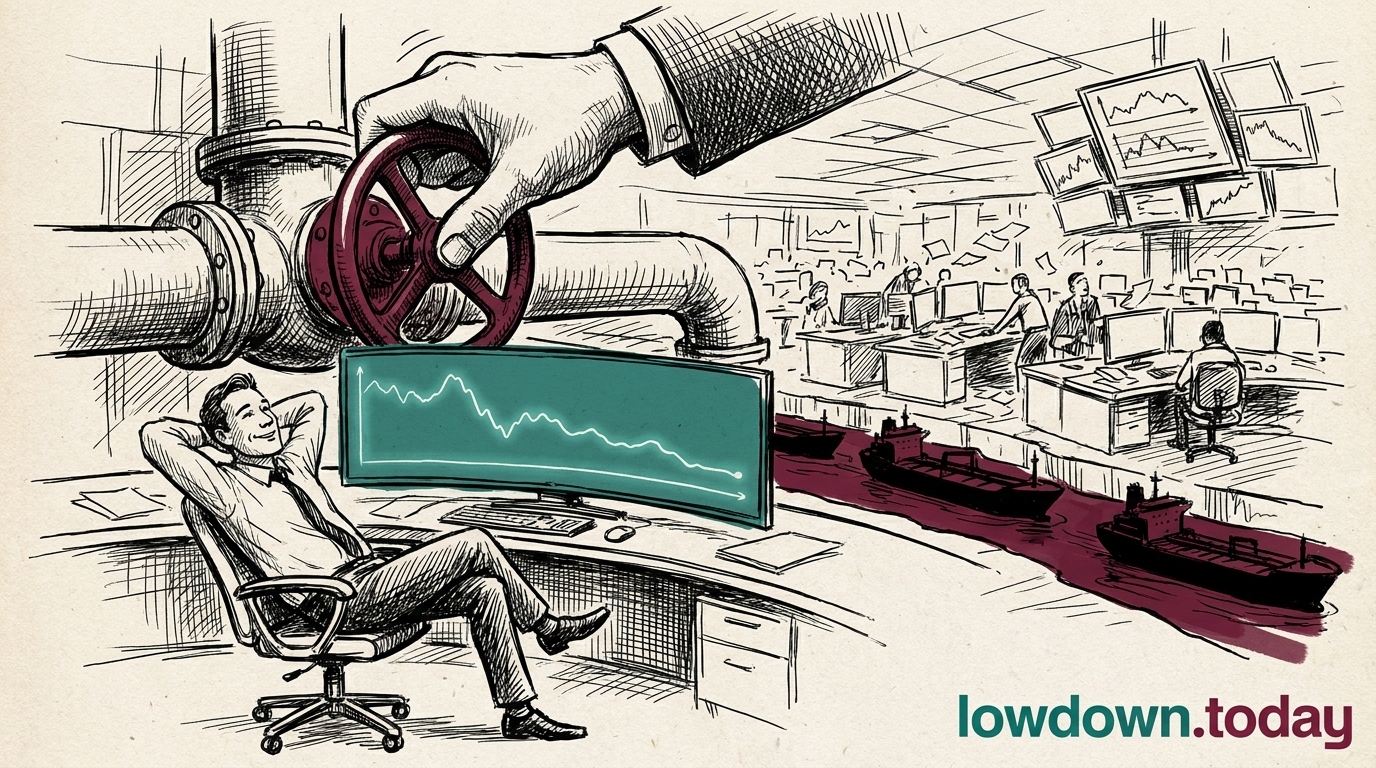
US Treasury Secretary Scott Bessent confirmed at a White House briefing on 16 April that General License 134A, the OFAC (Office of Foreign Assets Control) waiver covering Russian crude loaded before 12 March, will not be renewed. "We will not be renewing the general license on Russian oil, and we will not be renewing the general license on Iranian oil," Bessent said. The waiver had expired on 11 April with Reuters, Semafor and Bloomberg pointing to extension. Treasury paired the non-renewal with a coordinated US, UK and EU redesignation of Rosneft and Lukoil under the SDN (Specially Designated Nationals) list, and a statement calling for "an immediate ceasefire."

The dollar figure is the point. At $121 Urals the waiver was handing Moscow roughly $150 million a day against the $73 barrel design price the sanctions architecture was built around . That is a 2.6x inversion: a waiver intended as a market-stabilisation tool was running as a windfall the price cap was built to prevent. OFAC granted Lukoil's non-Russian retail network, some 2,000 forecourts across Europe, the Middle East and the United States, a wind-down exemption to 29 October, and gave the Lukoil Neftochim Burgas refinery in Bulgaria a separate operational licence. Asian refiners led by India and the Philippines had lobbied openly for GL 134A to continue; the non-renewal landed against their lobbying.

The enforcement test now runs through the wind-down dates, not the press release. A six-month Lukoil retail grace period lets European and US forecourts liquidate inventory before the cliff falls in October. Shorter, unpublished licences for non-retail operations will appear in OFAC guidance over the coming weeks and are the measurable portion of the revenue cut. Whether GL 134A died as a deliberate Trump policy turn or as the only available answer to a 2.6x Urals-to-design-price inversion is a question about motive; the coordinated redesignation is the dated fact.


Deep Analysis

In plain English

Russia earns most of its war funding from selling oil. In March 2026, the US Treasury gave buyers a temporary permission slip, called a general licence, to keep buying Russian crude that was already loaded onto ships. This was meant to prevent a sudden oil price spike after the Iran war disrupted supply. The problem: oil prices rose sharply, meaning Russia was now earning far more per barrel than anyone expected when the permission was granted. On 16 April, US Treasury Secretary Scott Bessent announced the permission slip would not be renewed. At the same time, the US, UK, and EU placed Russia's two biggest oil companies, Rosneft and Lukoil, back on a blacklist, meaning most international banks and buyers face legal risk doing business with them. The combined effect is that Russia loses a major daily income stream just as its war costs are rising.

Deep Analysis
Root Causes

GL 134A's core structural problem was issuing a blanket volume waiver when the price variable was untethered. The original March 2026 licence was defensible: Urals was trading near $73, Hormuz disruption risk justified stabilisation, and the 124 million barrels at sea were stranded rather than newly exported. The instrument was calibrated for a price environment that evaporated within three weeks.

The secondary cause is institutional. OFAC's general licence toolkit was designed for narrow humanitarian and technical use cases, not for real-time oil price management across 124 million barrels. Treasury did not include a price escalator clause or a cap, which would have automatically triggered review at a defined Urals threshold. That omission converted a temporary stabilisation measure into an open-ended subsidy as price moved.

A third structural driver: the coordinated US-UK-EU redesignation of Rosneft and Lukoil on the same day as GL 134A non-renewal signals the action was pre-planned across three jurisdictions, not improvised. That coordination timeline implies Treasury knew by at least early April that non-renewal was the outcome, yet continued signalling extension publicly. The gap between private planning and public messaging is its own governance failure.

What could happen next?
  • Consequence

    Asian refiners holding Rosneft/Lukoil delivery contracts face a spot-sourcing scramble as SDN exposure risk crystallises before the wind-down deadline.

    Immediate · 0.82
  • Risk

    China and India may accelerate bilateral rouble-yuan and rouble-rupee oil settlement mechanisms to insulate future Russian crude purchases from OFAC reach.

    Short term · 0.71
  • Consequence

    Russia's monthly oil budget receipts fall by an estimated $3-4.5 billion, compressing the fiscal buffer that has kept the National Wealth Fund solvent.

    Short term · 0.78
  • Precedent

    Non-renewal of a general licence over a market price anomaly, rather than a policy breach, establishes that OFAC can revoke stabilisation instruments unilaterally, changing how non-Western buyers model US sanctions reliability.

    Long term · 0.76
First Reported In

Update #13 · Treasury kills the Russian crude waiver

Interfax Ukraine· 16 Apr 2026
Read original
Different Perspectives
Indian refiners
Indian refiners
Indian refiners kept lifting discounted Urals as the India/Baltic price split widened past $9-10 a barrel, a gap that only grows as GL X1's Iranian wind-down cuts an alternative discounted grade off the market by 17 July. Cheaper Russian feedstock is being locked in while it lasts.
Chinese refiners
Chinese refiners
Chinese refiners gain leverage as the Urals-Brent discount widens, since Beijing's state buyers already source discounted Russian barrels near the fiscal floor unaffected by Western insurance costs. A wider discount, if it holds past 23 July, lets them lock in cheaper term contracts regardless of the cap's outcome.
US money managers (CFTC-tracked)
Managed money trimmed WTI net length into the rally, positioning that reflects doubt the Hormuz premium survives without freight or war-risk confirmation. The Brent-WTI spread widening almost entirely on the Brent leg supports that scepticism about a broad-based repricing.
OPEC+ (Saudi-led subgroup)
Saudi Arabia is defending market share through a fourth straight 188kbd August hike even as OPEC's own July MOMR cut 2026 demand growth for the fourth consecutive month. At a $108-111 fiscal breakeven, every added barrel costs Riyadh revenue it cannot recoup, so the hike reads as a positioning signal, not a demand bet.
Greek shipping registries
Greece, backed by Cyprus and Malta, is pushing a three-month cap-freeze compromise against the Commission's freeze to January 2027 ahead of the 23 July vote. Athens' and Valletta's combined tanker registrations mean a shorter review gives their insurers more frequent chances to reprice risk on Russian cargoes.
Russia (Deputy PM Alexander Novak)
Novak extended the diesel export restriction to producers on 8 July, the first producer-binding curb of the war, protecting the domestic pump price ahead of any refinery repair timeline. Urals still trades below Russia's $59 budget floor even as Brent gained, so the ban trades export revenue for fiscal stability at home.