Skip to content
You can now search across every topic, entity and event.What's new
European Oil Markets
23JUL

Iran War Hands Russia an Unexpected Oil Windfall

2 min read
19:27UTC

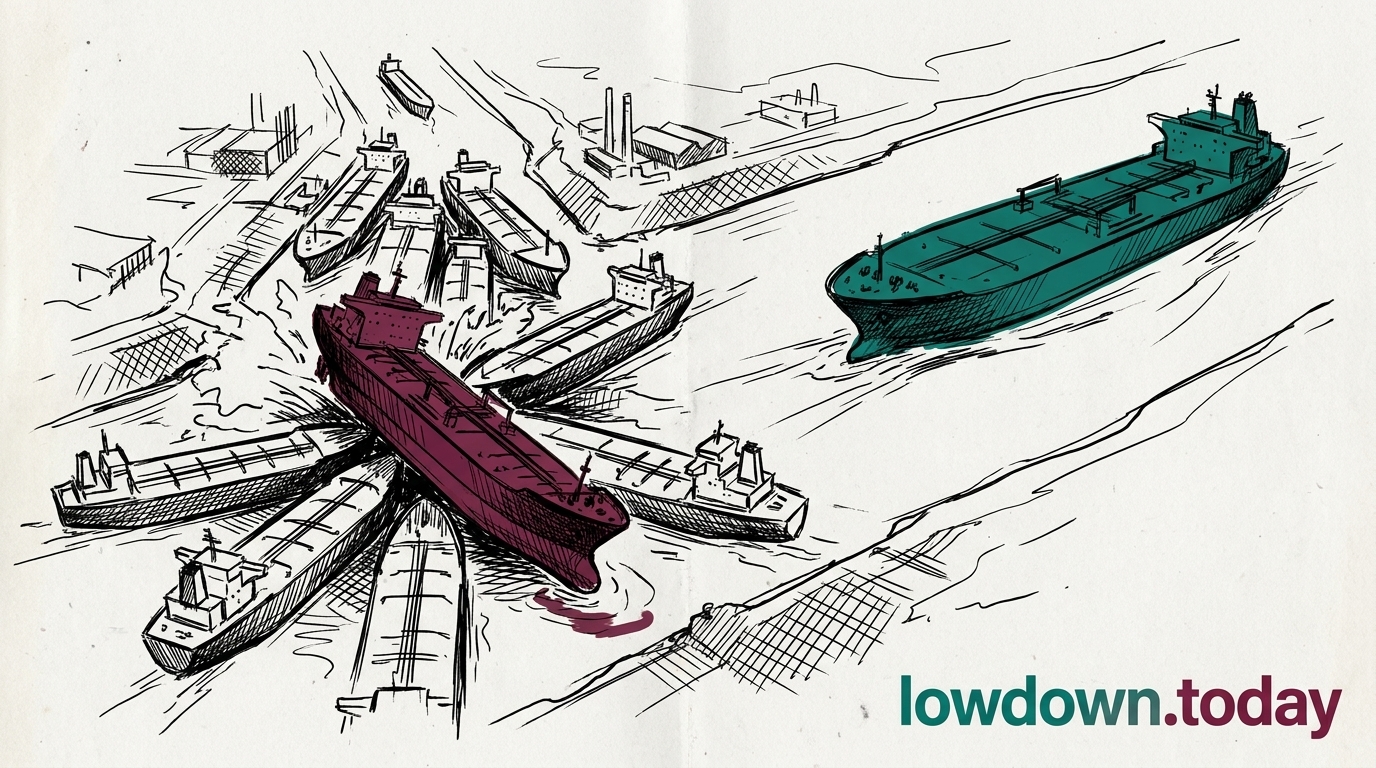
Ukraine's Baltic port strikes cut Russian crude exports by 43%, but the Iran war more than doubled the per-barrel price, projecting a 70% April revenue jump over March.

EconomicDeveloping
Key takeaway

Iran war doubled the per-barrel price, creating a net Russian windfall only sustained Baltic disruption can reverse.

Urals crude reached $123.45 per barrel on 3 April, more than double Russia's $59 budget assumption and nearly triple the January average. The cause is not Russian strength; it is the Iran war, which disrupted Gulf supplies and dragged global benchmarks upward.

Ukraine's Baltic drone campaign inflicted genuine physical damage: 15 tankers did not sail, weekly revenue fell by roughly $1 billion, and Primorsk lost 40% of storage capacity. But the Iran war has separated price from volume in a way the infrastructure campaign cannot control. At $123 per barrel, Russia earns approximately $64 more per barrel than its budget assumed. The G7 price cap of $44.10, enforced through insurance and shipping restrictions, is arithmetically irrelevant. CREA data shows 68% of Russian seaborne crude was already on sanctioned shadow tankers before the surge, meaning the enforcement architecture cannot reach two-thirds of exports even in normal conditions.

The physical threat remains real. Both terminals are offline for petroleum products. Russia's gasoline export ban through July signals domestic storage saturation, not export preference. A refinery specialist told Reuters stockpiles would fill within days, forcing output cuts. Russia's National Wealth Fund had already lost $4.8 billion in two months , but elevated prices now mask the structural erosion.

The decisive variable is strike tempo. Ukraine must sustain Baltic attacks long enough for storage saturation to force output curtailment before Transneft completes Arctic rerouting. That window is measured in weeks, not months.


Deep Analysis

In plain English

Ukraine successfully damaged Russia's ability to ship oil from its Baltic ports, cutting shipments by nearly half. But at the same time, a separate war in the Middle East caused global oil prices to more than double. Russia now earns so much more money per barrel that it is actually making more revenue overall, even though it is selling less oil. The question is whether Ukraine can keep damaging the ports long enough that Russia's storage tanks fill up, forcing it to cut production entirely — which would hurt Russia even at high prices.

Deep Analysis
Root Causes

The Iran war is the primary external cause of the price surge — unrelated to Ukrainian or Russian strategy. Russia's shadow fleet infrastructure (built since 2022) and CREA-documented circumvention of the price cap are the enabling structural conditions allowing Moscow to realise the windfall.

Escalation

The price windfall reduces Russia's incentive to negotiate on energy infrastructure and increases Ukraine's incentive to escalate Baltic strikes. Both sides now have stronger reasons to continue the infrastructure war through April.

What could happen next?
  • Consequence

    Russia's April oil revenues may be the highest since before Western sanctions, directly funding continued war prosecution.

    Immediate · High
  • Risk

    OFAC GL 134A expires 11 April; extension at $121/barrel would hand Moscow far greater revenue per barrel than when issued at $73.

    Immediate · High
  • Consequence

    The G7 price cap enforcement architecture is rendered ineffective while Urals trades at more than double the cap level.

    Short term · High
  • Opportunity

    Forced production cuts from storage saturation would compress Russian revenues even at elevated prices — achievable if Ukraine sustains strike tempo through April.

    Short term · Medium
First Reported In

Update #11 · Russia Sells Less Oil but Earns More

Gulf News / Bloomberg / Business Standard· 5 Apr 2026
Read original
Different Perspectives
US money managers (CFTC-tracked)
US money managers had trimmed WTI net long positioning into July's rally, doubting the Hormuz premium would hold without freight or war-risk confirmation, and the crude stock build reported for the week to 17 July gives that scepticism a fundamentals basis. The 25 July CFTC data will show whether Brent's move above $100 changed their calculus.
Asian distillate buyers (Singapore)
Singapore's distillate holders kept retaining middle-distillate barrels as the East-West arbitrage window narrowed further this week, a pattern that sharpened as Fujairah light distillates hit a record low. Cargoes are being held rather than released west into the tightening Mediterranean market.
Bulgaria
Bulgaria
Bulgaria secured the removal of Lukoil founder Vagit Alekperov and Patriarch Kirill from the 21st package, with President Rumen Radev calling a personal listing 'shooting ourselves in the foot'. Sofia is protecting its position in Lukoil's EUR 3bn compensation claim over the 2023 Neftohim Burgas nationalisation.
Russia
Russia
Russia loses the roughly $14 a barrel of legal headroom the price-cap formula would have released toward $58, even as Urals continues trading below Moscow's $59 budget floor. The shadow-fleet insurance workaround that lets sanctioned crude clear above $44 in practice remains untouched by the freeze itself.
European Union
European Union
The EU adopted its 21st sanctions package on 23 July, freezing the $44 Russia oil cap for 12 months rather than letting the formula drift it toward $58, and listed shadow-fleet support vessels for the first time. The package cleared only after three failed Coreper votes.
Marine war-risk underwriters (Lloyd's-linked syndicates)
War-risk syndicates lifted southern Red Sea hull premiums 150% to about 0.75% of hull value after the 20 July blockade declaration, still a seventh of the roughly 5% Hormuz band. Underwriters reset on realised loss, not declared threat, so the 23 July Encelia and Layla strikes set up the next re-mark.