Russia oil price cap
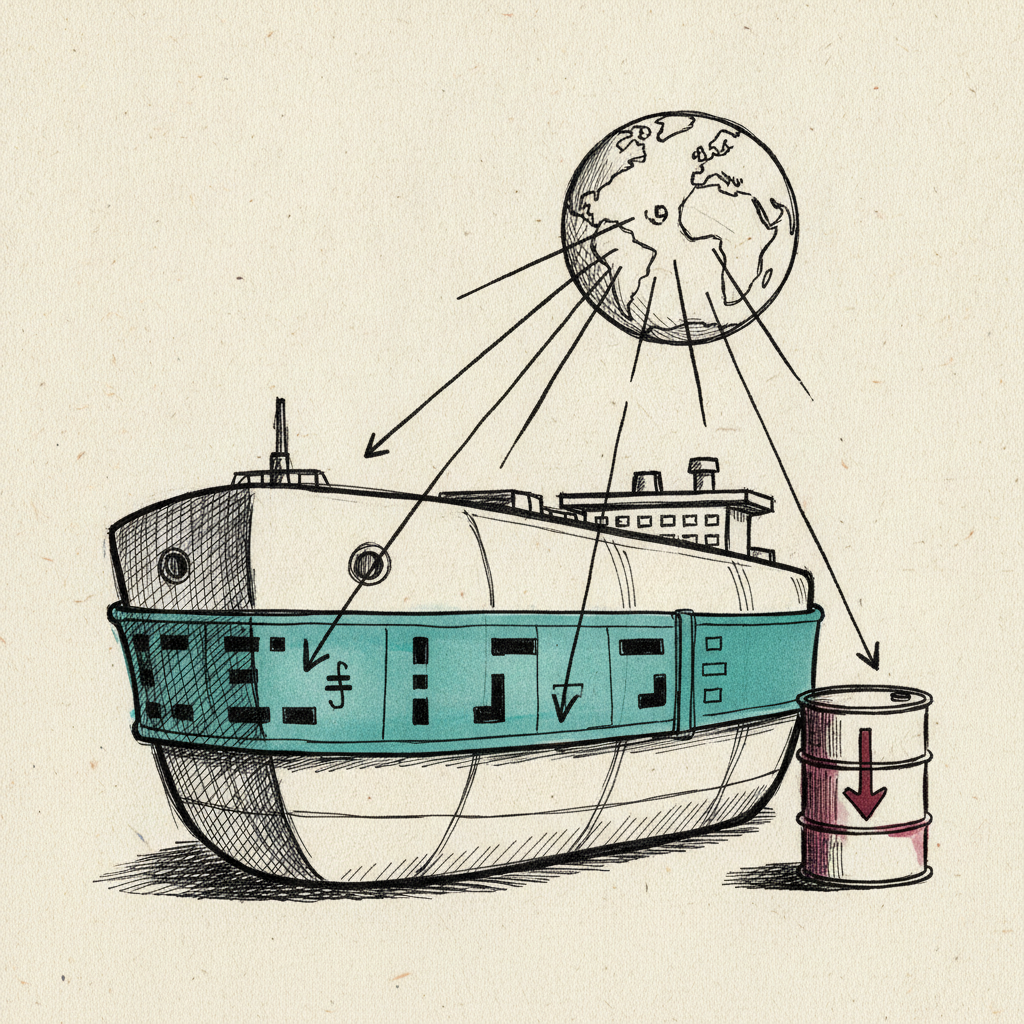
$44.10-a-barrel G7/EU ceiling barring Western shipping, insurance and finance on pricier Russian crude.
The Russia oil price cap sits at $44.10 a barrel after EU ambassadors froze it for one week to 23 July 2026, timed to a Coreper vote on the 21st sanctions package set for 22 July, itself blocked by six member states over unrelated demands.
Last refreshed: 20 July 2026 · Appears in 1 active topic
Six states are blocking a sanctions vote; does the $44.10 oil cap survive the week?
Timeline for Russia oil price cap
EU freezes $44 Russia oil cap 12 months
European Oil MarketsFaced a freeze expiry on 23 July absent a package vote
European Oil Markets: Six states hold the 22 July Coreper voteMentioned in: EU freezes Russia oil cap for a week
European Oil MarketsMentioned in: EU targets shadow fleet's service layer
European Oil MarketsMentioned in: EU moves to freeze the $44 cap
European Oil MarketsBackground
The Russia oil price cap stands at $44.10 a barrel after EU ambassadors froze the level for one week to 23 July 2026, timed to a Coreper vote on the 21st sanctions package set for 22 July. Six member states, Greece, Germany, France, Italy, Austria and Portugal, are each blocking that package over a separate, unrelated demand rather than any objection to the cap itself.
Introduced by the G7 and EU in December 2022, the mechanism bars Western shipping, insurance and financial services from handling Russian seaborne crude sold above the ceiling. It runs on a dynamic formula, set 15% below a rolling average of Urals crude rather than Brent, so the dollar figure moves as Urals prices move and is reviewed roughly every six months.
Because enforcement depends on Western insurers and shippers refusing to service above-cap cargoes, the cap's bite has always tracked how tightly the G7 and EU coordinate sanctions renewal. A stalled Coreper vote or a lapsed freeze both weaken that coordination at the same moment Lukoil-linked refinery sales are testing the wider sanctions perimeter.
Reference
How is the Russia oil price cap calculated?
What happens to the $44.10 price cap if the current freeze expires?
When does the current oil price cap freeze expire?
Why is the EU's 21st sanctions package stuck?
What is the Russia oil price cap?



Written with AI from Lowdown's published reporting. Not individually reviewed by an editor. Updated 20 July 2026. Editorial standards.