Skip to content
You can now search across every topic, entity and event.What's new
European Oil Markets
16JUL

Iran's SNSC finalises Hormuz security plan; US weapons transit barred

3 min read
09:39UTC

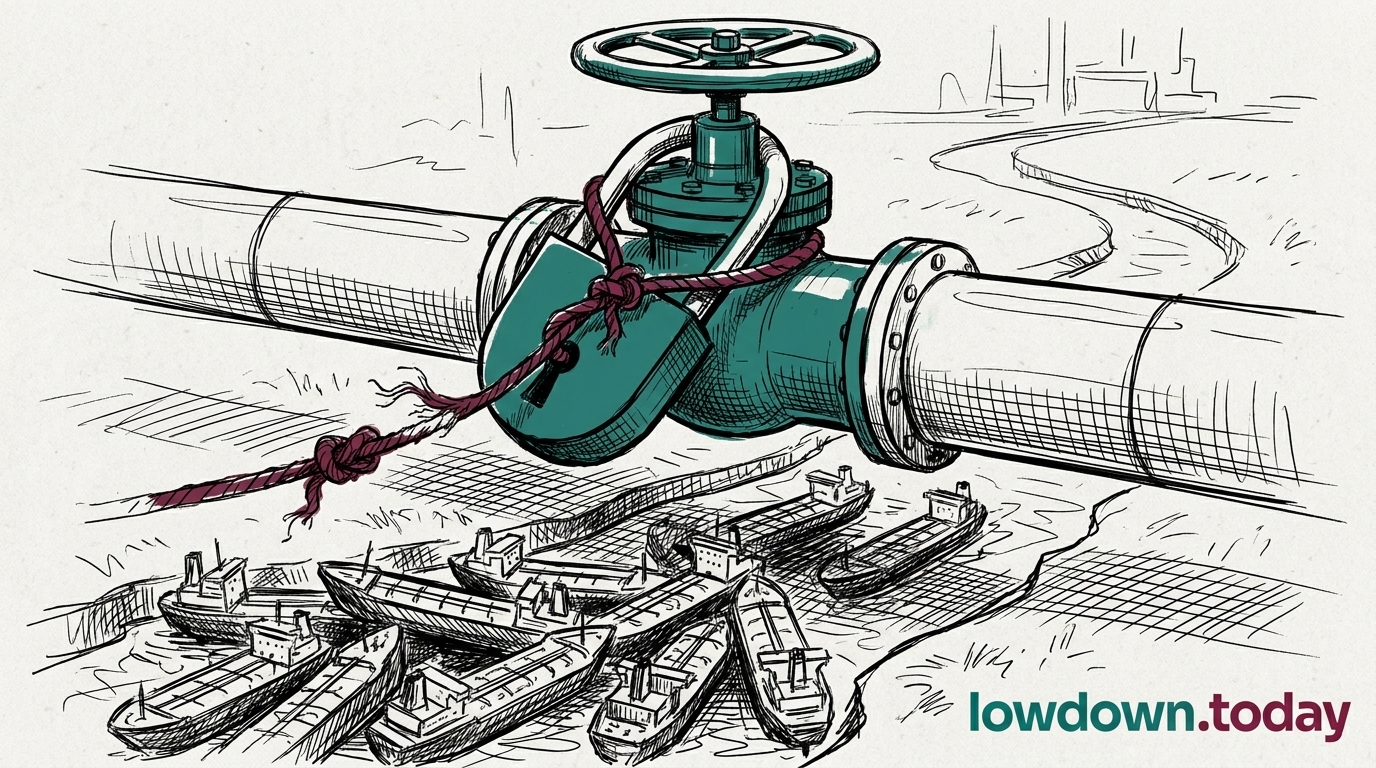
Iran's Supreme National Security Council finalised a formal Hormuz security architecture on 13 May, formalising the Persian Gulf Strait Authority's transit regime and declaring that no US weapons may pass through the strait into regional bases.

EconomicDeveloping
Key takeaway

Iran's SNSC produced written Hormuz architecture on 13 May while Trump's Beijing summit generated only verbal Iran statements.

Iran's Supreme National Security Council (SNSC, Iran's principal national security decision-making body chaired by the President) finalised a formal Hormuz security plan on 13 May, formalising the architecture Tehran began when it established the Persian Gulf Strait Authority (PGSA) in early May 1. The PGSA has required vessels to register, pay a transit toll of up to $2 million per ship in Chinese yuan, and adhere to a designated corridor since vessels began paying on 6 May . The SNSC plan converts that operational practice into a codified security framework.

The same day, Iran declared that no US weapons may transit the Strait of Hormuz (the 33 km chokepoint through which roughly 20% of global oil passes) into regional bases. This is a new operational constraint announced while Abbas Araghchi was simultaneously telling the BRICS meeting in Delhi that Iran had created no obstacles. Iran's Vice President Mokhber, First Vice President Aref, and Foreign Ministry spokesman Baqaei had declared Hormuz Iran's nuclear-equivalent strategic deterrent on 9 May , establishing the doctrinal framework the SNSC plan now operationalises.

The contrast with the US output on 13-14 May is structural. Trump's delegation in Beijing produced a Commerce Department chip clearance and verbal statements on Iran. Iran's SNSC produced written security architecture with an operational component. Tehran has been consistently generating institutional written output since the PGSA registration opened ; the US presidential-actions index remains at zero Iran instruments across 76 days. Iran's diplomatic initiative belongs to the written register; America's Iran policy continues to operate in the verbal one.


Deep Analysis

In plain English

Iran's top security council took its informal Hormuz toll operation and turned it into a formal government body with written rules on 13 May. This matters because informal wartime practices can be stopped informally; a formal government institution with published rules requires a formal legal agreement to dismantle. Iran also declared it now has a law banning US weapons from passing through the strait. Both moves convert temporary war measures into permanent legal structures that will survive any ceasefire.

Deep Analysis
Root Causes

The SNSC codification serves three simultaneous purposes. First, converting a practice requiring continuous IRGC operational authority into a legal rule requiring only administrative enforcement reduces the cost of maintaining the toll regime indefinitely. Second, establishing a written legal claim against which any future ceasefire instrument must negotiate means a state body with statutory authority cannot be suspended by a verbal agreement alone.

Third, the US weapons transit ban added the same day converts a military policy into a regulatory declaration: any resumption of US weapons deliveries through the strait now constitutes a formal legal violation under Iranian domestic law, giving Tehran a codified interdiction pretext for use at a time of its choosing.

What could happen next?
  • Consequence

    Any ceasefire agreement that does not specifically address the Persian Gulf Strait Authority's legal status leaves Iran with a permanent toll-collecting institution and a legal basis for resuming the toll at any time, making the strait's reopening conditional on future Iranian administrative discretion rather than treaty obligation.

  • Risk

    The US weapons transit ban, now codified as domestic law, creates a legal tripwire: any US attempt to resupply Israeli or Gulf state military bases through the strait triggers an Iranian domestic law violation, providing Tehran with a formal legal pretext for interdiction.

First Reported In

Update #97 · Chips for Beijing, no paper for Iran

Mehr News· 14 May 2026
Read original
Causes and effects
This Event
Iran's SNSC finalises Hormuz security plan; US weapons transit barred
While the Trump administration produced verbal statements at the Beijing summit, Iran produced a written institutional security architecture on the same day, extending a pattern of Tehran outpacing Washington on formal written output that has held since the PGSA registration opened on 6 May.
Different Perspectives
Indian refiners
Indian refiners
Indian refiners kept lifting discounted Urals as the India/Baltic price split widened past $9-10 a barrel, a gap that only grows as GL X1's Iranian wind-down cuts an alternative discounted grade off the market by 17 July. Cheaper Russian feedstock is being locked in while it lasts.
Chinese refiners
Chinese refiners
Chinese refiners gain leverage as the Urals-Brent discount widens, since Beijing's state buyers already source discounted Russian barrels near the fiscal floor unaffected by Western insurance costs. A wider discount, if it holds past 23 July, lets them lock in cheaper term contracts regardless of the cap's outcome.
US money managers (CFTC-tracked)
Managed money trimmed WTI net length into the rally, positioning that reflects doubt the Hormuz premium survives without freight or war-risk confirmation. The Brent-WTI spread widening almost entirely on the Brent leg supports that scepticism about a broad-based repricing.
OPEC+ (Saudi-led subgroup)
Saudi Arabia is defending market share through a fourth straight 188kbd August hike even as OPEC's own July MOMR cut 2026 demand growth for the fourth consecutive month. At a $108-111 fiscal breakeven, every added barrel costs Riyadh revenue it cannot recoup, so the hike reads as a positioning signal, not a demand bet.
Greek shipping registries
Greece, backed by Cyprus and Malta, is pushing a three-month cap-freeze compromise against the Commission's freeze to January 2027 ahead of the 23 July vote. Athens' and Valletta's combined tanker registrations mean a shorter review gives their insurers more frequent chances to reprice risk on Russian cargoes.
Russia (Deputy PM Alexander Novak)
Novak extended the diesel export restriction to producers on 8 July, the first producer-binding curb of the war, protecting the domestic pump price ahead of any refinery repair timeline. Urals still trades below Russia's $59 budget floor even as Brent gained, so the ban trades export revenue for fiscal stability at home.