Skip to content
You can now search across every topic, entity and event.What's new
European Oil Markets
18MAY

Iran's Hormuz Toll Matures Into Permanent Institution

3 min read
17:30UTC

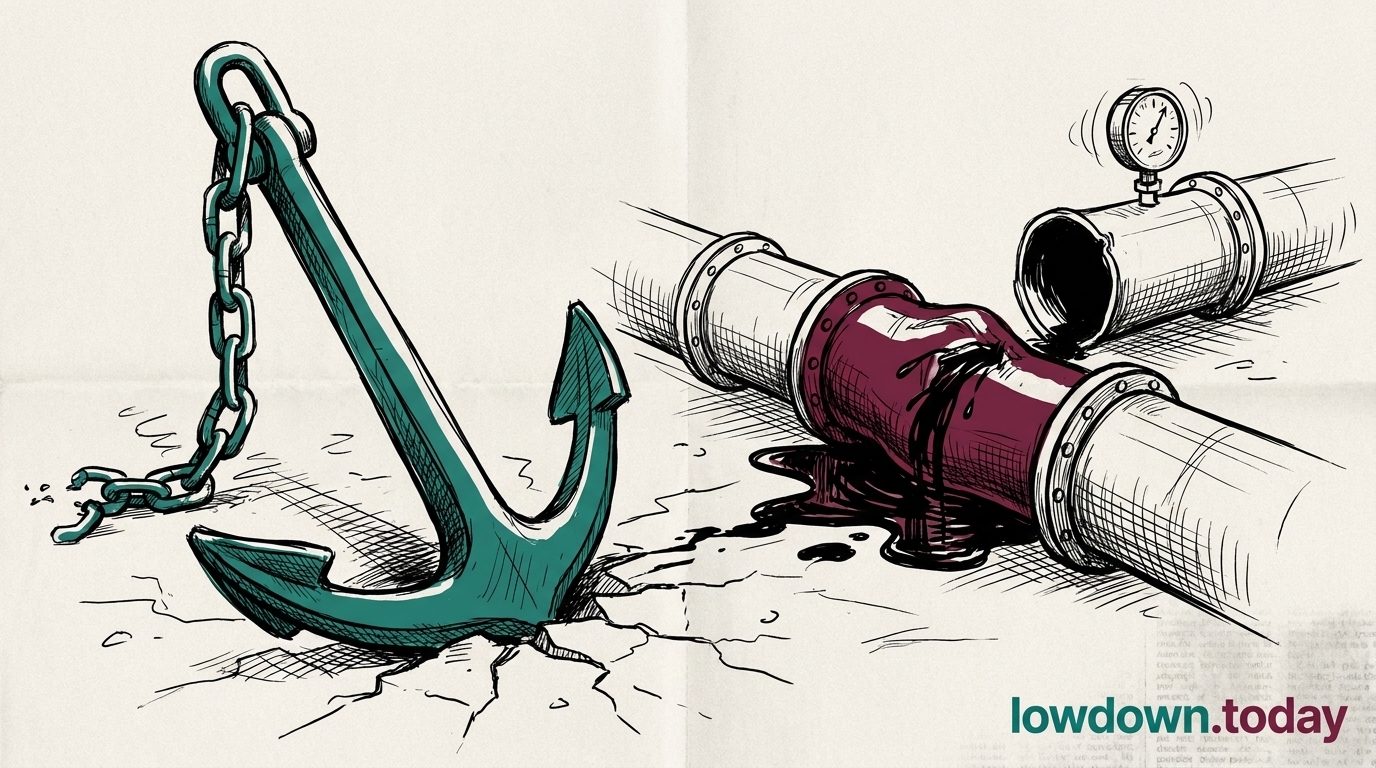
The IRGC built a customs authority, not a blockade. The infrastructure is designed for permanence, and the currency is yuan.

EconomicAssessed
Key takeaway

Iran built a customs authority, not a blockade; the infrastructure is permanent.

the strait of Hormuz toll system has matured from improvised blockade into something closer to a functioning customs authority . Claims Journal and Bloomberg detail the mechanics: $1 per barrel paid in yuan or stablecoins. A Very Large Crude Carrier carrying two million barrels pays roughly $2 million per transit.

The IRGC's Hormozgan Provincial Command runs background checks on all vessels. Five tiers of country classification determine access. Ships must raise the flag of a deal-country, broadcast passcodes over VHF radio, and receive an IRGC patrol escort through the corridor. Some vessels are required to change flag registration entirely. Pakistan has secured deals for 20 vessels.

Weekly transits have risen to 53, up from 36 the previous week, driven by bilateral exemptions: the Philippines , France, Japan , Oman, and Iraq . But pre-war volume was roughly 966 transits per week. The recovery runs through Tehran's licensing desk. Each new deal normalises Iran's sovereignty claim over international waters. Ali Vaez of the International Crisis Group assessed that Hormuz control is much more potent than even a nuclear weapon. The yuan, not the dollar, is the currency of this chokepoint.

At $1 per barrel, the IRGC's annual revenue from Hormuz tolls, if pre-war volumes resumed, would exceed $7 billion. Even at current reduced volumes, the toll generates hundreds of millions annually. The stablecoin payment option creates a sanctions-resistant financial channel. This is a new revenue stream for the IRGC that exists independently of any ceasefire agreement.


Deep Analysis

In plain English

Iran is not just blocking ships; it has built a full toll system with security checks, country rankings, and digital payments in Chinese currency. Ships pay roughly $2 million each time they pass through. This looks like a permanent operation, not a temporary war measure. It affects the price of everything that moves through the strait, which carries roughly one-fifth of global oil supply.

Deep Analysis
Root Causes

The toll system emerged from a blockade that the US threatened to break but never did (five deadline extensions).

Each unfulfilled threat gave Iran more time to institutionalise its control. The bilateral exemption pattern (Philippines, France, Japan, Oman, Iraq, Pakistan) further normalises the system by giving individual nations incentives to cooperate rather than collectively resist.

Escalation

The toll system is itself an escalation that has been normalised through repetition. Each new bilateral deal raises the cost of reversing the system. The transition from blockade to customs authority represents a permanent alteration of the maritime order in the Persian Gulf that no ceasefire framework currently addresses.

What could happen next?
  • Yuan as the currency of Hormuz transit accelerates de-dollarisation of global energy trade

    months · Assessed
  • Precedent for sovereign toll claims on international waterways could spread to other chokepoints

    years · Suggested
  • Insurance and shipping markets must price IRGC compliance costs into every Hormuz-dependent route

    weeks · Assessed
First Reported In

Update #60 · Pakistan's Ceasefire Plan Fills the Vacuum

Claims Journal / Bloomberg· 6 Apr 2026
Read original
Different Perspectives
Greek shipping registries
Flag states dominating the tanker fleet await the EU's 15 July cap-freeze vote. A formula unlock toward $75 would loosen the ceiling squeezing insurance and crewing costs on their registered hulls.
US money managers
US money managers
NYMEX WTI managed-money net long fell 23% to +64,041 in the week to 7 July, trimming length into the rally on doubt the Hormuz premium survives without freight or war-risk confirmation.
European refiners (ARA)
ARA refiners are capturing an $80/bbl US diesel crack as Russian gasoil loadings collapsed to 234kbd before Novak's 31 July export ban even bites, widening the arbitrage straight into refining margins.
OPEC+
OPEC+
The seven-member group confirmed a fourth consecutive 188kbd August hike on 5 July, defending market share even though Saudi Arabia's $108-111/bbl breakeven means every added barrel costs Riyadh revenue it cannot recoup.
Indian refiners
Indian refiners
Refiners kept lifting discounted Urals as the India/Baltic split widened past $9-10 a barrel on 7 July. A wider Urals-Brent gap means cheaper feedstock locked in against Baltic buyers.
Russia
Russia
Urals traded $48.95-55.12 on 12-13 July, below Moscow's $59 budget floor even as Brent gained $6. Oil and gas fund roughly 30% of federal revenue, and Novak's diesel export ban is rationing a shrinking export base.