Skip to content
You can now search across every topic, entity and event.What's new
European Energy Markets
18JUN

CENTCOM intercepts reach 33 in the Strait

3 min read
09:57UTC

US Central Command's cumulative vessel redirections in the Strait of Hormuz reached 33 on 25 April, up from 31 on 23 April. The diplomatic pause has not slowed the naval operation.

EconomicDeveloping
Key takeaway

CENTCOM's interdiction tempo is unchanged by the talks collapse; 33 cumulative vessel redirections and counting.

CENTCOM cumulative vessel redirections reached 33 on 25 April, up from 31 on 23 April 1. The pace stays at one to two interceptions per day; the talks pause has not slowed naval operations. CENTCOM is United States Central Command, the regional combatant command responsible for US military operations across the Middle East, Central Asia and parts of South Asia. The vessel redirections are interdictions in the Strait of Hormuz and the broader Persian Gulf under the operational tempo set early in the conflict.

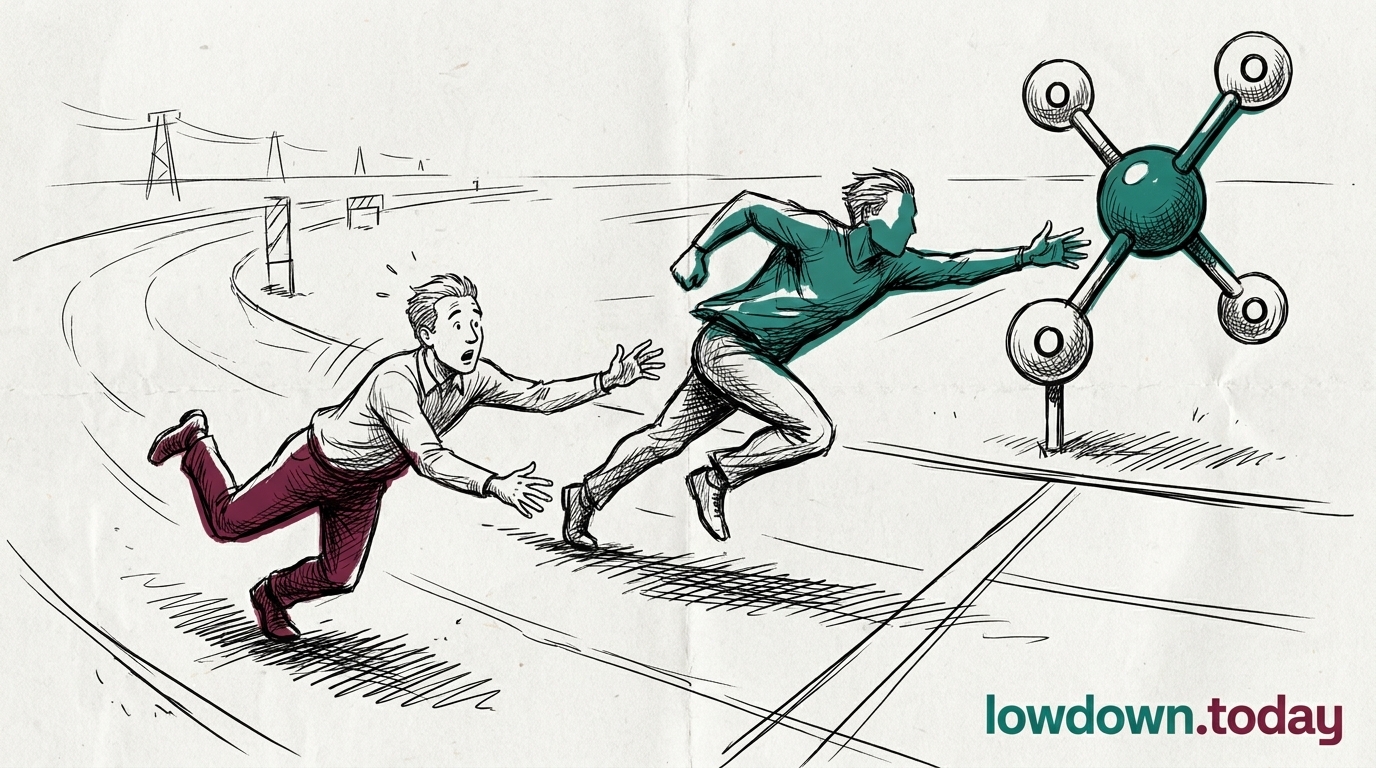
The blockade widened. Talks paused. Neither waited for the other. The pair of interceptions logged across 24 and 25 April match the pace CENTCOM held the previous week. The operation has now produced 33 cumulative redirections under a procedural framework that pre-dated both the Islamabad 3 collapse and the Cyprus EU summit, and continues without modification by either.

The operational fact matters more than its weekly variance: CENTCOM is conducting an active interdiction campaign while the National Security Council is unable to sustain a negotiation track and Treasury is producing signed paper at a faster cadence than the President. Three institutions are running on three different clocks, and the naval one is the one that touches commercial shipping insurers, the Brent forward curve, and any future ceasefire architecture that would have to integrate it.


Deep Analysis

In plain English

CENTCOM is the US military's Central Command, which oversees operations in the Middle East. As part of Operation Epic Fury, CENTCOM has been blocking Iranian vessels from leaving the Strait of Hormuz with certain cargoes, redirecting them back to Iranian ports. The cumulative count of 33 redirected vessels since the operation began tells you two things: first, that the interdiction is active and consistent, averaging about one to two vessels per day over the last few days. Second, that the ceasefire and the collapsed diplomatic talks have not slowed it down at all. CENTCOM's ships and aircraft continue interdictions on the same schedule regardless of diplomatic developments in Washington or Islamabad. That gap between military operations and diplomatic status is one of the distinctive features of this conflict: the shooting has mostly stopped, but the naval blockade that is the core economic weapon of the war has not.

Deep Analysis
Root Causes

The interdiction pace continuing through the diplomatic pause reflects a structural separation between CENTCOM's operational authority and the White House's diplomatic track.

CENTCOM's operational orders derive from the initial war authorisation and standing rules of engagement, not from daily presidential instruction. Once the interdiction framework was established in the opening weeks of Operation Epic Fury, it operates under standing orders that do not require per-vessel presidential approval.

The diplomatic collapse (Islamabad 3, WPR deadline, Truth Social modality dispute) has no effect on those standing orders unless Trump issues a new signed military directive pausing operations, which the zero-instruments pattern suggests he has not done.

What could happen next?
  • Risk

    If Iran files a case with the International Court of Justice or International Tribunal for the Law of the Sea over the interdictions, the absence of signed presidential authority for individual interceptions creates a legal vulnerability CENTCOM cannot easily defend.

First Reported In

Update #79 · Islamabad 3 collapses; Witkoff grounded, talks stall

Al Jazeera· 25 Apr 2026
Read original
Different Perspectives
Cross-border power traders
The France-Germany day-ahead spread flipped from a EUR 17.20 German premium on 1 August to a EUR 4.15 French premium on 3 August, the same day French curtailment peaked. They cannot yet attribute the flip to curtailment alone, since a like-for-like overnight comparison shows French nuclear output rising while wind fell and demand returned on the weekday step.
EDF
EDF
River-cooling limits took 7.6 GW, 12 per cent of its fleet, offline on 3 August, the highest curtailment since the heatwave began, with an easing forecast to 4.3 GW on 4 August and 3 GW after. It manages the cut as a recurring seasonal constraint, expecting it to lift with river temperature, not repair.
Gasunie
Gasunie
TTF, the Dutch hub it operates, drifted to roughly EUR 55 to 58 per MWh across the window, staying inside its recent range through both the German spark reversal and the French curtailment. It reads a flat hub price as evidence that neither event this window carried enough weight to move the fuel leg on its own.
German gas-fired generators
Record German solar of 18,761 MW on 2 August pushed the clean spark spread to minus 18.48 EUR/MWh, a loss-making day, before it returned to plus 16.20 on 3 August. They now price dispatch against post-solar residual load rather than wind alone, since the sign flipped inside 48 hours on unchanged fuel and carbon costs.
European Commission (DG Energy)
Its implementing-measures register logged transposition notices from only Portugal and Slovakia against Wednesday's Article 94 deadline for Directive (EU) 2024/1788, with 25 states silent. It expects the register to fill only gradually, since filing routinely lags legislating and any infringement track against non-notifying states runs on a slower clock than the deadline itself.
Spain's LNG terminal operators
Spain's 9,145 GWh terminal inventory is the largest single stock in the EU LNG network, an option value that can reroute cargoes wherever the winter strip pays best rather than a cavern gas obligation tied to a fixed date. That flexibility matters more as Germany's cavern shortfall pushes more of the winter security question onto import infrastructure.



