Skip to content
You can now search across every topic, entity and event.What's new
European Energy Markets
18JUN

Araghchi denies Hormuz obstruction at BRICS Delhi

3 min read
09:57UTC

Iranian Foreign Minister Abbas Araghchi told BRICS foreign ministers in New Delhi on 14 May that Iran has not created any obstacles in the Strait of Hormuz, one day after Iran's Supreme National Security Council finalised a formal Hormuz security plan.

EconomicDeveloping
Key takeaway

Araghchi denied Hormuz obstruction at BRICS the day after Iran's SNSC finalised a formal control architecture for the strait.

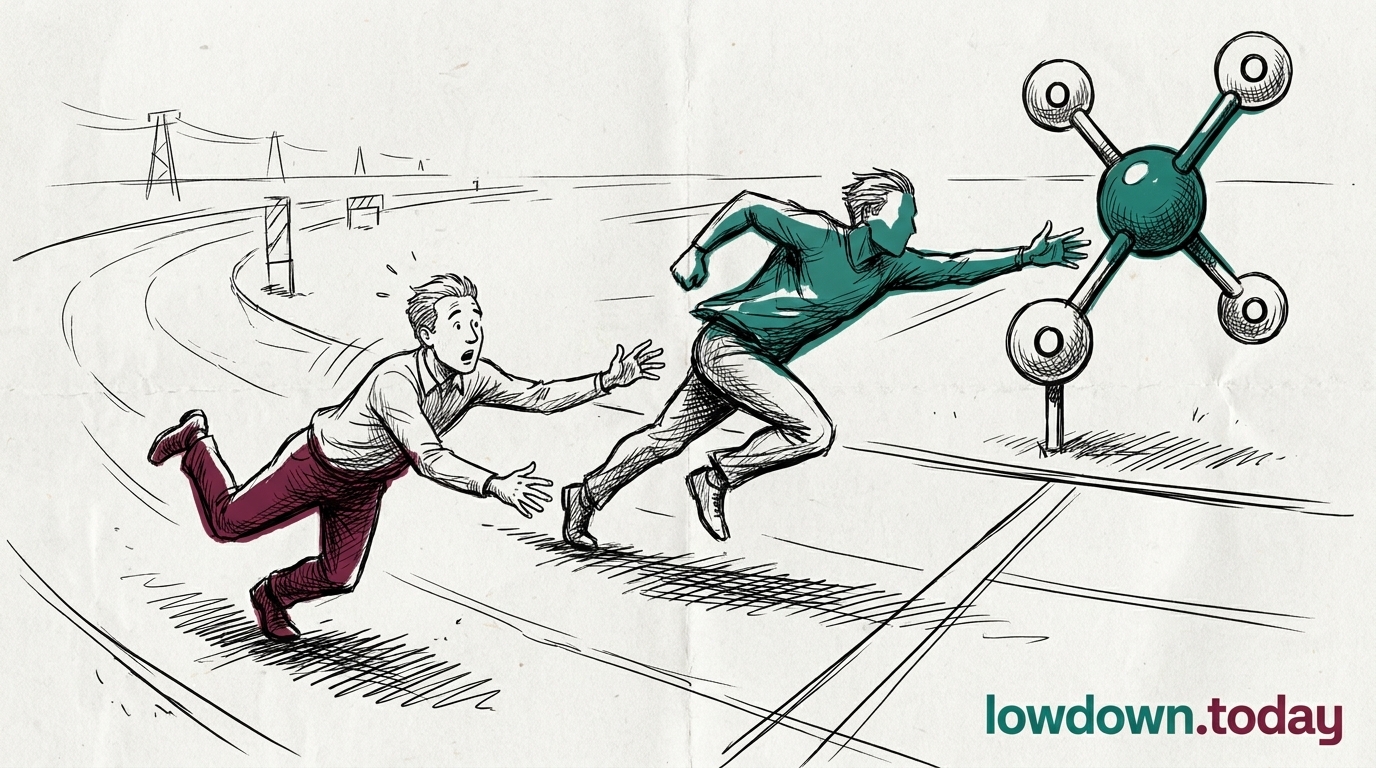
Abbas Araghchi, Iran's Foreign Minister, arrived in New Delhi on 14 May having announced his attendance at the BRICS (the Brazil-Russia-India-China-South Africa grouping, a multilateral forum for non-Western powers) foreign ministers meeting the previous day . In his address, he told the assembled ministers that Iran "has not created any obstacles in the strait of Hormuz" 1. The claim was structured for a non-Western audience and delivered one day after Iran's Supreme National Security Council finalised a formal Hormuz security plan that operationalises the transit toll and corridor regime.

Deputy Foreign Minister Ali Bagheri Kani, accompanying Araghchi in Delhi, called on BRICS states to act "against US aggression." South China Morning Post reported Iran's anti-American rhetoric was testing India's balancing posture 2. India is the largest non-Chinese user of Iranian-routed crude, with domestic political constraints that make open endorsement of Araghchi's framing costly; Delhi is expected to prioritise de-escalation language over bloc confrontation in the final communique.

The Persian Gulf Strait Authority (PGSA), established on 5 May, requires vessels to register, pay a transit toll in Chinese yuan, and adhere to a designated corridor . Tehran frames those requirements as regulatory, not obstructive; Araghchi's Delhi statement carries that framing to a non-Western audience that has not signed up to Washington's counter-position. The denial is designed to hold simultaneously with the operational architecture. Iran had also declared no US weapons may transit Hormuz into regional bases, announced the same day as Araghchi's denial, adding a new operational constraint while the Foreign Minister described a strait without obstacles.

The BRICS stage gives Tehran a non-Western readership that is both sympathetic and practically important. Whether the BRICS communique adopts Araghchi's "no obstacles" framing or remains neutral on the transit regime question is one of the key diplomatic tests of the Delhi meeting.


Deep Analysis

In plain English

The BRICS group, which includes Brazil, Russia, India, China, and South Africa, is a forum where non-Western countries coordinate positions. Iran's foreign minister went to their meeting in New Delhi on 14 May and told them Iran was not blocking the Strait of Hormuz. The day before, Iran's own security council had approved a formal plan to control the strait with tolls and corridors. Iran told the BRICS audience one thing and did another thing at home. The key question now is whether India, which chairs BRICS and buys a lot of Iranian oil, will back Iran's framing or stay neutral.

Deep Analysis
Root Causes

Iran's need to maintain non-Western alignment while the bilateral US-Iran track operates through Pakistan reflects a domestic constraint: Mojtaba Khamenei's government cannot be seen to negotiate with Washington without simultaneously demonstrating non-Western solidarity. The BRICS presence is a legitimacy-maintenance exercise for the domestic audience, not a negotiating move directed at Washington.

The structural tension between Araghchi's "no obstacles" claim at BRICS and the SNSC's written Hormuz security plan produced one day earlier is resolved by audience separation: the denial is for BRICS consumption, the written architecture is for operational and legal purposes. Both can coexist because they address different audiences on different registers.

What could happen next?
  • Consequence

    BRICS communique language on Hormuz will reveal India's positioning: adoption of Iran's 'no obstacles' framing would give the PGSA toll regime non-Western multilateral cover; de-escalation language would leave Iran's regulatory framing without BRICS endorsement.

  • Risk

    Bagheri Kani's call for BRICS states to act against US aggression tests India's chair neutrality at a time when Delhi has maintained public silence on US Iran sanctions targeting Indian firms in the Shamkhani network.

First Reported In

Update #97 · Chips for Beijing, no paper for Iran

South China Morning Post· 14 May 2026
Read original
Different Perspectives
Cross-border power traders
The France-Germany day-ahead spread flipped from a EUR 17.20 German premium on 1 August to a EUR 4.15 French premium on 3 August, the same day French curtailment peaked. They cannot yet attribute the flip to curtailment alone, since a like-for-like overnight comparison shows French nuclear output rising while wind fell and demand returned on the weekday step.
EDF
EDF
River-cooling limits took 7.6 GW, 12 per cent of its fleet, offline on 3 August, the highest curtailment since the heatwave began, with an easing forecast to 4.3 GW on 4 August and 3 GW after. It manages the cut as a recurring seasonal constraint, expecting it to lift with river temperature, not repair.
Gasunie
Gasunie
TTF, the Dutch hub it operates, drifted to roughly EUR 55 to 58 per MWh across the window, staying inside its recent range through both the German spark reversal and the French curtailment. It reads a flat hub price as evidence that neither event this window carried enough weight to move the fuel leg on its own.
German gas-fired generators
Record German solar of 18,761 MW on 2 August pushed the clean spark spread to minus 18.48 EUR/MWh, a loss-making day, before it returned to plus 16.20 on 3 August. They now price dispatch against post-solar residual load rather than wind alone, since the sign flipped inside 48 hours on unchanged fuel and carbon costs.
European Commission (DG Energy)
Its implementing-measures register logged transposition notices from only Portugal and Slovakia against Wednesday's Article 94 deadline for Directive (EU) 2024/1788, with 25 states silent. It expects the register to fill only gradually, since filing routinely lags legislating and any infringement track against non-notifying states runs on a slower clock than the deadline itself.
Spain's LNG terminal operators
Spain's 9,145 GWh terminal inventory is the largest single stock in the EU LNG network, an option value that can reroute cargoes wherever the winter strip pays best rather than a cavern gas obligation tied to a fixed date. That flexibility matters more as Germany's cavern shortfall pushes more of the winter security question onto import infrastructure.



