Skip to content
You can now search across every topic, entity and event.What's new
European Energy Markets
15JUN

Iran's Hormuz Toll Matures Into Permanent Institution

3 min read
12:23UTC

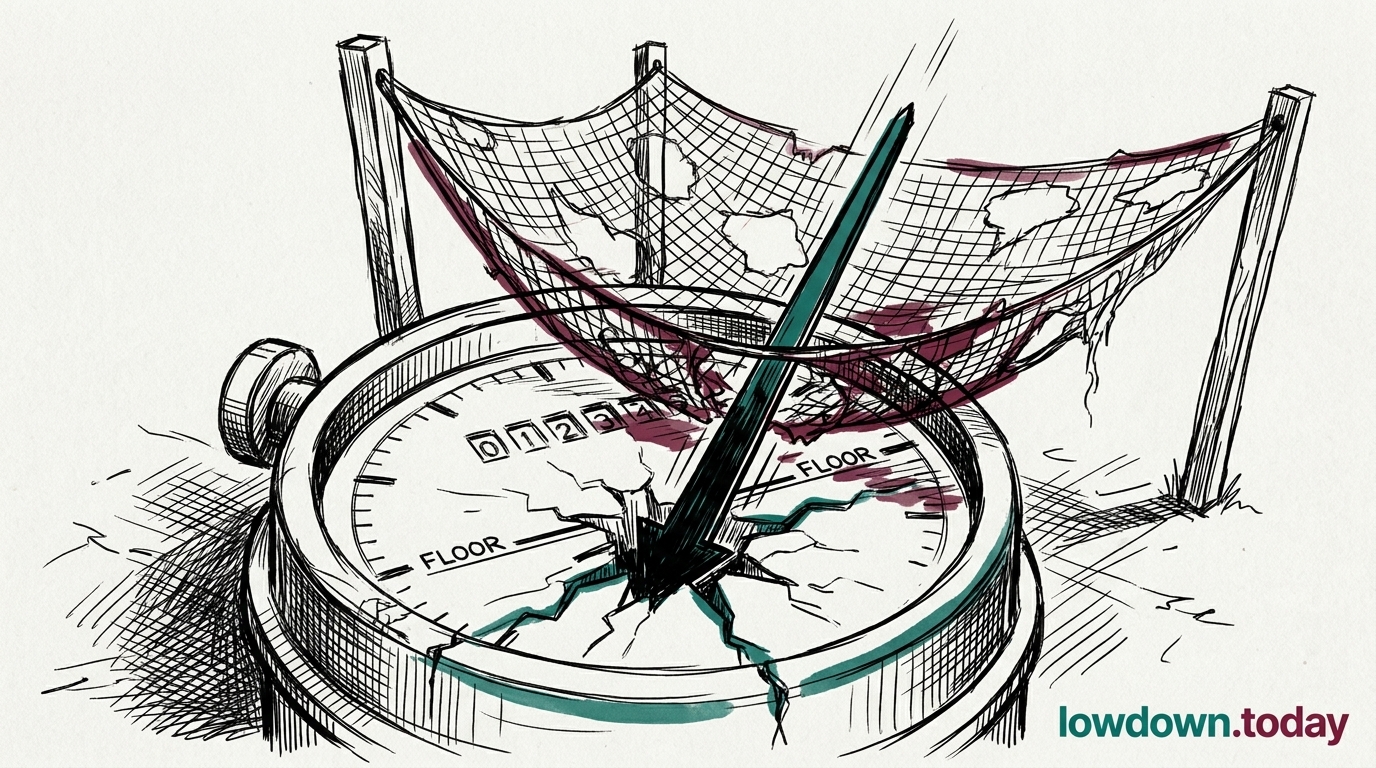
The IRGC built a customs authority, not a blockade. The infrastructure is designed for permanence, and the currency is yuan.

EconomicAssessed
Key takeaway

Iran built a customs authority, not a blockade; the infrastructure is permanent.

the strait of Hormuz toll system has matured from improvised blockade into something closer to a functioning customs authority . Claims Journal and Bloomberg detail the mechanics: $1 per barrel paid in yuan or stablecoins. A Very Large Crude Carrier carrying two million barrels pays roughly $2 million per transit.

The IRGC's Hormozgan Provincial Command runs background checks on all vessels. Five tiers of country classification determine access. Ships must raise the flag of a deal-country, broadcast passcodes over VHF radio, and receive an IRGC patrol escort through the corridor. Some vessels are required to change flag registration entirely. Pakistan has secured deals for 20 vessels.

Weekly transits have risen to 53, up from 36 the previous week, driven by bilateral exemptions: the Philippines , France, Japan , Oman, and Iraq . But pre-war volume was roughly 966 transits per week. The recovery runs through Tehran's licensing desk. Each new deal normalises Iran's sovereignty claim over international waters. Ali Vaez of the International Crisis Group assessed that Hormuz control is much more potent than even a nuclear weapon. The yuan, not the dollar, is the currency of this chokepoint.

At $1 per barrel, the IRGC's annual revenue from Hormuz tolls, if pre-war volumes resumed, would exceed $7 billion. Even at current reduced volumes, the toll generates hundreds of millions annually. The stablecoin payment option creates a sanctions-resistant financial channel. This is a new revenue stream for the IRGC that exists independently of any ceasefire agreement.


Deep Analysis

In plain English

Iran is not just blocking ships; it has built a full toll system with security checks, country rankings, and digital payments in Chinese currency. Ships pay roughly $2 million each time they pass through. This looks like a permanent operation, not a temporary war measure. It affects the price of everything that moves through the strait, which carries roughly one-fifth of global oil supply.

Deep Analysis
Root Causes

The toll system emerged from a blockade that the US threatened to break but never did (five deadline extensions).

Each unfulfilled threat gave Iran more time to institutionalise its control. The bilateral exemption pattern (Philippines, France, Japan, Oman, Iraq, Pakistan) further normalises the system by giving individual nations incentives to cooperate rather than collectively resist.

Escalation

The toll system is itself an escalation that has been normalised through repetition. Each new bilateral deal raises the cost of reversing the system. The transition from blockade to customs authority represents a permanent alteration of the maritime order in the Persian Gulf that no ceasefire framework currently addresses.

What could happen next?
  • Yuan as the currency of Hormuz transit accelerates de-dollarisation of global energy trade

    months · Assessed
  • Precedent for sovereign toll claims on international waterways could spread to other chokepoints

    years · Suggested
  • Insurance and shipping markets must price IRGC compliance costs into every Hormuz-dependent route

    weeks · Assessed
First Reported In

Update #60 · Pakistan's Ceasefire Plan Fills the Vacuum

Claims Journal / Bloomberg· 6 Apr 2026
Read original
Different Perspectives
Spain's LNG terminal operators
Spain's 9,145 GWh terminal inventory is the largest single stock in the EU LNG network, an option value that can reroute cargoes wherever the winter strip pays best rather than a cavern gas obligation tied to a fixed date. That flexibility matters more as Germany's cavern shortfall pushes more of the winter security question onto import infrastructure.
European Commission
European Commission
Brussels holds the bloc to 90% on a flexible window while Germany, holding roughly a quarter of EU storage capacity, tracks toward missing its own lower 80% figure by 21 points. A national shortfall this size in the anchor market matters more to bloc security than the flexible timetable alone can absorb.
French power exporters and CRE
French day-ahead rose in step with Germany but by less, reopening a EUR 7-17 premium that makes northward export flows commercially attractive again after the EUR 43.09 discount evaporated in days. CRE separately authorised RTE and Enedis to buy flexibility locally, betting the coming winter's binding constraint is grid congestion rather than a shortage of firm capacity.
TTF trading desk
TTF trading desk
A visible national shortfall like Germany's 21-point gap is a directional signal, not noise, for a desk holding the summer-winter spread. TTF's flat EUR 58-60 range through this week's German price swings says the market has not yet chosen to reprice refill risk into the front of the curve.
German cavern and CCGT operators
German caverns kept buying prompt gas at TTF near EUR 58-60 through the inversion; the wind collapse to 2.4 GW then flipped the spark spread to plus EUR 29 and put turbines back in the same queue. Every day turbines win that bid, injection at a third of the 877 GWh/day pace needed falls further behind.
Slovakia
Slovakia
Slovakia says it dropped its hold-out on the 21st sanctions package only after Ursula von der Leyen personally signed written gas-price and supply guarantees. The Council of the European Union's own 17,238-character release on the package names neither Slovakia nor any guarantee, leaving Bratislava's account unconfirmed by the institutional record.



