Skip to content
You can now search across every topic, entity and event.What's new
European Energy Markets
15JUN

France and Japan pay Iran's toll

2 min read
12:23UTC

Two G7 nations paid Iran in yuan to transit the Strait of Hormuz, breaking the collective coalition posture Washington built.

EconomicAssessed
Key takeaway

The US-led coalition is fracturing as allies pay Iran for passage in Chinese currency.

CMA CGM Kribi, a Malta-flagged container ship owned by France's CMA CGM (the world's third-largest container line), became the first Western European vessel to transit the Strait of Hormuz since 28 February. It paid Iran's toll in yuan. Before entering Iranian territorial waters, the ship changed its AIS designation to "Owner France", signalling nationality for the IRGC's sorting mechanism. 1

Hours later, Mitsui OSK Lines' LNG carrier Sohar LNG crossed in ballast, the first Japanese-affiliated vessel to transit. Three Omani ships also passed through . The toll system charges $1 per barrel for oil tankers or roughly $2 million flat for container ships, payable in yuan or stablecoins.

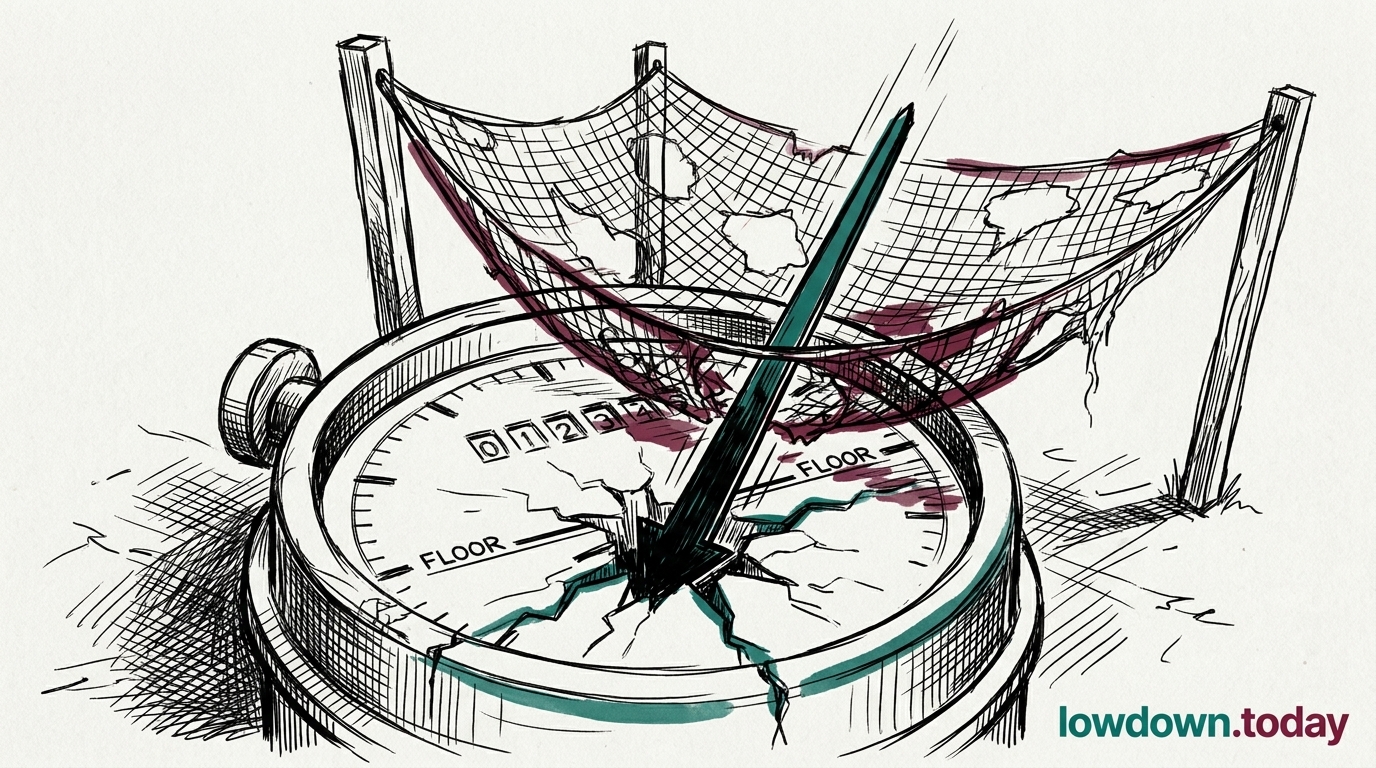
France and Japan are nominal US allies. Both coordinated with Iranian maritime authorities. Both implicitly accepted Tehran's sovereignty claim over the strait, the precise claim Trump's 6 April energy deadline threatens force to break. Both paid in yuan, not dollars. The Philippines cut its own bilateral deal two days earlier . The coalition posture Washington has relied on since the blockade began is dissolving into bilateral licensing arrangements administered by Tehran.


Deep Analysis

In plain English

France and Japan are close US allies. On 4 April, their shipping companies paid Iran a fee in Chinese currency to sail through the Strait of Hormuz. This matters for two reasons. First, they implicitly accepted Iran's right to charge for use of an international waterway. Second, they paid in yuan, not dollars, chipping away at US financial influence. The Philippines cut a similar deal two days earlier. The alliance the US built around Hormuz is dissolving one bilateral arrangement at a time.

Deep Analysis
Root Causes

France's CMA CGM faces existential commercial pressure: the world's third-largest container line cannot absorb indefinite Hormuz closure without route restructuring at scale.

Japan's LNG dependency on Gulf supply creates energy-security vulnerability that outweighs diplomatic solidarity costs. Both governments calculated that collective posture imposed costs their economies could not sustain, while defection imposed only reputational costs the US would absorb rather than escalate over.

What could happen next?
  • Precedent

    Yuan payment for Hormuz passage creates a non-dollar settlement precedent for strategic waterway access that will outlast this conflict.

    Long term · High
  • Consequence

    Each bilateral deal reduces the political viability of US military action to reopen Hormuz, as enforcement would require overriding arrangements US allies have themselves accepted.

    Short term · High
  • Risk

    General License U expiry on 19 April could force a confrontation with France and Japan if Treasury declines to renew, criminalising transactions both nations have already completed.

    Medium term · Medium
First Reported In

Update #58 · First US aircraft fall over Iran

Euronews / Bloomberg· 4 Apr 2026
Read original
Different Perspectives
Spain's LNG terminal operators
Spain's 9,145 GWh terminal inventory is the largest single stock in the EU LNG network, an option value that can reroute cargoes wherever the winter strip pays best rather than a cavern gas obligation tied to a fixed date. That flexibility matters more as Germany's cavern shortfall pushes more of the winter security question onto import infrastructure.
European Commission
European Commission
Brussels holds the bloc to 90% on a flexible window while Germany, holding roughly a quarter of EU storage capacity, tracks toward missing its own lower 80% figure by 21 points. A national shortfall this size in the anchor market matters more to bloc security than the flexible timetable alone can absorb.
French power exporters and CRE
French day-ahead rose in step with Germany but by less, reopening a EUR 7-17 premium that makes northward export flows commercially attractive again after the EUR 43.09 discount evaporated in days. CRE separately authorised RTE and Enedis to buy flexibility locally, betting the coming winter's binding constraint is grid congestion rather than a shortage of firm capacity.
TTF trading desk
TTF trading desk
A visible national shortfall like Germany's 21-point gap is a directional signal, not noise, for a desk holding the summer-winter spread. TTF's flat EUR 58-60 range through this week's German price swings says the market has not yet chosen to reprice refill risk into the front of the curve.
German cavern and CCGT operators
German caverns kept buying prompt gas at TTF near EUR 58-60 through the inversion; the wind collapse to 2.4 GW then flipped the spark spread to plus EUR 29 and put turbines back in the same queue. Every day turbines win that bid, injection at a third of the 877 GWh/day pace needed falls further behind.
Slovakia
Slovakia
Slovakia says it dropped its hold-out on the 21st sanctions package only after Ursula von der Leyen personally signed written gas-price and supply guarantees. The Council of the European Union's own 17,238-character release on the package names neither Slovakia nor any guarantee, leaving Bratislava's account unconfirmed by the institutional record.



