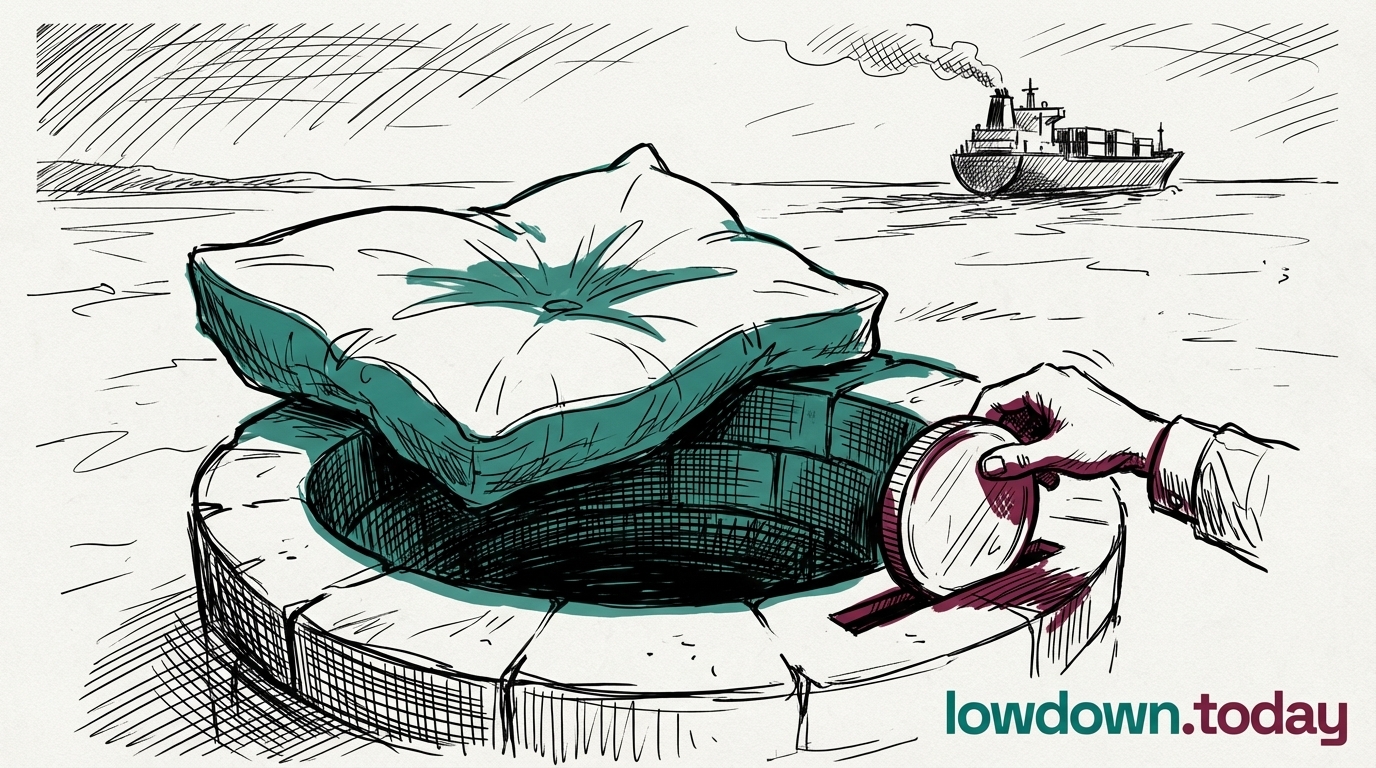
QatarEnergy declared force majeure to buyers in Belgium, Italy, and Poland after strikes in early March damaged the Ras Laffan LNG complex. The facility handles 77 million tonnes per annum, roughly 17% of global LNG export capacity. Repairs are estimated at up to five years.1
The direct EU exposure to Qatari gas is modest: Bruegel puts it at only 4% of total EU gas imports, below one in ten of LNG. But direct exposure understates the mechanism. Qatar's absence tightens the global LNG spot market, where Asian and European buyers compete for the same flexible cargoes. Kpler estimates the monthly supply shortfall from the Qatar and UAE disruption at nearly 6 million tonnes, with alternative sources covering under 2 million tonnes.
Bruegel distinguishes this shock from the Russia crisis. There is no equivalent of the Russian pipeline cut, no bilateral supply relationship severed. The transmission is indirect: global spot market tightening via Asian competition for Atlantic cargoes. Policy tools that worked against a single-supplier disruption (demand reduction mandates, solidarity mechanisms) are less effective because the constraint is global competition, not a bilateral decision.




