Skip to content
European Energy Markets
13APR

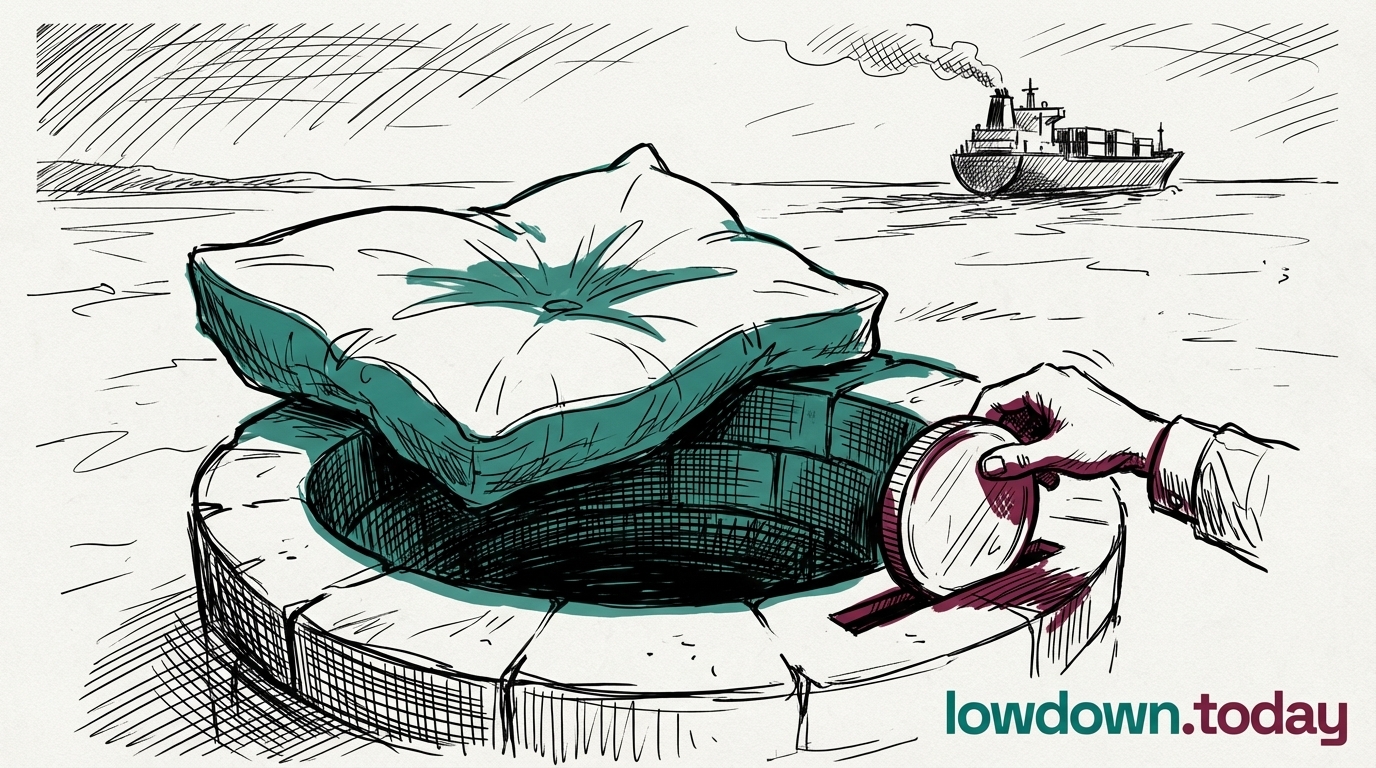
Europe's thinnest gas cushion since 2018

9 min read
22:33UTC

EU gas storage enters injection season at 28.9%, its lowest April level in five years, while the Hormuz crisis chokes LNG supply and TTF swings between EUR 44 and 53/MWh. The Commission has cut the mandatory winter fill target from 90% to 80%, but even that reduced goal requires roughly 180 additional LNG cargoes over 2025 volumes, at an estimated EUR 35bn refill cost.

Key takeaway

Three simultaneous supply constraints have blunted every traditional European emergency lever at once.

In summary

EU gas storage entered the 2026 injection season at 28.92% fill on 9 April, the lowest April level since 2018, while QatarEnergy's force majeure on Ras Laffan removed 17% of global LNG export capacity and the JKM-TTF spread collapsed to near zero, erasing Europe's ability to attract spot cargoes by price alone. The European Commission has responded by cutting the mandatory winter fill target from 90% to 80%, its first formal admission that the post-Russia energy security framework cannot absorb a simultaneous LNG supply shock. Refilling to even that reduced target will require roughly 180 additional LNG cargoes at an estimated EUR 35 billion, 55% above 2025 injection costs.

This briefing mapped
Loading map…
Economic
Regulatory

Europe enters injection season with tanks barely a quarter full, the thinnest cushion in five years.

Sources profile:This story draws on neutral-leaning sources

EU underground gas storage stood at 28.92% full (327 TWh) this week, according to GIE AGSI+ data. That is the lowest level for this point in the year since 2018, and six to twenty percentage points below the five-year seasonal average. Europe must now refill from a deficit while its two traditional safety valves, Russian pipeline gas and flexible LNG supply, are both impaired.

The country-level picture sharpens the risk. Germany, the EU's largest storage holder, sat at just 23% three days later. The Netherlands is at 5.5%, France at 24%. Only Spain (above half full) and Portugal (91.7%) sit comfortably, insulated by Iberian renewables and hydropower.

The seasonal context matters. In April 2022, the last comparable trough, storage touched 26% before a massive injection campaign and demand-reduction mandates pushed levels to 95% by November. But that spring, Russian pipeline gas was still flowing through Q2 and global LNG was not constrained by a Hormuz closure. Neither lever is available now. The refill arithmetic starts from a deeper deficit with fewer supply options.

Explore the full analysis →

Bundesnetzagentur data reveals a structural asymmetry: Germany can draw gas twice as fast as it can inject it.

Sources profile:This story draws on neutral-leaning sources

Bundesnetzagentur data showed Germany's gas storage at 23.32% (57.6 TWh) on 12 April, the steepest national deficit in the EU. Daily injection capacity stands at only 4.3 TWh against 7.0 TWh withdrawal capacity, a structural asymmetry that limits how fast reserves can rebuild regardless of supply availability.

The Bundeswirtschaftsministerium (federal economics ministry) activated its early warning stage (Fruhwarnstufe) last summer and has not lifted it since. Germany's 247 TWh storage estate is the EU's largest, and at current fill levels the country holds roughly two months of average winter consumption. Reaching the Commission's revised target by November requires injecting approximately 140 TWh in seven months, an average daily rate of roughly 0.67 TWh; that is achievable within the 4.3 TWh ceiling, but leaves no margin for supply disruptions or late-season cold snaps.

The injection asymmetry is the structural constraint traders are watching. A late start to refilling, whether from continued high TTF prices discouraging early buying or from LNG supply tightness through May, cannot be recovered by faster injection later. The pipeline only flows so fast.

Explore the full analysis →

Brussels concedes its own safety standard is unachievable, lowering the mandatory fill level from 90% to 80% with a 70% floor in extremis.

Sources profile:This story draws on neutral-leaning sources from Belgium
Belgium

EU Energy Commissioner Dan Jorgensen confirmed at a Gas Coordination Group meeting in Brussels that the Commission has lowered the mandatory storage filling target from 90% to 80% by this November, with a floor of seventy percent in exceptional circumstances. "Even if peace comes tomorrow, we will not go back to normal in the foreseeable future," Jorgensen stated. 1

ENTSOG (European Network of Transmission System Operators for Gas) presented its Summer Supply Outlook at the same meeting. The assessment: 80% is achievable, but only if LNG supply improves and injections start from April rather than the historical May. The conditional language matters. LNG supply has not improved.

The original 90% mandate, introduced as emergency legislation after Russia's pipeline cuts, was the centrepiece of the EU's storage security framework. Lowering it by ten points is not a technical adjustment; it reprices the implied winter supply buffer from roughly 90 days of average consumption to below 75 days. At current TTF levels, the difference between 80% and 90% fill is approximately EUR 8 billion in procurement costs and 45 additional LNG cargoes.

Explore the full analysis →

Strike damage at Ras Laffan knocked 17% of global LNG export capacity offline, and QatarEnergy has told Belgium, Italy, and Poland it cannot deliver.

Sources profile:This story draws on mixed-leaning sources from France and United States
FranceUnited States
LeftRight

QatarEnergy declared force majeure to buyers in Belgium, Italy, and Poland after strikes in early March damaged the Ras Laffan LNG complex. The facility handles 77 million tonnes per annum, roughly 17% of global LNG export capacity. Repairs are estimated at up to five years. 1

The direct EU exposure to Qatari gas is modest: Bruegel puts it at only 4% of total EU gas imports, below one in ten of LNG. But direct exposure understates the mechanism. Qatar's absence tightens the global LNG spot market, where Asian and European buyers compete for the same flexible cargoes. Kpler estimates the monthly supply shortfall from the Qatar and UAE disruption at nearly 6 million tonnes, with alternative sources covering under 2 million tonnes.

Bruegel distinguishes this shock from the Russia crisis. There is no equivalent of the Russian pipeline cut, no bilateral supply relationship severed. The transmission is indirect: global spot market tightening via Asian competition for Atlantic cargoes. Policy tools that worked against a single-supplier disruption (demand reduction mandates, solidarity mechanisms) are less effective because the constraint is global competition, not a bilateral decision.

Explore the full analysis →
Briefing analysis
What does it mean?

The European energy market is navigating three simultaneous constraints that historically have never coincided: structurally depleted storage entering injection season, a physical LNG supply shock removing 17% of global export capacity, and the collapse of the pricing mechanism that normally allows Europe to attract flexible cargoes.

Each constraint would be manageable in isolation; their intersection creates a compounding dynamic where the traditional policy levers are blunted. The Commission's 90-to-80% target cut is not administrative housekeeping; it reprices the implied winter supply buffer from roughly 90 days of average consumption to below 75, and it signals that emergency demand reduction measures remain on the table.

The power market divergence captures the structural consequence with unusual clarity. On a single trading day, Italy paid EUR 104/MWh more than Spain for electricity. This is not a transient imbalance; it reflects two decades of different infrastructure investment.

Gas-heavy markets are fully exposed. Renewables-heavy markets are largely insulated. The market is now pricing that structural difference in real time, and it is accelerating the industrial and investment decisions that will define European energy geography for the next decade.

Bruegel's buyer coalition proposal, pairing the EU with Japan and South Korea to represent 60% of global LNG demand, is the most structurally novel policy response on the table. It is also untested at this scale and faces institutional coordination timelines that make it unlikely to affect the 2026 injection season.

The 180-cargo gap must therefore be sourced through bilateral and spot market channels, with uncoordinated member state purchasing risking a repeat of the 2022 competitive premium dynamic.

Watch for
  • First LNG cargo transiting Hormuz post-ceasefire, which would test whether the supply interruption is structural or geopolitically reversible. German Bundesnetzagentur weekly injection data through April for whether rates are tracking toward or away from the 4.3 TWh/day ceiling required for an on-time 80% fill. Goldman Sachs Q2 TTF forecast revision, which would signal whether bank consensus is converging on Standard Chartered's EUR 80+/MWh scenario. Whether Yara or BASF announce ammonia plant curtailments before June, which would confirm demand destruction is materialising ahead of any price normalisation.

Vessel tracking shows Europe losing the cargo-by-cargo competition with Asian buyers, as the JKM-TTF spread collapses to near zero.

Sources profile:This story draws on mixed-leaning sources from France and United States
FranceUnited States
LeftRight

Kpler vessel tracking data shows eight Atlantic LNG cargoes (five US-origin, three Nigerian) have been diverted from Europe to Asia via the Cape of Good Hope since the conflict began in late February. EU weekly LNG imports fell 15% to 3.3 million tonnes as a result.

Behind the diversions sits the JKM-TTF spread, the gap between Asian spot LNG and the European benchmark. It narrowed to USD 0.10/MMBtu in early April, effectively zero. When the spread was positive, Europe could outbid Asia for flexible cargoes; at parity, shippers route to whichever buyer offers better terms on a cargo-by-cargo basis. US LNG still accounts for 58% of EU LNG imports under long-term contracts, but spot volumes follow the Asian premium.

Kpler's broader supply arithmetic is tight. Alternative sources cover under two million of the monthly shortfall. That gap persists until Ras Laffan repairs advance or new US export capacity comes online, Europe competes for a shrinking pool of flexible supply.

Explore the full analysis →

Ceasefire relief drove a 20% drop to EUR 44/MWh; a Hormuz blockade threat from President Trump bounced it back within days.

Sources profile:This story draws on mixed-leaning sources from United Kingdom and United States
United KingdomUnited States
LeftRight

TTF (Title Transfer Facility, the European gas benchmark) peaked near EUR 70/MWh in March, fell a fifth to EUR 44/MWh on the Ceasefire announcement day, then bounced to EUR 47.27/MWh by mid-April when President Trump threatened a Strait of Hormuz blockade. The week's range: EUR 44-53/MWh. No LNG cargo has transited Hormuz for over a month.

Physical supply did not change across that week; no new cargoes arrived, no facility restarted, no storage injection rate shifted. Price moved on political statements alone. For utilities hedging summer procurement and industrials managing feedstock costs, the signal-to-noise ratio in TTF has deteriorated sharply.

Argus Media data shows the summer-winter spread has inverted, with summer contracts trading above winter, a structure that reflects the market pricing injection-season scarcity rather than the normal seasonal pattern of cheap summer gas and dear winter gas.

Explore the full analysis →

Italy cleared at EUR 133/MWh while Spain paid EUR 29/MWh on the same day, the starkest intra-EU power price divergence of 2026.

Sources profile:This story draws on neutral-leaning sources

Italy cleared at EUR 133/MWh in day-ahead power on 13 April 2026, while Spain settled at EUR 29/MWh on the same exchange day. The Netherlands matched Italy at EUR 128/MWh, Belgium at EUR 128/MWh. France surged 188% day-on-day. Then south and north: Spain at EUR 29/MWh, Portugal at EUR 28/MWh, Norway (northern zones) at EUR 2/MWh. A single market, five time zones apart in price.

Merit order mechanics explain the gap. In gas-dependent markets, gas-fired plants set the marginal clearing price. Ember data shows gas sets the electricity price most hours in Italy but a fraction of that in Spain, where wind and solar capacity has displaced gas from the stack. The result: a EUR 100+/MWh spread between Iberian and north-western European power markets.

For industrial consumers, the spread is a location arbitrage signal. Energy-intensive production in Spain operates at roughly one quarter of the power cost of an equivalent plant in Italy or the Netherlands. For policymakers, it is a live demonstration that renewables penetration translates directly into price shock insulation, not in theory or over a decade, but on a single trading day.

Explore the full analysis →
Sources:Ember
Causes and effects
Why is this happening?

The immediate crisis has two independent structural roots. First, the permanent removal of Russian pipeline gas (12-14 bcm/year) in January 2025 created a baseload supply gap that Norwegian and Algerian ramp-ups have not fully replaced, leaving European storage drawing down faster per cold day than historical planning models assumed.

Second, Europe's continued dependence on the global LNG spot market as its flexible supply backstop has proven structurally fragile: LNG sourced via the Strait of Hormuz represents a concentrated geographic chokepoint that pipeline gas never exposed Europe to at this scale. The Ras Laffan force majeure and the Hormuz closure are functionally a single event arriving simultaneously.

At the power market level, two decades of divergent national investment in gas-fired versus renewable capacity has created a structural bifurcation that the EU's single market design does not resolve: physical interconnector constraints at the Pyrenees prevent price equalisation regardless of economic incentive, meaning gas-dependent markets bear the full pass-through while renewables-insulated markets are largely unaffected.

Wind and solar generated more EU electricity than fossil fuels for the first time in 2025, yet the power sector's gas bill still climbed 16%.

Sources profile:This story draws on mixed-leaning sources from Belgium
Belgium
LeftRight

Ember published its European Electricity Review showing wind and solar exceeded fossil fuels in EU electricity generation for the first time in 2025: renewables at thirty percent against fossil fuels' share. The milestone marks a structural shift in the generation mix. But the EU power sector's gas import bill still reached EUR 32 billion in 2025, up 16% year-on-year, because gas generation itself rose 8% to compensate for reduced hydro output.

The transition insulates unevenly. Spain is largely protected from TTF pass-through; Italy, the Netherlands, and Belgium are fully exposed. Ember's data confirms that the merit order mechanism, where the most expensive fuel needed to meet demand sets the price for all generation, means gas retains pricing power far beyond its share of actual generation. In markets where gas sets the marginal price most hours (Italy being the clearest case), the rising renewables share delivers environmental benefit but limited consumer price relief.

The structural implication for traders: EU-wide renewables statistics overstate the degree to which the bloc is insulated from gas price shocks. Market-by-market merit order composition, not aggregate generation share, determines price exposure.

Explore the full analysis →
Sources:Bruegel·Ember

Two new instruments replace the 2014 data-reporting framework. Compliance teams have 20 days.

Sources profile:This story draws on neutral-leaning sources from Belgium
Belgium

ACER (the EU Agency for the Cooperation of Energy Regulators) published two new REMIT (Regulation on Energy Market Integrity and Transparency) instruments this week. A recast Implementing Regulation replaces the legacy data-reporting framework, targeting more effective abuse detection while reducing compliance burden. A companion Delegated Regulation standardises authorisation and supervision of Registered Reporting Mechanisms (RRMs) and Inside Information Platforms (IIPs). Both enter force at the end of April. 1

The practical impact falls on compliance teams at every regulated entity trading European gas and power. Twenty days to implement revised reporting obligations is tight under normal conditions; under current market volatility, where TTF moved EUR nine in a single week, the operational risk of a reporting gap is elevated. Any failure to meet the entry-into-force deadline exposes firms to ACER's expanded investigatory powers, which were strengthened under the recently enacted REMIT amendments.

Explore the full analysis →

Yara needs an 11% European price increase just to break even; BASF is exposed on spot gas until its Cheniere contract starts.

Sources profile:This story draws on neutral-leaning sources

JPMorgan warned this week that European chemicals margins face renewed compression with TTF above EUR 47/MWh. The most quantified exposure belongs to Yara International: higher gas costs are equivalent to 20% of 2026 EBITDA and 22% of 2027 EBITDA, requiring an 11% European price increase in both years to break even. Ammonia production uses natural gas as primary feedstock, so Yara has no substitution option at current technology.

BASF is exposed via spot gas purchasing at elevated prices. Its long-term Cheniere LNG supply contract begins mid-2026 but does not cover the current gap. Until that contract kicks in, BASF buys at whatever TTF offers. Bruegel confirms that industrial gas demand across the EU has remained depressed throughout 2026 with no recovery signs, even during periodic price dips. Demand destruction is the market's own price ceiling, but it operates with a lag, and it comes at the cost of European industrial output.

Explore the full analysis →

The Brussels think tank's estimate is the most precise public figure for the 2026 injection campaign: 55% above 2025, requiring 180 extra LNG cargoes.

Sources profile:This story draws on centre-leaning sources from Belgium
Belgium
LeftRight

Bruegel, the Brussels-based economic think tank, estimated the cost of refilling EU gas storage to the revised target at EUR 35 billion at EUR 60/MWh, 55% above last year's equivalent costs. Europe needs approximately 180 additional LNG cargoes compared to last summer to reach the revised target by November. A gas price doubling from pre-crisis levels would add EUR 100 billion to the EU's annual import bill, which was EUR 117 billion last year.

Bruegel's policy recommendation includes an untested lever: a buyer coalition with Japan and South Korea, which together with the EU represents 60% of global LNG demand. Coordinated purchasing could counteract the cargo-by-cargo bidding war that currently favours sellers. No such coalition has been attempted at this scale, and the coordination challenges between three blocs with different regulatory frameworks and procurement cycles are substantial.

Explore the full analysis →
Sources:Bruegel

A call-for-evidence on ACER's investigatory powers runs to 6 May, alongside a new LNG price assessment Expert Group.

Sources profile:This story draws on neutral-leaning sources from Belgium
Belgium

ACER launched a call-for-evidence evaluation last Thursday, running to 6 May, assessing the agency's own performance under its expanded investigatory powers granted by the 2024 REMIT amendments. Separately, ACER updated its LNG price assessment methodology and convened a dedicated Expert Group.

The LNG price methodology review carries direct market relevance. During periods of extreme spot market tightness, assessed prices (published benchmarks) and actual traded prices can diverge significantly, as they did during the previous energy crisis when the EU introduced its gas price cap mechanism. How ACER assesses LNG prices feeds into regulated tariffs, storage injection economics, and the reference prices that trigger emergency supply measures. The Expert Group's conclusions will shape the transparency infrastructure for the next LNG supply cycle.

Explore the full analysis →

European energy trading hours have more than doubled from 10 to 21 hours as volatility forces round-the-clock coverage.

Sources profile:This story draws on mixed-leaning sources from United States
United States
LeftRight

European gas and power trading hours are extending from 10 to 21 hours per day, according to Bloomberg, a structural adaptation to sustained market volatility. The extension reflects the reality that price-moving events (Hormuz threats, ceasefire announcements, force majeure declarations) arrive outside traditional European trading hours, and desks that are not staffed miss the move.

Standard Chartered forecast TTF could breach the EUR eighty mark if the conflict remains unresolved at summer injection start. Goldman Sachs forecast Q2 TTF at EUR 50/MWh, but that assumes Hormuz normalisation by mid-April, an assumption already overtaken by events. That forecast gap captures the market's fundamental uncertainty: whether the Strait reopens in weeks or months is the single variable that separates a manageable injection season from another winter of extreme price spikes.

Explore the full analysis →

Watch For

  • Whether the new REMIT rules force any market participant disclosures before the 29 April entry-into-force deadline
  • First LNG cargo transiting the Strait of Hormuz post-ceasefire, which would be a concrete test of resumed supply flow
  • German BNetzA storage data through April for injection rates against the 4.3 TWh daily capacity ceiling
  • EU intermediate storage trajectory check on 1 May: whether injection is on track for the revised 80% target from a 29% base
Closing comments

The direction is cautiously stabilising at current TTF levels (EUR 44-53/MWh) but materially upside-skewed on two triggers. The immediate risk is Hormuz: each week without LNG transit reduces the probability that markets price a swift resumption, pushing the physical fundamentals floor higher. Standard Chartered's EUR 80+/MWh scenario requires only two independently plausible conditions to converge: Hormuz remaining closed through June, and German injection rates tracking below 3.5 TWh/day in April-May. The secondary escalation path is Germany invoking the 70% exceptional-circumstances clause before October, which would signal that the 80% target itself is failing and trigger solidarity obligations across member states.

Different Perspectives
European Commission
European Commission
Commissioner Jorgensen formally acknowledged the post-Russia energy security framework cannot absorb the LNG shock, cutting the mandatory storage target from 90% to 80% and explicitly warning that normalisation is not foreseeable even with immediate peace. The Commission is now dependent on coordinated member state LNG purchasing and demand flexibility to bridge the remaining gap.
Germany
Germany
Germany holds the EU's largest storage estate but entered injection season at 23.32% fill with a 4.3 TWh/day injection ceiling that physically prevents any sprint recovery; the Bundeswirtschaftsministerium has maintained its early warning stage since July 2025. An escalation to Alarmstufe, which would trigger compulsory injection obligations, remains live if storage fails to rise through April.
QatarEnergy
QatarEnergy
QatarEnergy declared force majeure on European LNG contracts citing Ras Laffan strike damage, while the Gulf Research Centre assessed the declaration may also reflect a commercial decision to reallocate volumes toward higher-priced Asian spot markets without triggering breach penalties. Independent engineering confirmation of damage extent has not been published, leaving legal and commercial uncertainty unresolved.
Equinor / Norway
Equinor / Norway
Norway remains the EU's largest pipeline gas supplier and benefits from sustained elevated TTF; Norwegian pipeline capacity has partially offset the Russian supply loss but cannot close the structural gap. Norway Zone 4 power prices at EUR 2/MWh on 13 April illustrate how hydro-dominated systems are structurally decoupled from the gas price shock affecting continental Europe.
Italy
Italy
Italy cleared day-ahead power at EUR 133/MWh on 13 April, four to five times the Iberian equivalent, because gas-fired plants set the marginal price for approximately 90% of generation hours. Italy's circa 40 GW of gas-fired CCGT capacity, built when gas was cheap and nuclear was politically blocked, is now a structural liability at EUR 47/MWh TTF.
Spain
Spain
Spain cleared at EUR 29/MWh on the same day Italy paid EUR 133/MWh, the starkest single-day demonstration that its renewable energy investment is translating directly into price shock insulation for industry. Iberian interconnector constraints at the Pyrenees mean Spain cannot export this advantage to northern European markets at scale.


