Skip to content
Briefings are running a touch slower this week while we rebuild the foundations.See roadmap
European Energy Markets
29MAY

Troll A extended to 31 May; 51 mcm/day worst case

3 min read
09:05UTC

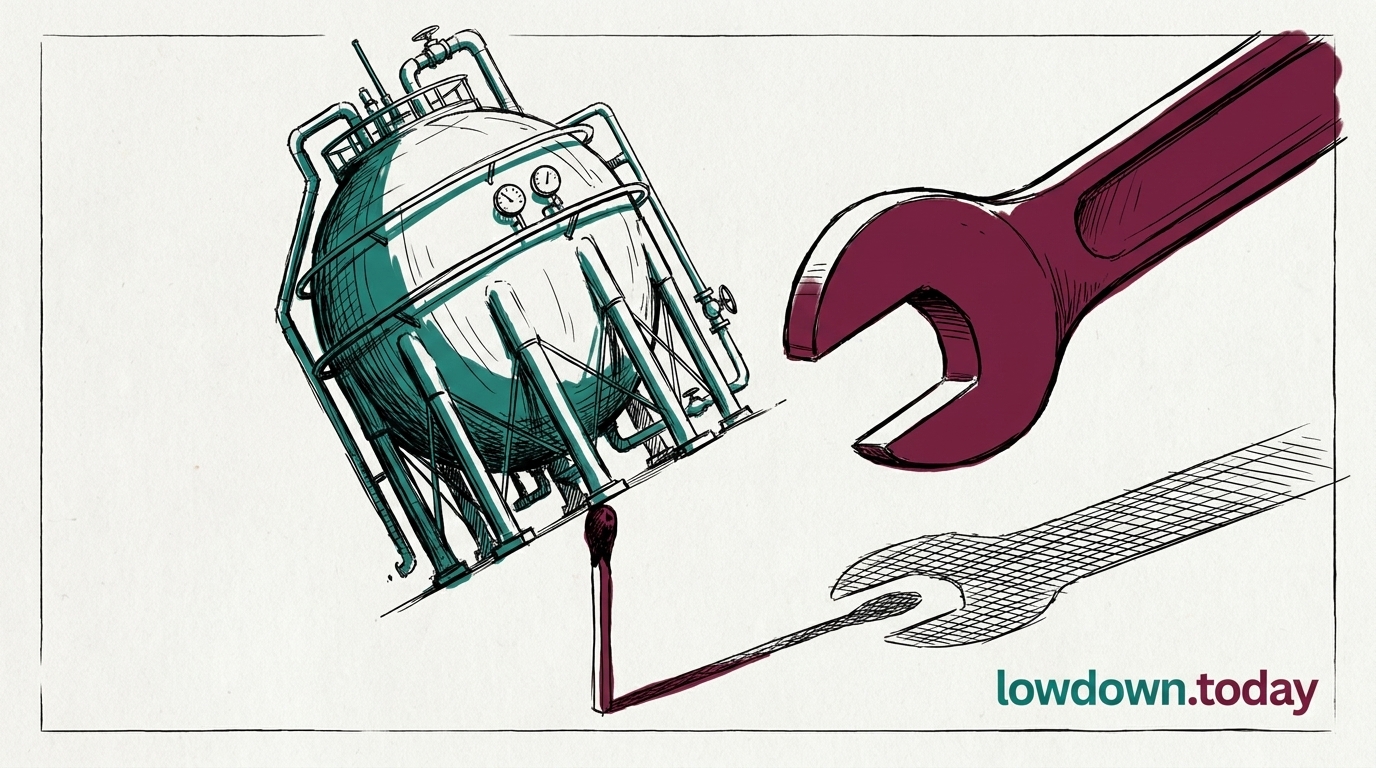
Equinor extended the Troll A compressor outage to Saturday 31 May with no confirmed restart, layering an additional 16.2 mcm/day reduction that pushed the worst-case Norwegian send-out cut to approximately 51 mcm/day.

EconomicDeveloping
Key takeaway

Confirmed restart or a slip past 2 June defines the next week's trading range.

Equinor extended the Troll A partial compressor outage to 31 May at 04:00 GMT, with no confirmed restart as of Thursday evening. The baseline reduction holds at 34.6 mcm/day against Troll A's roughly 125 mcm/day nameplate capacity. An additional 16.2 mcm/day outage layered onto 30-31 May pushes the worst-case Norwegian send-out reduction to approximately 51 mcm/day across both days.

The compressor fault originated from a routine maintenance test on 21 May . The extension follows a documented pattern: a prior Hammerfest compressor fault of the same class slipped 24 days, and the layering of a second outage suggests corrective scope is wider than initially disclosed. Sodir April data posted 10.2 bcm, down 0.6 bcm on March , extending a second consecutive monthly decline from the March reading of 349.3 mcm/day . Norwegian Continental Shelf production is weakening at the same moment its largest field is offline.

For a storage trajectory running on a 45 GWh/day margin, Troll A alone has the capacity to snap the path back into deficit. The curve is, in Timera's framing, a Troll-restart long : confirmed restart removes the supply premium from the prompt, while a slip past 2 June compresses the time between the operational shortfall and the 11 June ACER workshop.


Deep Analysis

In plain English

Troll A is Europe's single largest gas field, normally piping the equivalent of about 125 million cubic metres of gas per day into the European network. A compressor is the industrial pump that pushes gas down the pipeline, and one of Troll's compressors has broken. Equinor has been trying to fix it since late May but keeps finding additional problems, pushing the worst-case supply loss to 51 million cubic metres per day. To put that in context, the entire daily buffer Europe has above its minimum winter fill target is only enough gas to fill that same 51-mcm gap for less than one day. If the fix takes longer than expected, Europe needs to find replacement gas quickly and at higher cost.

Deep Analysis
Root Causes

The compressor fault was discovered during a 21 May 2026 annual test rather than through routine operational monitoring, indicating the failure mode was latent rather than progressive. Troll A operates at close to nameplate capacity to meet Norwegian contractual send-out obligations; high-intensity operation reduces the margin for compressor degradation before operational impact.

The additional 16.2 mcm/day layer on 30-31 May is separate from the original fault and points to a second compressor train issue, compounding the base outage rather than being part of the same repair timeline.

What could happen next?
  • Risk

    A Troll A restart slip past 2 June breaks the 45 GWh/day EU storage margin into deficit and triggers a forced TTF price response that mandate-driven injection cannot buffer.

    Immediate · Assessed
  • Consequence

    The second compressor-train issue (16.2 mcm/day additional layer) means Equinor's technical team may face a sequential repair queue rather than a single fault, extending the realistic restart timeline beyond 2 June at a higher probability than the market is pricing.

    Short term · Assessed
  • Precedent

    If Troll A follows the 2025 Hammerfest pattern and extends 24 days, the outage runs to approximately 25 June, removing Norwegian supply security as a stabilising factor for the entire Q2-Q3 2026 injection season.

    Medium term · Suggested
First Reported In

Update #13 · Storage on track by 45 GWh; one outage away

Trading Economics / ICE· 29 May 2026
Read original
Different Perspectives
Amsterdam-Rotterdam gas trading desks
TTF failing to sustain EUR 47+ with 51 mcm/day of Norwegian capacity offline confirms EUR 50 as a diplomatic ceiling; the curve is a Troll-restart long, and EBN's EUR 233 million mandate budget cap is a known limit on price-insensitive prompt buying.
ARERA
ARERA
Italy's energy regulator is running mandatory storage injection that carries the EU aggregate trajectory alongside CRE and EBN, while Italian industrial consumers at Panigaglia face a simultaneously low-utilisation terminal and a EUR 2/MWh delivered-cost basis above TTF. The mandate funds security of supply at the expense of Italian competitiveness.
Shell
Shell
As a long-term Russian LNG contract holder, Shell faces a replacement procurement problem concentrated in Q3-Q4 2026 ahead of the 1 January 2027 double cliff; with terminal booking lead times running weeks, the real deadline is late November 2026 and no replacement supply has been publicly named.
CRE
CRE
France's 100% mandatory booking order funds injection regardless of the inverted strip, providing the EU aggregate cover that Germany's abolished levy cannot; the CRE order is renewed annually, making it a political risk rather than a structural guarantee. That dependency exposes the EU injection trajectory to French electoral cycles.
Bundesnetzagentur
Bundesnetzagentur
Germany's regulator holds the early-warning gas stage active with no statutory instrument to compel commercial injection, and Berlin confirmed on 20 May it will introduce no summer incentive scheme; Germany is the EU's only major unincentivised storage market after the levy lapsed on 1 January 2026. The mandate gap is carried by three other member states.
European Commission
European Commission
The Commission relaxed the mandatory fill target from 90% to 80% and published an ETS benchmark revision saving industry EUR 4 billion, choosing industrial competitiveness over both climate and storage ambition at the moment physical margins are tightest. Both decisions reduce policy pressure at the exact week the trajectory margin narrowed to 45 GWh/day.
