Skip to content
You can now search across every topic, entity and event.What's new
Data Centres: Boom and Backlash
8SEP

PJM faces Monday FERC tariff deadline

4 min read
13:06UTC

PJM Interconnection must file its revised co-located load tariff with FERC on Monday 18 May, the regulatory precursor to RM26-4-000 and the rules that govern the Loudoun, Fairfax and Prince William corridor.

IndustryDeveloping
Key takeaway

PJM's Monday filing sets the co-located generation template for the Loudoun corridor and signals RM26-4-000's June direction.

PJM Interconnection, the regional grid operator covering thirteen states from Illinois to North Carolina, must file its revised co-located load tariff with FERC (Federal Energy Regulatory Commission) on Monday 18 May. The filing follows FERC's 16 April order, which accepted PJM's reformed interconnection pathway but rejected the operator's redefinition of co-located load and its attempt to alter behind-the-meter rules 1. The deadline is the immediate regulatory step before RM26-4-000, the main rulemaking on loads above 20 MW that FERC pledged to act on by end-June .

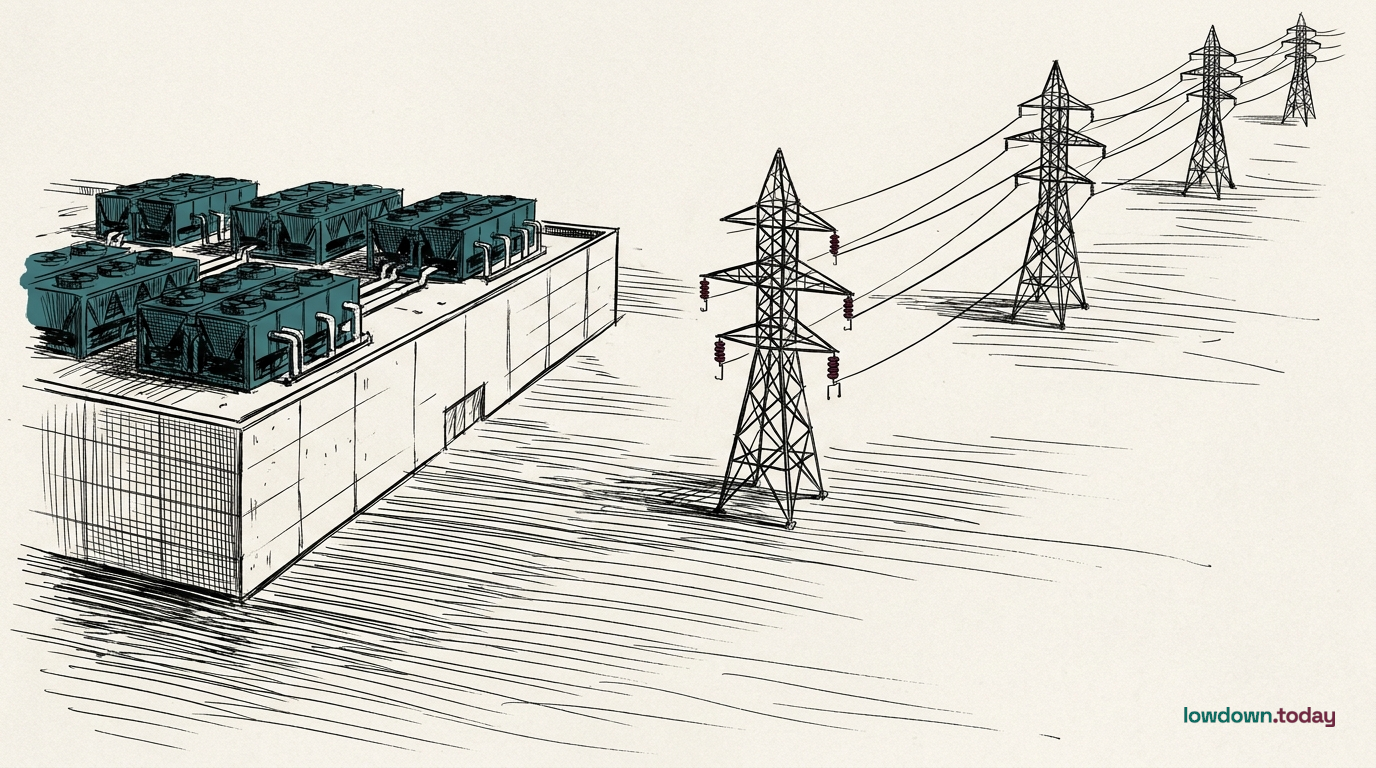
The specific question PJM must answer is technical but consequential: when a generator (typically a gas turbine or a battery system) sits on the same campus as the data-centre load it serves, how is that arrangement classified for tariff purposes? PJM's preferred definition would have allowed a wider category of behind-the-meter configurations; FERC ruled the definition would let load avoid contributing to grid costs in ways the commission was not prepared to accept. The new filing has to thread between the FERC objection and the operating reality of the Loudoun cluster, where co-located generation is already being designed into 2027-2028 builds.

The stakes sit directly on the Loudoun, Fairfax and Prince William corridor that PJM serves. Operators designing campuses there now face a planning environment where rezoning has narrowed (the Digital Gateway abandonment closes one path, Fairfax's new rules write a tighter one) at the same time as the federal tariff language defining their preferred behind-the-meter configurations is being rewritten. The 18 May filing is the document the colocation engineers in that corridor will read on Tuesday morning to find out which configurations remain viable. RM26-4-000 then becomes the federal template against which ERCOT, CAISO and MISO will be benchmarked over the second half of the year.

Deep Analysis

In plain English

PJM Interconnection manages the electricity grid across 13 US states, from Illinois to North Carolina, including the area around Washington DC where most of America's data centres are located. It had to file new rules with the federal electricity regulator, FERC, by Monday 18 May about how data centres can use their own on-site power generators rather than drawing from the public grid. This matters because the rules determine how much data-centre operators pay toward the costs of the public grid. If they generate their own power on-site, they might avoid contributing to those costs, which could mean other electricity customers pay more. FERC partially rejected PJM's previous attempt to define these arrangements, and the 18 May filing is the revised attempt.

Deep Analysis
Root Causes

Co-located generation inside a hyperscale fence is driven by a single structural constraint: grid interconnection timelines. A campus operator that can commission its own gas turbines or battery arrays in 18-24 months, against a grid connection timeline of 5-15 years in PJM territory, has a powerful economic motive to develop behind the meter rather than wait for grid power.

FERC's resistance to PJM's preferred definition of co-located load is a cost-allocation defence: if behind-the-meter generation does not contribute to transmission costs, the grid-connected load that does pay for the grid subsidises the behind-the-meter operator.

The Loudoun corridor context makes the cost-allocation question acute. Loudoun County hosts the world's densest data-centre cluster; the transmission infrastructure that serves it was built at ratepayer cost. A tariff that allows new campuses to co-locate generation without contributing to those sunk costs shifts the cost recovery burden further onto residential and commercial ratepayers already paying for infrastructure the industry helped necessitate.

What could happen next?
  • Consequence

    PJM's 18 May filing sets the co-located generation template for the Loudoun corridor; if FERC accepts it, data-centre operators can file campus-level generation plans with commissioning in 2027-2028 against a confirmed tariff structure.

    Short term · 0.75
  • Risk

    If FERC rejects PJM's second filing, the RM26-4-000 timeline slips into late 2026, leaving operators in PJM territory in regulatory uncertainty for campus builds already in the design phase.

    Short term · 0.65
  • Precedent

    The RM26-4-000 final rule, expected by end-June, will be the federal template against which CAISO and MISO file their own co-located load tariffs in H2 2026.

    Medium term · 0.8
First Reported In

Update #3 · OpenAI cuts $800bn; rivals double down

National Law Review· 16 May 2026
Read original
Different Perspectives
NVIDIA
NVIDIA
NVIDIA told the Securities and Exchange Commission on 26 August it had signed memorandums aiming to mobilise over $500bn for buyers' equipment purchases, then said in the same filing the arrangements may not become definitive. It may also carry limited residual-value risk on the equipment itself.
IREN Limited
IREN Limited
IREN signed $2.4bn of financing on 25 August that only releases cash once its Mackenzie GPU servers are accepted, and only through 31 December 2026. A shipping delay from here now creates a funding problem as well as a revenue one.
Energy Commission (Malaysia)
Malaysia's Energy Commission recorded data centres at 9.3% of national power in one hot week in August, against a 7% year-to-date average, and is projecting 31% of peninsular demand by 2035. It wants roughly 9 GW of new gas-fired capacity by 2032 to cover the gap.
Economic Development Board and Infocomm Media Development Authority
Singapore's EDB and IMDA rationed 200 MW across four operators on 21 August and followed with a tropical liquid-cooling standard six days later, fixing the terms before construction starts. The agencies will decide within 18 to 24 months whether to run a third call.
Legal Resources Centre
The Legal Resources Centre put the water and power draw of two approved Cape Town Equinix sites in public, at roughly 4.4 billion litres and 1.4 to 1.5 billion kWh a year, because the city and the operator would not. It wants a cumulative assessment before any more of the five approvals proceed.
Ministerio de Minas e Energia
Brazil's energy ministry published Redata's five conditions after the Senate passed PL 278/2026 on 1 September, betting a repeatable annual water test enforces cooling design better than a one-off approval. Redata now needs President Lula's signature before any of it takes effect.

