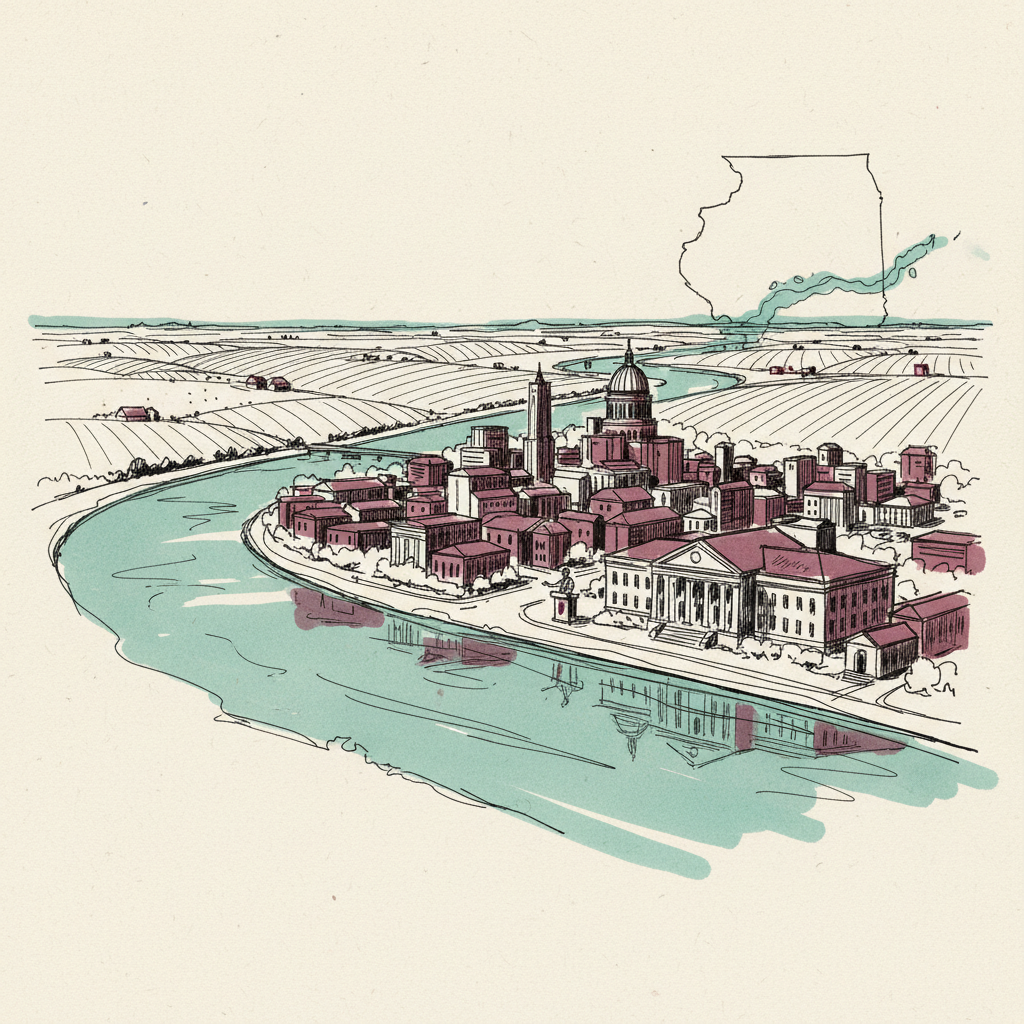
Illinois
Midwest US state centred on Chicago, the third-largest American city.
Two private plaintiffs sued the state's Board of Elections on 31 July 2026, opening a federal voting-rights front in a state that has otherwise spent the year fighting over data-centre siting and grid costs.
Last refreshed: 4 August 2026 · Appears in 2 active topics
How far can Illinois push retaliation redistricting without triggering its own legal challenge?
Timeline for Illinois
Mentioned in: ISPreview: Cambium files administration notice
UK Startups and InnovationMentioned in: New voting-rights suit filed in Illinois
US Midterms 2026Mentioned in: Alaska moves to strike a decoy
US Midterms 2026Mentioned in: SoFi workers ratify deal, keep strike option
2026 FIFA World CupBackground
Illinois is a Midwest state of roughly 12.7 million people, centred on Chicago, the third-largest city in the United States and the economic and cultural anchor of the American interior. Its congressional delegation leans Democratic and its state government has been under unified Democratic control for most of the past decade.
The state's recent policy weight has fallen in two areas. Its position on the PJM grid has made it central to the argument over data-centre siting, load growth and WHO pays for the transmission that serves it, an argument running through county moratoria and federal regulatory proceedings alike. Separately, its election administration is run by a bipartisan state board rather than by a partisan secretary of state, a structure intended to keep neither party in sole control of the machinery.
Chicago's civic infrastructure gives the state a recurring role in national events, from hosting duties to immigration and public-health enforcement at O'Hare, one of the busiest international gateways in the country. Those appearances are episodic; the grid and the ballot are the durable ones.
The state faces a federal voting claim
A complaint against the Illinois State Board of Elections was filed in the Northern District of Illinois on 31 July 2026, recorded on the Court file as a voting rights matter. Lowdown has not read the complaint and does not report what it alleges.
Illinois has featured in none of the 2026 cycle's redistricting litigation and is not among the thirty states the federal government has sued for voter registration data. An action brought by private plaintiffs against the state's own election administrators is therefore the first substantial election-law matter the state has faced this cycle, and the first test of procedures that have gone unchallenged.