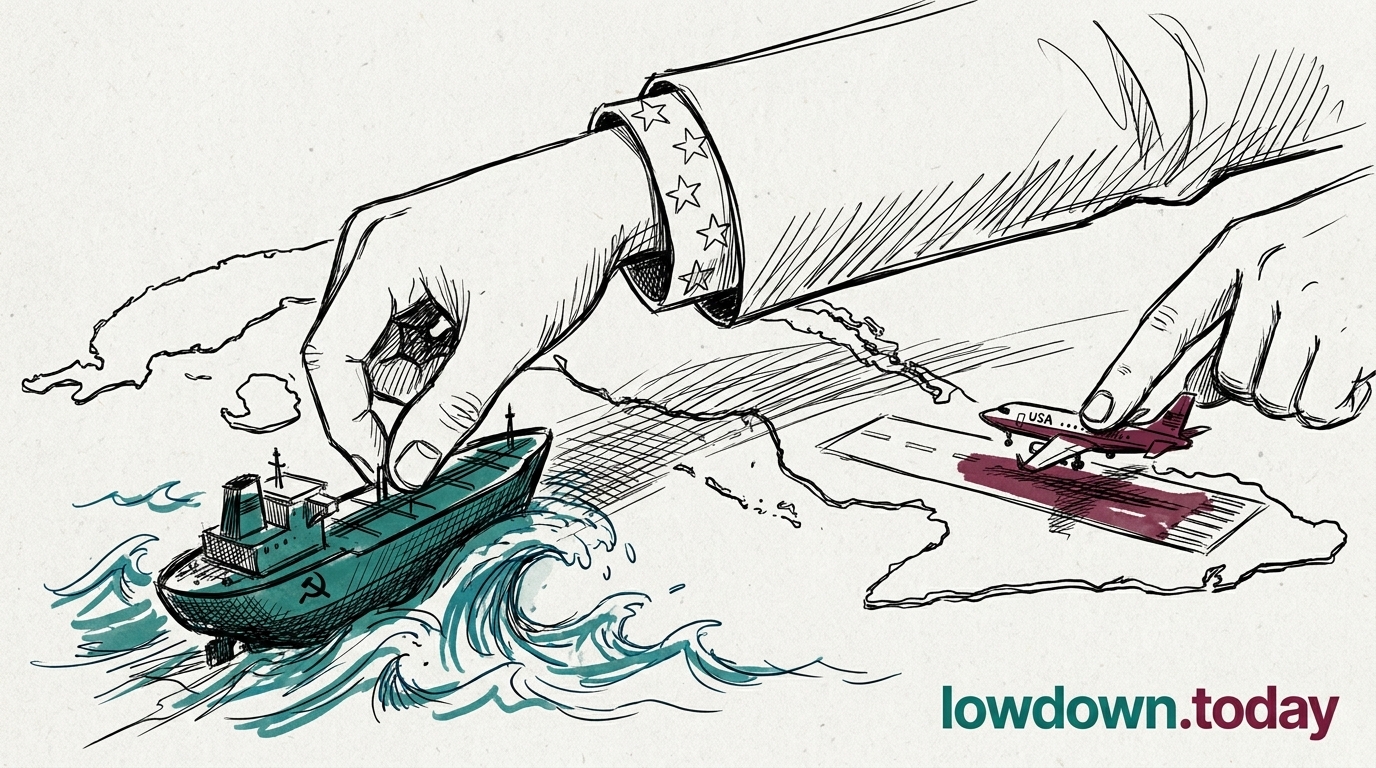
A senior State Department official held a separate Havana meeting on the same Friday with Raúl Guillermo Rodríguez Castro, age 41, a grandson of former President Raúl Castro who holds no government position. The encounter ran outside the formal state-to-state talks with Cuban foreign ministry officials. Axios broke the back-channel detail; Al Jazeera and the Spokesman-Review corroborated the basic outline. Foreign Minister Bruno Rodríguez Parrilla has not addressed the meeting publicly.
Diplomatic protocol distinguishes sharply between meeting Cuba's deputy foreign minister, which is conventional state-to-state engagement, and meeting a former president's 41-year-old grandson outside any government title. The first registers as recognition; the second is intelligence-style probing of a parallel power structure. Cuba's post-2018 transition formally moved presidential power to Miguel Díaz-Canel but left the Castro family in command of GAESA (the military's holding conglomerate), the FAR (Cuba's armed forces) and the intelligence services. The Communist Party general-secretary track now runs through Díaz-Canel; the security-services track does not.
The choice of counterpart matters. Washington selected a Castro family member who carries the lineage but no formal title, which is the configuration that lets the contact be registered without conferring official status. The back-channel bypasses the Holy See route that produced Cuba's first 2026 prisoner-release announcement and operates alongside the formal track represented publicly by Alejandro Garcia del Toro's 21 April confirmation. Rodríguez Parrilla's mid-April "extraterritorial" framing of US sanctions included no acknowledgement of any contact with Washington, consistent with the Cuban government not having been briefed on the back-channel itself.
Any future Castro-family-mediated transition that marginalised the Díaz-Canel structure now carries a higher political price domestically; Havana cannot publicly disavow the grandson without rejecting the lineage that anchors the security services. Washington has tested whether the Castro circle would consider a transition deal independently of the elected structure, and Havana has yet to answer.




