SUMED
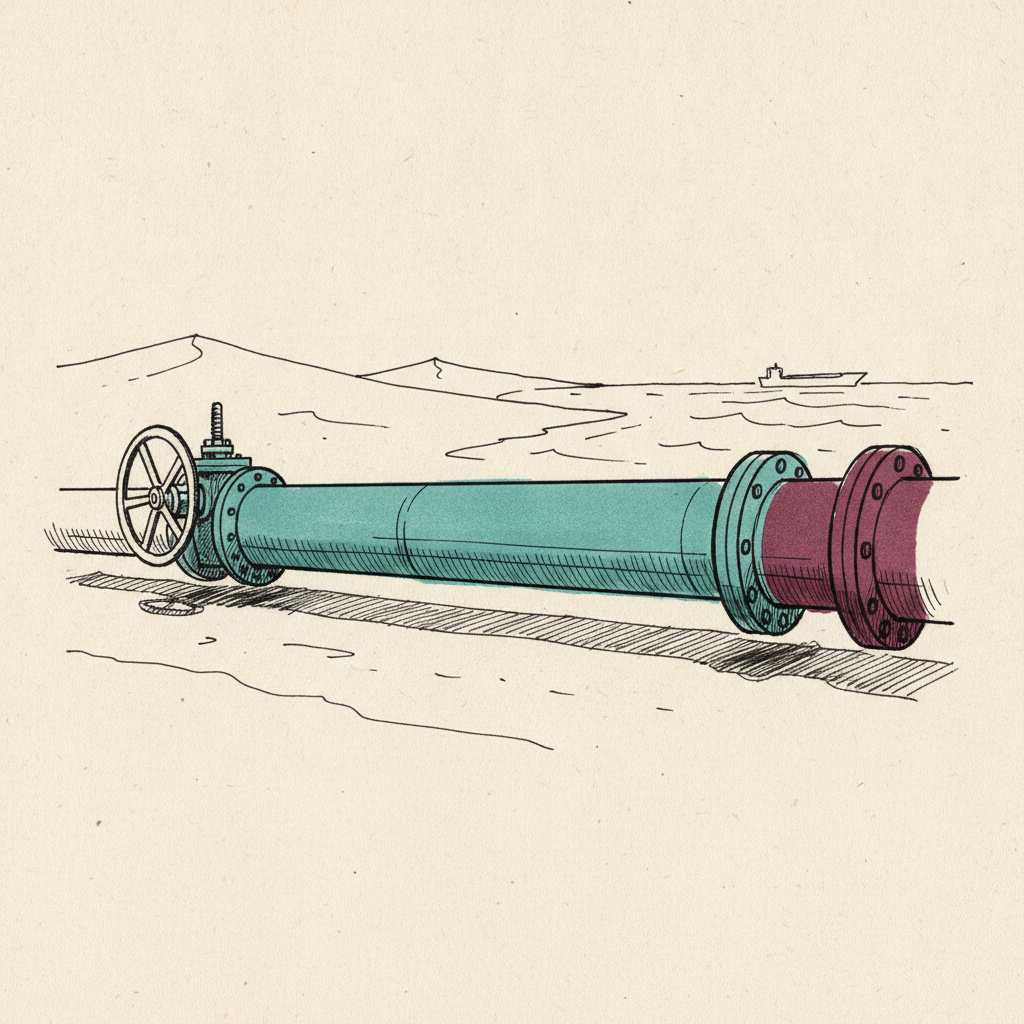
The Suez-Mediterranean Pipeline carrying crude from Ain Sokhna to the Mediterranean.
Last refreshed: 13 September 2026 · Appears in 2 active topics
Why is SUMED carrying a smaller share of rerouted Saudi crude than the Suez Canal itself?
Timeline for SUMED
Houthis take all of Yemen's Red Sea coast
Iran Conflict 2026Carried the Red Sea crude Ain Sokhna received toward Mediterranean refiners
European Oil Markets: Med refiners face a thinner backfillBackground
SUMED is now carrying a reduced share of Saudi Arabia's Red Sea crude bypass: Ain Sokhna, its Red Sea inlet, is taking only 23% of the volume Saudi Arabia has rerouted through Yanbu since the 23 July 2026 Bab el-Mandeb blockade, leaving Mediterranean refiners with a thinner backfill than the Suez Canal route alone provides. Opened in 1977 and jointly owned by Egyptian, Saudi, Kuwaiti, Qatari and other Gulf state interests, the pipeline runs overland from Ain Sokhna on the Red Sea to Sidi Kerir on the Mediterranean, giving crude too large for the Suez Canal, or shippers wanting to skip canal transit fees and queues, a direct route to European markets. (Provisional seed background; full synthesis pending.)
What is the SUMED pipeline?
How much Saudi crude is flowing through SUMED after the Bab el-Mandeb blockade?
Who owns the SUMED pipeline?
Written with AI from Lowdown's published reporting. Not individually reviewed by an editor. Updated 13 September 2026. Editorial standards.