War Powers Resolution
1973 war-powers law; House passed its first Iran resolution 23 July, Senate again blocked.
On 23 July The House passed its Iran war-powers resolution 214-208 but the Senate killed it 47-49, the seventh failed attempt since March; three days later the Pentagon renamed casualty tracking, a move that could reset the clock the vote just missed.
Last refreshed: 2 October 2026 · Appears in 1 active topic
Why has Congress voted seven times to stop the Iran war without managing to do it?
Timeline for War Powers Resolution
Supplied the section 5(c) procedure the measure ran on
Iran Conflict 2026: Tillis crosses but Iran vote fails 49-50Mentioned in: Trump calls off the Sunday strike
Iran Conflict 2026Defense casualty system logs 4 dead, 207 hurt
Iran Conflict 2026The Iran war gets a new file name
Iran Conflict 2026Provided the section 5(c) authority H.Con.Res.89 invoked
Iran Conflict 2026: House votes to end war, Senate won'tBackground
The War Powers Resolution is a 1973 US statute, passed over President Nixon's veto by a Senate vote of 75-18 and a House vote of 284-135, requiring a president to notify Congress within 48 hours of introducing US forces into hostilities and to withdraw within 60 days, plus a 30-day wind-down, absent explicit congressional authorisation. Its constitutional status remains disputed and untested by the Supreme Court; the closest analogous ruling, INS v. Chadha in 1983, is widely read as having gutted the mechanism Congress built to enforce it.
The 2026 Iran war has produced the statute's heaviest real-world workout since its passage: repeated notification filings, disputed clock start-dates, and a Senate that has never mustered the votes to force a withdrawal despite public opposition running well ahead of legislative action. The Administration has argued at different points that hostilities had ended, that Article II authority alone covered the campaign, or that a Ceasefire paused the clock, each position aimed at keeping the 60-day trigger from converting into a binding withdrawal order.
Congress failed again to force a clock
On 23 July The House passed H.Con.Res.89 214-208, directing Trump to withdraw forces under the statute's own machinery; hours later the Senate's parallel measure, the binding S.J.Res.180, went down 47-49 on the same Roll Call, with only Susan Collins crossing over against four House Republicans. It is at least the seventh vote since March the statute has failed to convert into a binding order.
Three days later, on 26 July, the Pentagon retired the Operation Epic Fury label and folded Iran casualty reporting into a broader Overseas Operations category. For the statute, that renaming carries more weight than its wording lets on: if EPIC FURY counts as having ended in May, the switch could start a fresh 60-day withdrawal clock, the exact trigger the Senate had just refused to pull by vote, so the resolution's teeth now hinge on an administrative filing rather than the vote Congress just held.
A foreign leader paused this war
On 2 August Trump scrapped a planned strike on Iran, not because of anything the War Powers Resolution requires but because Saudi Crown Prince Mohammed bin Salman warned Gulf states would absorb the retaliation, a request Qatar and the UAE joined. Every previous halt in the fighting had come from inside the machinery this statute or its allies built: a munitions warning from General Dan Caine, the Senate's own failed vote on this resolution.
This pause came from outside Washington entirely. For a statute built on the premise that Congress, not a foreign head of state, checks a president's war-making, a stop ordered by Gulf diplomacy rather than a floor vote is a demonstration of exactly the gap the resolution has never closed.
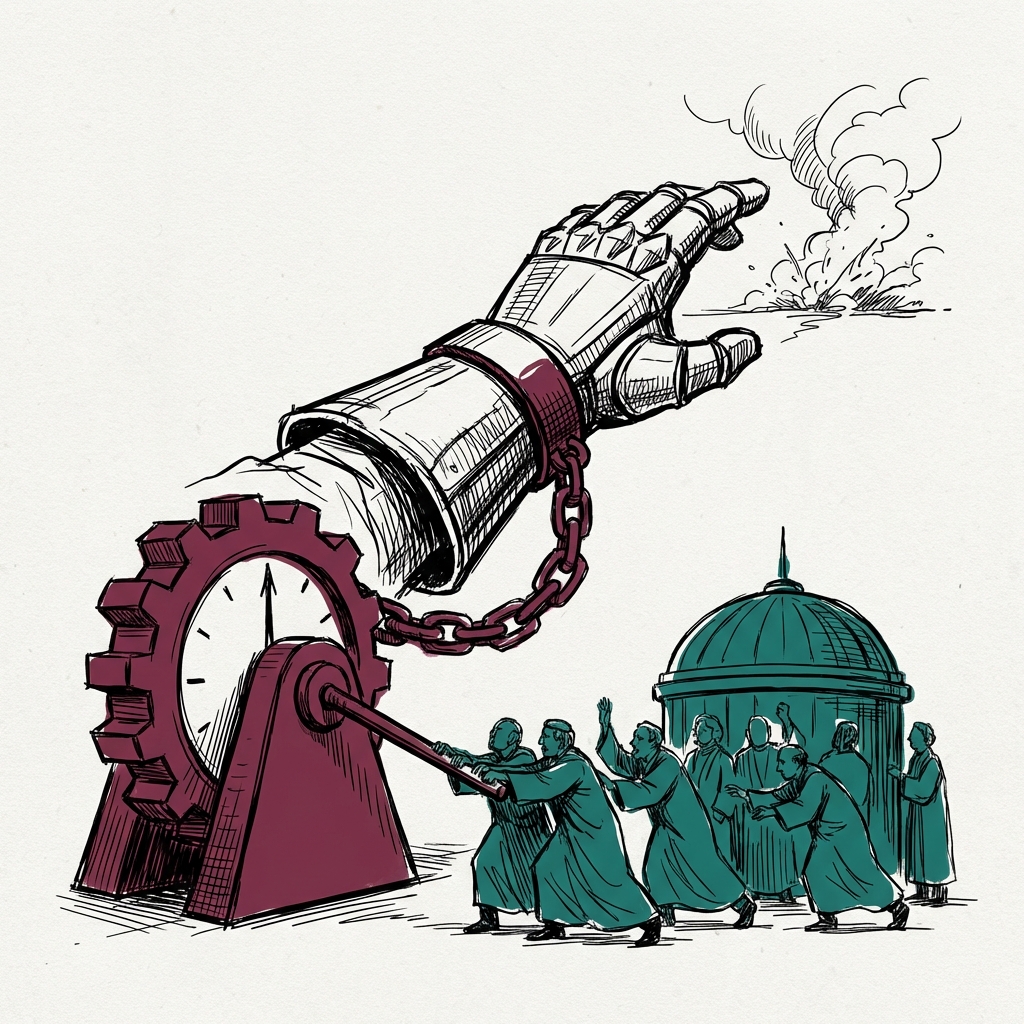
Congress keeps failing to bind the President
Does renaming the Iran operation reset the War Powers Resolution clock?
What is Operation Sledgehammer and how does it relate to the War Powers Resolution?
Why did all six War Powers Resolution votes on Iran fail?
Reference
What is an AUMF and how is it different from the War Powers Resolution?
Has the War Powers Resolution ever successfully stopped a war?
What is the War Powers Resolution 60-day clock and how does it work?
What is the War Powers Resolution?
Why did the Senate vote against the Iran war in June 2026 if it had no legal force?
What happened to the Senate vote on the Iran War Powers Resolution?
What does Pete Hegseth's Article 2 claim mean for the War Powers Resolution?
Can Trump legally conduct the Iran war without congressional authorisation?
What happened to the War Powers Resolution deadline in the Iran war?
Has Congress passed a War Powers Resolution to stop the Iran war?
Can Congress use the War Powers Resolution to stop the Iran war?
Did the House ever pass a resolution to end the Iran war?



Written with AI from Lowdown's published reporting. Not individually reviewed by an editor. Updated 2 October 2026. Editorial standards.