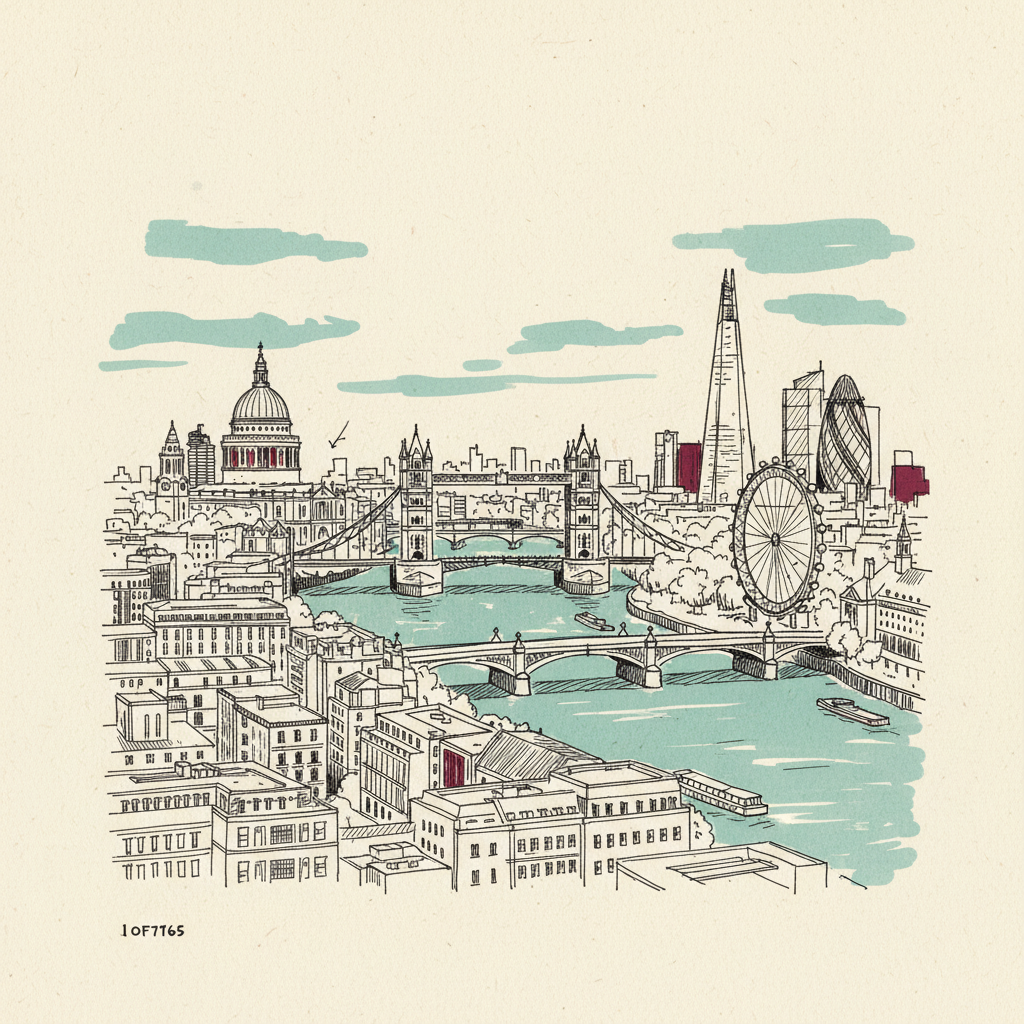
London
Capital of the UK; hosts the IMO, whose crewless-ship code entered force 1 July 2026.
On 1 July 2026, the first global code for crewless cargo vessels entered force through the London-based International Maritime Organization, leaving liability and shore-control questions unresolved.
Last refreshed: 22 October 2026 · Appears in 7 active topics
Is London converting deep-tech and AI investment into lasting industrial strength?
Timeline for London
Mentioned in: Beijing will not confirm Shenzhen summit
Russia-Ukraine War 2026Mentioned in: UKMTO confirms one tanker hit near Bukha
Iran Conflict 2026Mentioned in: Microsoft quits Nscale's Essex AI site
Data Centres: Boom and BacklashMentioned in: Florida AG secures Raúl Castro warrant
Cuba DispatchMentioned in: Ukraine hits a St Petersburg data centre
Russia-Ukraine War 2026Background
London is the capital of the United Kingdom and the seat of Parliament, The National government and many central departments. The City of London and Canary Wharf form a major centre for banking, insurance, law and professional services.
London hosts the International Maritime Organization, which sets global shipping standards. Lloyd's of London provides a market where syndicates insure Marine and war risks. Lloyd's Register, a separate London-based classification society, sets technical rules and assesses vessels.
London's political, financial and maritime institutions give the city influence over government policy, capital, commercial law, safety standards and the availability of insurance for international trade.
London anchors crewless shipping rules
On 1 July 2026, the International Maritime Organization's first global code for crewless cargo vessels entered force from its London headquarters. It left liability for a shore-based master, safe supervision limits and seafarers' future roles unresolved.
By July 2026, Lloyd's Register in Britain and Norway's classification body had each published separate assurance frameworks. For London, the split matters because the city hosts the UN rule-maker while a London-based classification society helps shipowners prove compliance in the gaps. The code gives the city a central regulatory role, but private technical standards still determine how operators handle questions the global text leaves open.
London prices maritime war risk
On 19 June 2026, Lloyd's of London launched a Chubb-led consortium offering $400m of Marine war-risk capacity for vessels crossing the strait of Hormuz. The facility reopened private cover before commercial transits had resumed, putting London-market underwriting inside the route's recovery.
By 17 July, Hormuz war-risk cover had widened to 5% of a vessel's hull value after two tankers were hit in The Gulf. For London, the shift showed how quickly actual losses can reset the price set by underwriters and brokers. The market can restore capacity before a route reopens, but subsequent attacks still determine its cost.
London anchors crewless shipping rules
What happens now the IMO's crewless-ship code is in force?
Reference
What is Cosine's Lumen Sovereign AI model?
Where is the Brent crude oil price set?
Why is London so important for global shipping law?
Where is the International Maritime Organization based?
What did the UK Commons committee say about Britain's tech sovereignty?
Why are Lloyd's war-risk premiums for the Strait of Hormuz still high?
What is the E3 five-point framework on Ukraine?
Why did OpenAI open a big London office while pausing its Stargate UK data centre?
Why did the UK ease sanctions on Russian-refined fuel imports?

Written with AI from Lowdown's published reporting. Not individually reviewed by an editor. Updated 22 October 2026. Editorial standards.