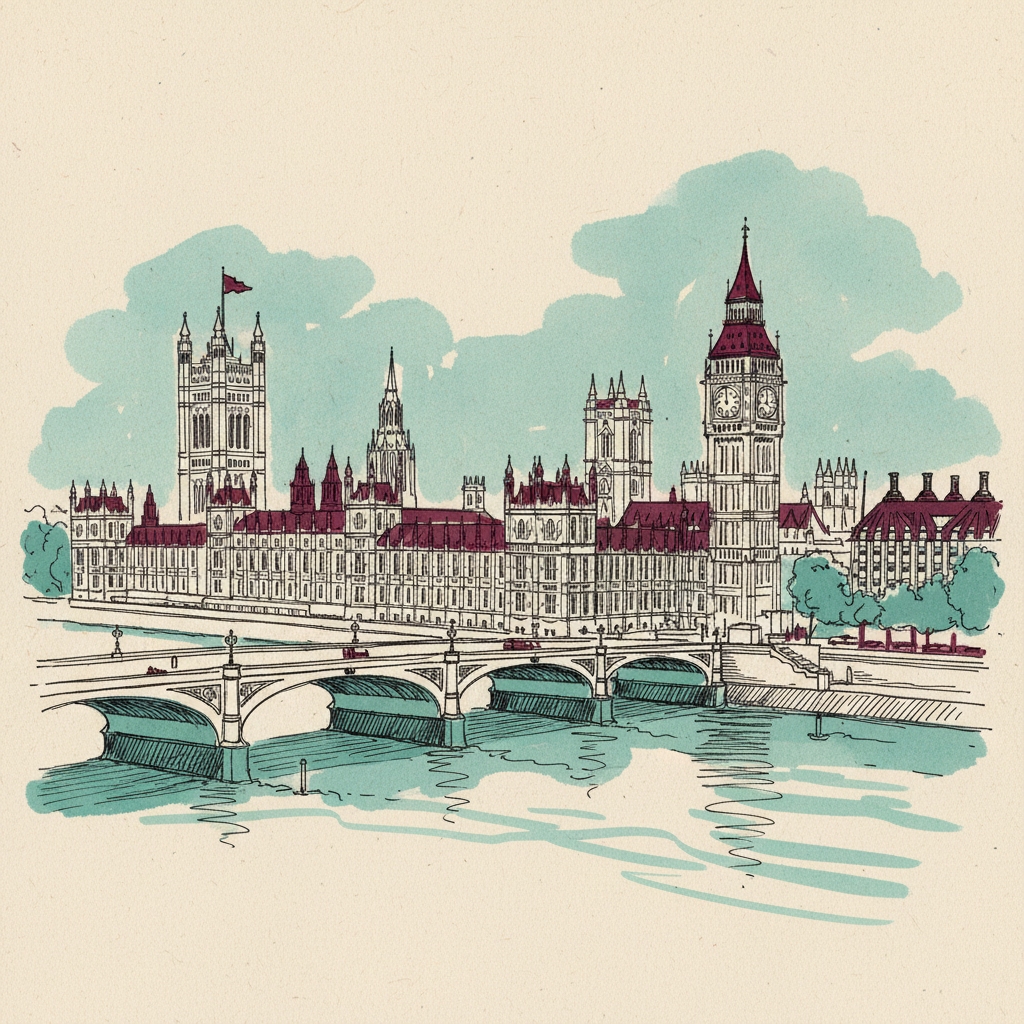
Westminster
London district housing UK Parliament; metonym for the UK Government whose authority over the devolved nations weakened after 7 May 2026.
On 7 July, Westminster refused a Section 30 order for a Scottish independence referendum, keeping legal control of any binding vote.
Last refreshed: 7 October 2026
How does Westminster manage three devolved administrations pursuing conflicting agendas after 7 May 2026?
Timeline for Westminster
Mentioned in: Burnham pledges to change voting system
UK Local Elections 2026Mentioned in: Marra's MSPs vote for right to decide
UK Local Elections 2026Mentioned in: Holyrood booked £1.1bn of ScotWind draws
Is Britain Actually Broke?Mentioned in: Holborn's by-election puts 15 on the ballot
UK Local Elections 2026Mentioned in: MP says option D splits Huntingdonshire
UK Local Elections 2026Background
Westminster is the London district containing the Palace of Westminster, Downing Street and major UK Government offices. In political use, it is shorthand for the UK Parliament and central government.
The UK constitutional settlement reserves some powers to Parliament. A legally binding Scottish independence referendum requires a Section 30 order, which Westminster declined after Holyrood's vote on 26 May. The refusal was maintained on 7 July under a new prime minister.
Pressure from Edinburgh continued after the summer. On 22 September Holyrood carried the First Minister's right-to-decide motion, as amended, by 84 votes to 18, with all 17 Scottish Labour MSPs in FAVOUR. A Holyrood motion cannot itself grant a Section 30 order, so the power stays at Westminster.
Westminster retains referendum control
On 26 May, Holyrood voted 72 to 55 to seek a Section 30 order for another independence referendum. Westminster rejected the request that day, leaving the Scottish Government unable to hold a legally binding vote without central approval.
The position survived the change of prime minister. On 7 July, Andy Burnham said he would not grant an order and instead offered enhanced devolution. For Westminster, the dispute keeps constitutional authority over the referendum at the centre of its relationship with Edinburgh.
Westminster directs council restructuring
On 1 September, ministers said Cambridgeshire and Peterborough would receive a reorganisation decision by October. The timetable retained shadow elections in 2027 and a 2028 vesting day, placing Westminster at the point where local proposals become a formal structural decision.
The department allocated £63m across 21 reorganising areas for work including payroll, contracts, borrowing and statutory services. A minister had not confirmed a preferred Cambridgeshire option, and no Structural Changes Order had been laid on 1 September. Westminster therefore remained responsible for turning consultation into the legal reorganisation.