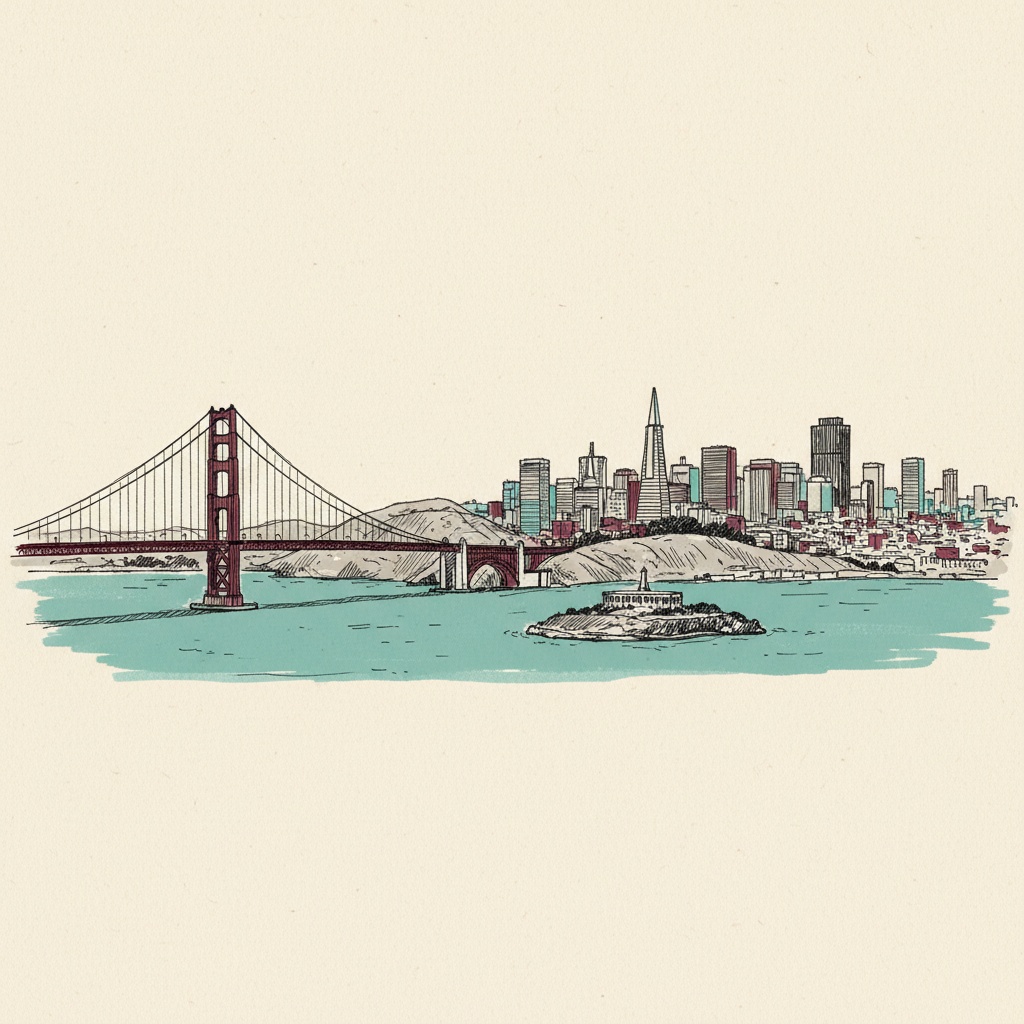
San Francisco
California Bay Area city; global technology hub; 2026 World Cup host at Levi's Stadium.
On 11 May, San Francisco was among 12 World Cup host cities without a public fan-rights plan, despite hosting matches at Levi's Stadium in June.
Last refreshed: 22 September 2026 · Appears in 2 active topics
Why has San Francisco — the US's most watched tech city — published no World Cup rights plan?
Timeline for San Francisco
Mentioned in: Verda raises $189m for Finnish megawatts
European Tech SovereigntyMentioned in: Paramount trial set for March 2027
Media's AI PivotMentioned in: Odyssey Ventures gets £10m state cheque
UK Startups and InnovationMentioned in: EU clears Gulf equity in Paramount deal
Media's AI PivotMentioned in: Helsing picks Plymouth for £350m plant
UK Startups and InnovationBackground
San Francisco is a California city in the Bay Area and a global centre for technology and venture capital. Its position beside Silicon Valley gives it lasting relevance to the firms, investors and workers shaping the technology sector.
The city is also part of a wider metropolitan region whose institutions and companies reach beyond its municipal boundary. A San Francisco startup, Aikido Technologies, announced a floating wind-powered computing pilot for Norway in March 2026, illustrating the city's continuing role as a base for technology ventures.
San Francisco's 2026 World Cup role centred on Levi's Stadium in nearby Santa Clara. Austria played Jordan there on 17 June, a lasting part of the city's record as a tournament host.
San Francisco missed the rights deadline
On 11 May, San Francisco was one of 12 of the 16 World Cup host cities that had not published a fan-rights plan by Human Rights Watch's Deadline. The city entered its hosting duties without a public document that supporters could inspect, while Atlanta, Dallas, Houston and Vancouver had published plans.
San Francisco hosted Austria's 3-1 win over Jordan at Levi's Stadium on 17 June. Football's governing body said all 16 cities had submitted plans privately, but that did not give supporters a public account of the safeguards expected around a San Francisco matchday.
Reference
What is San Francisco famous for?
Did San Francisco hotels benefit from the World Cup?
Why did states sue to block the Paramount-Warner Bros. Discovery merger in San Francisco?
Has San Francisco published a World Cup human rights plan?
Where does San Francisco's World Cup team play its matches?
Why is San Francisco's World Cup stadium in Santa Clara and not the city itself?


