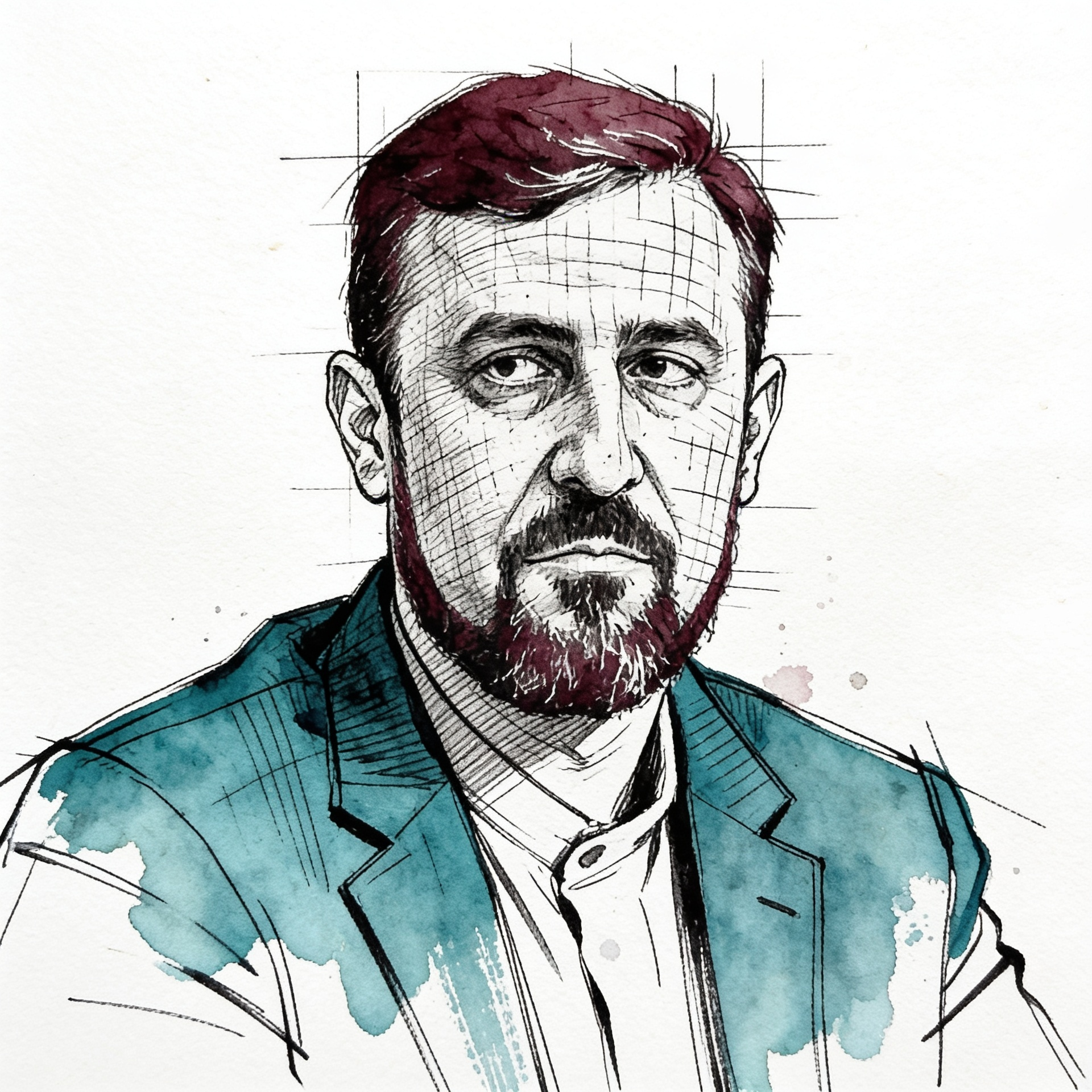
Kazem Gharibabadi
Iran's deputy foreign minister for legal affairs and lead nuclear negotiator from 2024.
Gharibabadi countered Oman's voluntary Hormuz fee plan on 30 July 2026 by demanding Iran control both its own shipping lane and part of the opposite Omani lane.
Last refreshed: 6 August 2026 · Appears in 2 active topics
What conditions is Iran's lead nuclear negotiator demanding before talks can advance?
Timeline for Kazem Gharibabadi
Mentioned in: Navy says it cleared two Hormuz lanes
Iran Conflict 2026Mentioned in: Two Hormuz accounts, no published text
Iran Conflict 2026Proposed Iran control its own lane plus part of the opposite one
Iran Conflict 2026: Iran counters Oman with a lane demandWarned Oman against outside interference
Autonomous Systems: Land & Sea: Oman clears mine mission, then a stallIran's two voices on the talks
Iran Conflict 2026Background
Kazem Gharibabadi has served as Iran's Deputy Minister of Foreign Affairs for Legal and International Affairs since September 2024 and is Tehran's designated nuclear negotiator for the Islamabad MOU process. A jurist by training, he previously served as Deputy Head of the Judiciary and headed Iran's Human Rights Headquarters, the body responsible for Iran's official UN reporting, before moving into diplomacy, and was formerly Iran's ambassador in Vienna, the seat of the IAEA.
He is the son-in-law of Brigadier General Mohammad Baqer Zolqadr, a senior IRGC commander and Secretary of the Expediency Discernment Council, a family tie that gives him standing within Iran's security establishment alongside his legal specialism. In February 2026, lawyers filed a Universal-jurisdiction complaint against him in Switzerland alleging crimes against humanity over the crackdown following Mahsa Amini's death in custody in 2022.
Gharibabadi's combination of IRGC-adjacent family ties and legal training positions him to police the precise wording of any emerging nuclear agreement while retaining credibility with hardliners, making him a pivotal figure in Iran's divided foreign-policy apparatus rather than a purely technical negotiator.
Gharibabadi counters Oman's Hormuz fee plan
Gharibabadi rejected Oman's voluntary-fee proposal for policing the Strait of Hormuz on 30 July, countering with a demand that Iran control not only its own territorial shipping lane but part of the lane on the opposite, Omani side. The move followed weeks of splits among the fee proposal's own authors over how any Hormuz policing arrangement should work, after Oman had handed Washington the plan on 30 June styled on the Malacca Strait's voluntary charges.
As Iran's deputy foreign minister for legal affairs, Gharibabadi is the official through whom Tehran's negotiating position on the strait passes, and his lane demand raised Iran's price for any routing deal well beyond a fee dispute into a question of territorial control.
Gharibabadi sets conditions before inspectors return
At the Islamabad MOU signing on 14 June, Gharibabadi declared the text was drafted "in continued distrust" and named three preconditions for substantive talks: lifting the naval blockade, formally ending military operations, and releasing frozen Iranian funds. On 26 June he hardened that position further, setting two explicit conditions for any IAEA inspector return, a completed final agreement and termination of all sanctions, both unmet with no agreed timetable.
That sequencing leaves verification trailing any eventual deal rather than underpinning it, a structural choice that narrows what the 60-day MOU window agreed at Islamabad can realistically deliver.
Gharibabadi counters Oman's Hormuz fee plan
What did Iran demand in response to Oman's Hormuz safe-passage plan?
Gharibabadi sets conditions before inspectors return
What are Iran's three demands before nuclear talks begin?
Who is Iran's nuclear negotiator in the 2026 US-Iran talks?
Reference
Why won't Iran allow IAEA inspectors back into its nuclear facilities in 2026?
Why was Gharibabadi accused of crimes against humanity in Switzerland?
What conditions did Gharibabadi set for IAEA inspectors to return to Iran?

