Canada
G7 federal co-host of the 2026 World Cup; eliminated in the last 16 by Morocco.
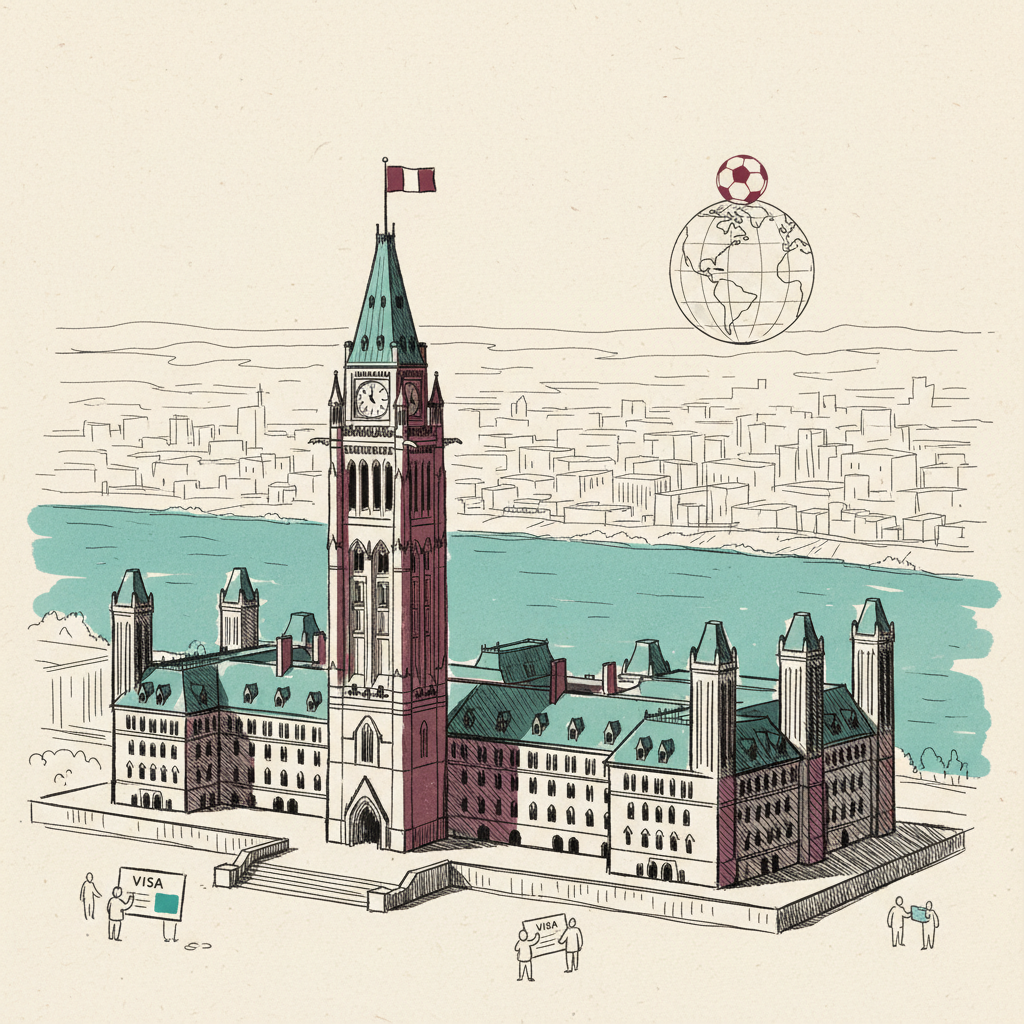
Canada's home World Cup ended on 4 July with a 3-0 last-16 defeat to Morocco, after its first World Cup wins and a tournament marked by Canadian border decisions.
Last refreshed: 22 October 2026 · Appears in 7 active topics
Can Canada's squad survive Koné's injury and advance past the round of 32?
Timeline for Canada
Mentioned in: EU Arctic Strategy backs Greenland cable
European Tech SovereigntyMentioned in: HCLTech hires again as Wipro cuts 6,716
AI: Jobs, Power & MoneyMentioned in: IMF ranks UK sixth of G7 on gross debt
Is Britain Actually Broke?Mentioned in: Quebec data centres face under-use fee
Data Centres: Boom and BacklashMentioned in: Ten agencies name Beijing firm in hacks
Cybersecurity: Threats and DefencesBackground
Canada is a federal parliamentary democracy and constitutional monarchy in northern North America, with its capital at Ottawa. It has ten provinces and three territories. English and French are its official languages, and the Canadian dollar is its currency.
The country belongs to the Group of Seven and was a founding member of NATO. Those memberships place it within the main Western economic and security institutions while its federal structure gives provinces substantial authority over public services and natural resources.
Canada's population is about 41 million. Its territory spans Atlantic, Pacific and Arctic coasts, making trade, energy, defence and relations with the United States lasting parts of its international role.
Canada records its first wins
Canada arrived at its home tournament having lost all six of its previous World Cup matches, in 1986 and 2022. It drew 1-1 with Bosnia-Herzegovina in Toronto on 12 June, then beat nine-man Qatar 6-0 in Vancouver on 18 June. Jonathan David scored a hat-trick, while Ismael Kone broke his leg and missed the rest of the tournament.
Stephen Eustaquio's 92nd-minute goal beat South Africa 1-0 on 28 June, Canada's first World Cup knockout win. The run ended in Houston on 4 July, when Azzedine Ounahi scored twice in Morocco's 3-0 victory. Co-host status had eased Canada's group draw but gave it no protection in the knockout bracket.
Canada enforces its border rules
Hosting did not suspend Canadian immigration law. On 29 April 2026, the Canada Border Services Agency turned back Iran's football federation delegation at Toronto Pearson. Officers cited president Mehdi Taj's reported former role in the IRGC and revoked the three officials' valid visas. Iran missed the FIFA Congress in Vancouver the next day.
On 16 June, Canada refused entry to Ghana captain Thomas Partey before a match in Toronto, citing pending UK sexual-offence charges that he denies. A Canadian court dismissed his emergency appeal the same day. FIFA said immigration decisions rest with host governments.
Canada refused entry to tournament figures
Why did Canada refuse to let Thomas Partey play in Toronto?
Is the IRGC banned in Canada?
Why did Canada deny entry to Iranian football officials in April 2026?
Did Canada win a World Cup knockout match in 2026?
How many people attended the 2026 World Cup group stage?
Who is Ismael Koné and why is he out of the World Cup?
Did Canada qualify for the 2026 World Cup knockout rounds?
Which city is Canada's World Cup 2026 venue in?
Who is Canada's Prime Minister during the 2026 World Cup?


Written with AI from Lowdown's published reporting. Not individually reviewed by an editor. Updated 22 October 2026. Editorial standards.