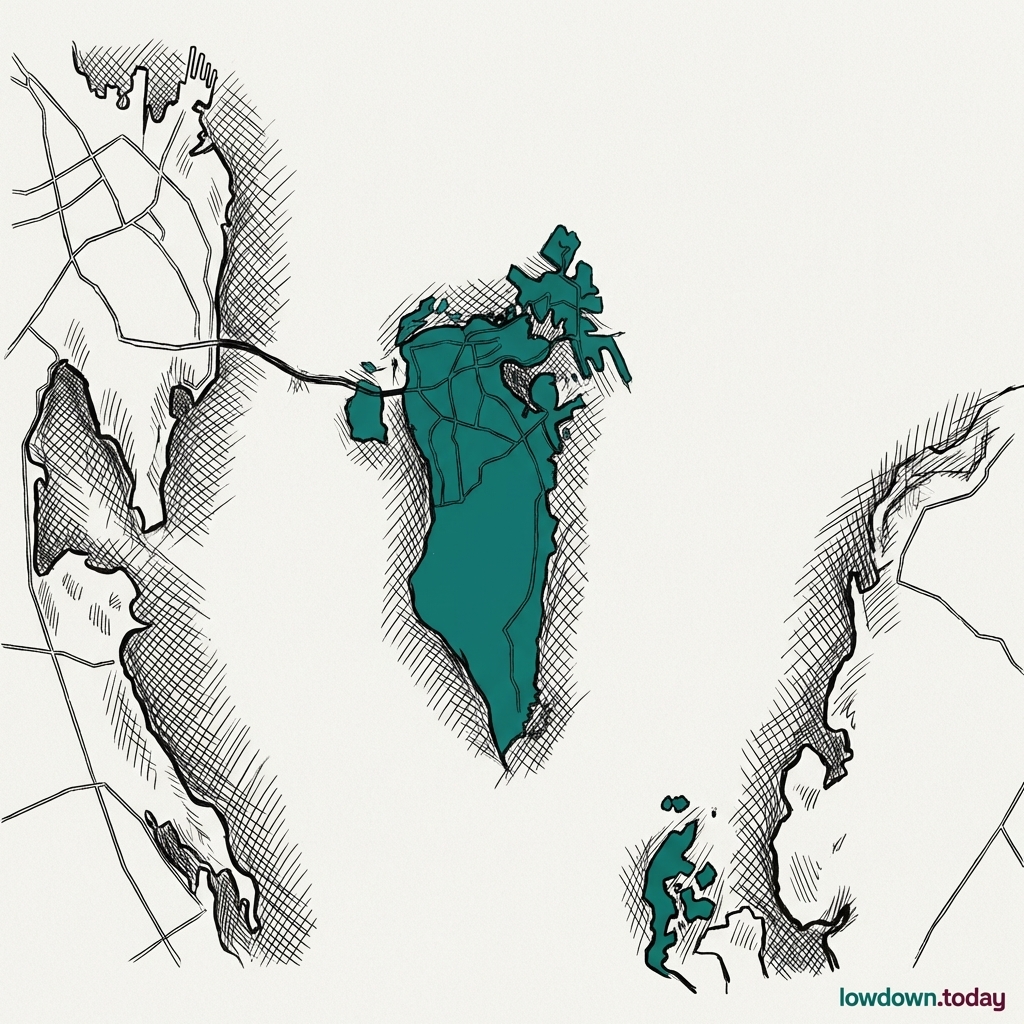
Bahrain
Gulf archipelago hosting the US Fifth Fleet; air-defence stocks near-exhausted as Iran's 2026 campaign intensifies.
Last refreshed: 8 June 2026 · Appears in 1 active topic
Can CENTCOM defend Bahrain's Fifth Fleet base as local Patriot stocks run dry?
Timeline for Bahrain
Mentioned in: US Army Apache goes down near Hormuz
Iran Conflict 2026Mentioned in: Saudi Arabia left off the Patriot list
Iran Conflict 2026Mentioned in: Iran fires 10 missiles at Ramat David
Iran Conflict 2026IRGC salvo hits two Gulf states at once
Iran Conflict 2026Reached 87% PAC-3 magazine depletion with 18-month resupply gap after IRGC salvo
Iran Conflict 2026: Bahrain's missile shield runs near empty- Why is Iran attacking Bahrain?
- Bahrain hosts the US Navy's Fifth Fleet headquarters and has an Israeli embassy. Iran views it as a forward base for American operations and has struck military and civilian targets.Source: editorial
- Has Bahrain joined the US naval blockade of Iran?
- Yes. Bahrain joined the US blockade of Iranian ports on 13 April 2026 alongside the UAE. Both are host-base states with limited room to refuse given the US military installations on their soil.Source: iran-conflict-2026
- Where is the US Fifth Fleet based?
- The US Fifth Fleet is headquartered at Naval Support Activity Bahrain in Manama. It has been struck by Iranian missiles in the 2026 conflict, the first direct attack on a major US naval base by a state adversary.Source: editorial
- Is Bahrain Sunni or Shia?
- Bahrain has a Shia majority population governed by a Sunni monarchy, the Al Khalifa dynasty. This sectarian divide is a persistent source of internal tension that Iran has historically sought to exploit.Source: editorial
- Why is Iran targeting Bahrain in the 2026 conflict?
- Iran targets Bahrain primarily because it hosts the US Navy's Fifth Fleet headquarters at NSA Bahrain, the most forward-deployed American naval presence in the Gulf. Bahrain's Shia majority population also gives Tehran domestic leverage, and Iranian intelligence arrested 41 alleged IRGC-recruited Bahraini nationals in March 2026.Source: entity background
- What did Bahrain sign on 12 May 2026?
- Bahrain signed the joint statement formalising the Multinational Military Mission for the Strait of Hormuz on 12 May 2026, co-convened by the UK and France with 26 nations. It was the first time Bahrain appeared on Western Hormuz Coalition paper since Operation EPIC FURY began.Source: entity background
- Does Bahrain have enough fresh water to survive the conflict?
- Bahrain has almost no natural fresh water and depends entirely on desalination plants, which Iran has threatened. The desalination infrastructure represents an existential vulnerability independent of the military campaign.Source: entity background
- How many Iranian attacks has Bahrain intercepted?
- Bahrain intercepted 198 projectiles in just six days of concentrated Iranian fire, absorbing more strikes per square kilometre than any other Gulf state in the 2026 conflict.Source: entity background
- Why is Bahrain running out of Patriot missiles?
- Bahrain's PAC-3 interceptor magazine reached an estimated 87 per cent depletion after intercepting 198 projectiles during Iran's 2026 campaign. It was excluded from the May 2026 US emergency resupply authorisation; 50 replacement rounds were ordered but sit at the back of an 18-month Camden production queue behind larger Gulf-state orders.Source: event
- Is the US Fifth Fleet headquarters in Bahrain safe?
- The Fifth Fleet headquarters at Naval Support Activity Bahrain has been directly struck by Iranian missiles and drones in the 2026 conflict. With Bahrain's own Patriot stocks near-exhausted, CENTCOM has begun absorbing The Intercept burden over Hormuz directly rather than relying on Bahraini air defences.Source: event
- What did the IRGC hit in Bahrain on 5 June 2026?
- The IRGC fired part of a seven-missile salvo targeting US military bases in both Kuwait and Bahrain simultaneously on 5-6 June 2026. CENTCOM intercepted six of the seven missiles. No casualties were confirmed, but the strike drew down Bahrain's already-depleted interceptor stocks further.Source: event
- Why does Bahrain host the US Fifth Fleet?
- The US Navy's Fifth Fleet has been based at Naval Support Activity Bahrain since 1995. Bahrain's location at the northern end of the Persian Gulf gives the fleet a forward operating base inside the Gulf itself, covering the Strait of Hormuz, the Arabian Sea, and Red Sea approaches.
Background
An archipelago of 33 islands in the Persian Gulf, Bahrain has a population of roughly 1.5 million, over half of them foreign nationals. It hosts the US Navy's Fifth Fleet at Naval Support Activity Bahrain, making it the most forward-deployed American naval presence in the Gulf. Bahrain's Shia majority is governed by a Sunni monarchy, a sectarian fault line Iran has historically exploited. The kingdom is a signatory to the Abraham Accords and a member of the Gulf Cooperation Council. Its economy depends on aluminium smelting (Alba/Mumtalakat), financial services, and petroleum from a shared offshore field with Saudi Arabia. The island has almost no natural fresh water; desalination plants are existential infrastructure.
Bahrain has absorbed more Iranian fire per square kilometre than any other Gulf state in the 2026 conflict. Iran struck the US Fifth Fleet headquarters, hit the BAPCO oil refinery with a Ballistic missile, and attacked the Israeli Embassy compound; Britain pulled diplomats as strikes intensified. In March 2026 Bahraini authorities arrested 41 alleged IRGC-recruited nationals in the largest single IRGC-linked detention in the kingdom's history, exposing a dual threat: external bombardment and internal subversion simultaneously.
The deeper structural problem is Bahrain's near-empty interceptor magazine. By 3 June its Patriot PAC-3 stock was estimated at 87 per cent depleted, intercepting a total of 198 projectiles across the conflict, and it was excluded from Rubio's emergency resupply authorisation covering Qatar, Kuwait, the UAE and Israel. A Federal Register notice on 1 June added 50 PAC-3 MSE rounds, but on an 18-month standard procurement timeline against a Camden production queue already behind Qatar's 300 and Saudi Arabia's 730 rounds. The IRGC's 5 June salvo fired seven Ballistic Missiles at US bases in Kuwait and Bahrain simultaneously, the largest two-country launch of the war, drawing Bahrain's stock further down. CENTCOM is now absorbing The Intercept burden over the Strait of Hormuz directly as Gulf-state stocks thin, a structural shift in how the air-defence architecture operates.
On 12 May 2026 Bahrain signed the Multinational Military Mission for the Strait of Hormuz joint statement alongside Qatar, the first time either state appeared on Western coalition paper. On 21 May the five GCC states jointly wrote to the IMO rejecting Iran's Persian Gulf Strait Authority transit route. Bahrain's calculus is unchanged: it absorbs Iranian fire because of the Fifth Fleet, joins every Coalition because of the Fifth Fleet, and now watches CENTCOM step in as its own shield empties.


