Skip to content
You can now search across every topic, entity and event.What's new
Russia-Ukraine War 2026
13JUL

Fire station falls at Zaporizhzhia plant

1 min read
10:28UTC

An IAEA team confirmed a 30 June drone strike damaged the fire station serving the Zaporizhzhia Nuclear Power Plant, cutting its firefighting capacity.

ConflictDeveloping
Key takeaway

A drone strike damaged Zaporizhzhia's fire station, the IAEA confirmed, reducing firefighting cover at Europe's largest nuclear plant.

An IAEA team visiting Enerhodar on 1 July confirmed that a 30 June drone strike had damaged the fire station supporting emergency response at the Zaporizhzhia Nuclear Power Plant, Europe's largest 1. The International Atomic Energy Agency said the strike damaged the building and several fire-fighting vehicles, significantly reducing the station's firefighting capacity 2.

The plant has run on emergency backup power for months and suffered its twentieth total blackout on 20 June . Director General Rafael Grossi said the latest loss of off-site power "again highlights the extreme fragility of nuclear safety at the plant and the need for maximum military restraint" 3.

The counter-argument holds that the plant's six reactors sit in cold shutdown, so the consequence of any single failure is far lower than at an operating station. Even so, fewer working fire engines leave less room to contain the next failure.

Deep Analysis

In plain English

The Zaporizhzhia Nuclear Power Plant, Europe's largest, sits in an active war zone and depends on outside power lines that keep getting cut by fighting. On 1 July, an IAEA inspection team confirmed that a drone strike on 30 June had damaged the fire station in the nearby town of Enerhodar, the facility that would respond if there were a fire at the plant. This matters because it is not about the plant losing power this time, it is about losing the ability to fight a fire if one broke out. IAEA Director General Rafael Grossi said the incident is a reminder of the extreme fragility of nuclear safety at the plant and the need for maximum military restraint.

Deep Analysis
Root Causes

ZNPP's recurring blackouts stem from transmission infrastructure, the 750kV Dniprovska line and its 330kV Ferosplavna-1 backup, that sits astride active front lines neither side fully controls, making repair ceasefires fragile and short-lived.

The Enerhodar fire station strike adds a distinct structural vulnerability on top of that: even when power holds, the plant's capacity to respond to a fire or other on-site emergency now depends on a damaged facility, compounding rather than replacing the power-line risk IAEA has tracked for months.

Escalation

Direction: a new category of risk at ZNPP, damage to emergency-response infrastructure rather than another blackout, representing an escalation in the range of systems affected even without a change in radiation levels.

First Reported In

Update #23 · Moscow rations diesel as US cover lapses

IAEA· 13 Jul 2026
Read original
Different Perspectives
Turkey
Turkey
Turkey, a major buyer of Russian diesel cargoes, loses that access under Moscow's first producer-binding export ban, in force from 8 July to 31 July. Ankara hosted the same week's NATO summit pledging EUR 70bn to Ukraine, sitting on both sides of the fuel-and-alliance ledger.
NATO
NATO
NATO leaders meeting in Ankara on 7 and 8 July pledged EUR 70bn in equipment, assistance and training for Ukraine across 2026, with a 2027 sustainment commitment and a $40bn Drone Edge counter-drone initiative. European allies now fund the vast majority of that package, filling the gap left by Washington's idled crude waiver.
India
India
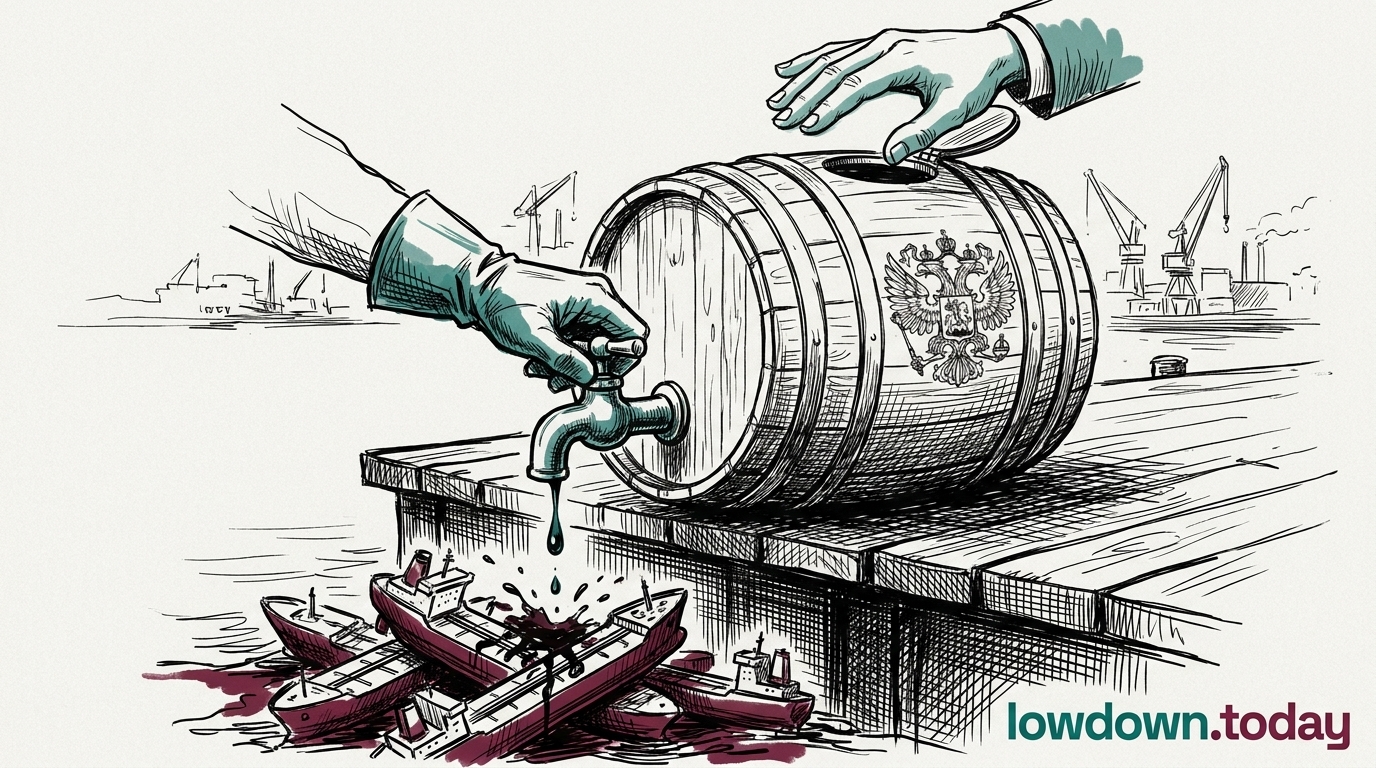
India's state refiners continued buying discounted Urals crude as June's price fell to $63.18 a barrel, insulating New Delhi from the OFAC waiver gap still constraining Western buyers. Indian refiners could pick up diesel-export share as Russia's producer-binding ban shuts out its former customers.
China
China
China's independent refiners kept importing discounted Urals crude through June as the price fell to $63.18 a barrel, down 26% month-on-month per CREA. Beijing has said nothing on Moscow's new diesel ban, leaving Chinese refiners a likely beneficiary if Turkish and Brazilian buyers seek replacement cargoes.
United States
United States
No successor licence has been issued since General License 134C lapsed on 17 June, leaving a 26-day gap, the longest of the war, in the Russian crude waiver. Washington's silence is tightening the channel without any stated decision, as Treasury weighs whether to let it die.
Ukraine
Ukraine
Ukraine's long-range strike campaign shifted from refineries to seaborne fuel tankers crossing the Sea of Azov, cutting tracked vessel traffic 55% between 30 June and 11 July, per Starboard Maritime Intelligence. The shift targets Russia's export revenue directly rather than just domestic supply, adding pressure alongside the collapsing Urals price.
