Skip to content
You can now search across every topic, entity and event.What's new
Russia-Ukraine War 2026
16JUN

Russia fossil fuel revenue: €510m/day

3 min read
10:25UTC

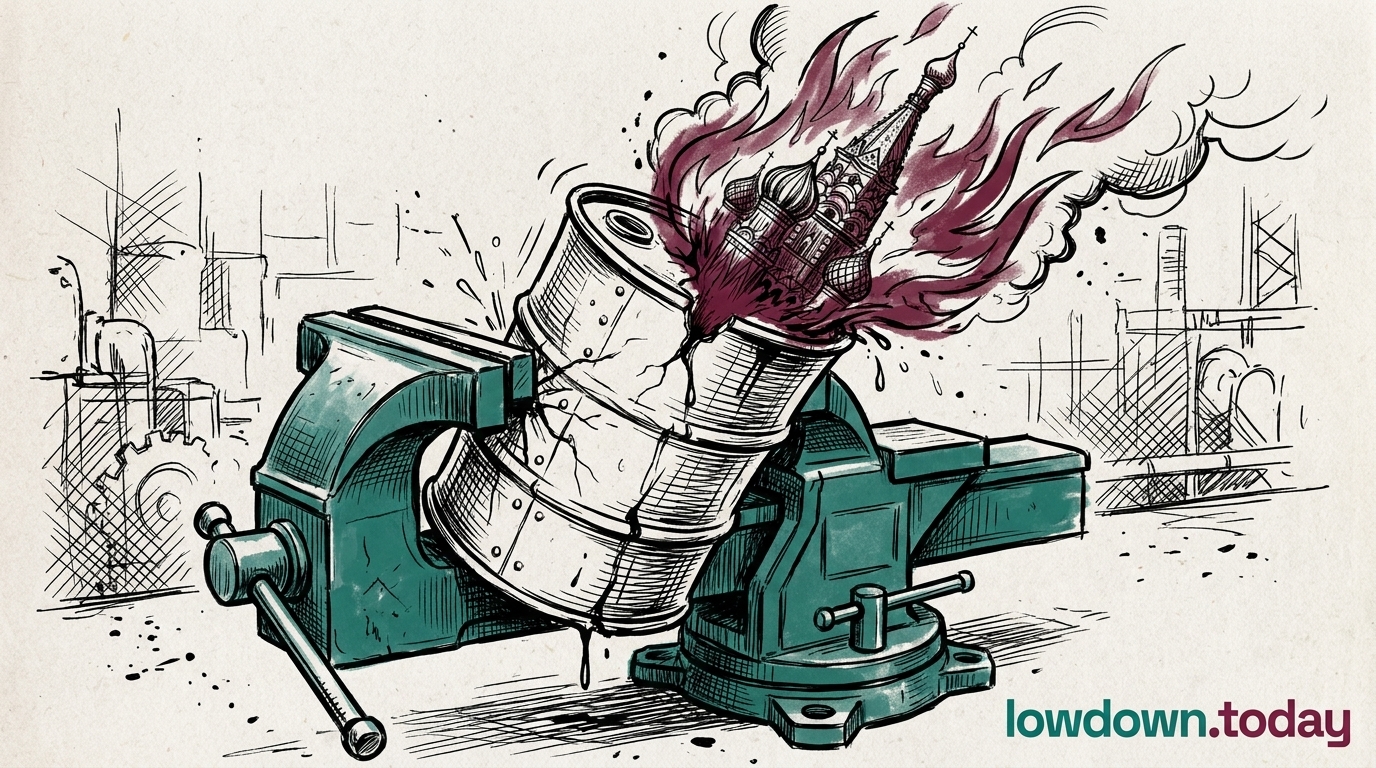
Russian fossil fuel revenues hit €510 million per day in the first two weeks of the Iran conflict — enough to fund thousands of combat drones daily at current manufacturing costs.

ConflictDeveloping
Key takeaway

Russia's daily fossil fuel revenue now exceeds Western military aid to Ukraine by a ratio of roughly four to one.

CREA data analysed by German NGO Urgewald showed Russia earned €6 billion in fossil fuel revenues in the first two weeks of the Iran conflict, with daily earnings running 14% above February's average at €510 million per day 1. The surge coincides with Washington's 30-day sanctions waivers on Russian oil and the 65% rise in Brent Crude to approximately $103 by 18 March .

The revenue translates into military capacity on a specific and measurable scale. At reported manufacturing costs of $20,000–$50,000 per Shahed-136 drone 2, a single day's oil revenue could theoretically purchase thousands of units. Daily drone volumes had already tripled from 2025 averages of 2,000–3,000 to nearly 9,000 by early March , with 9,616 recorded on 17 March alone . Oil prices in the strait of Hormuz fund drone production; drone production sustains the rate of fire on Ukrainian positions.

Russia's January financial position looked materially different. Oil and gas revenues had fallen 32% year-on-year , and the recruitment deficit — 31,700 personnel lost against 22,700 recruited in January — suggested a war effort under both financial and demographic strain. The Iran conflict eliminated the financial constraint. At €510 million per day, Russia earns in two weeks what its January revenue shortfall implied it could not sustain. The money does not solve the recruitment gap, but it funds the equipment, ammunition, and Iranian-supplied drones that compensate for infantry losses with firepower.

The CREA figures measure revenue from fossil fuel sales, not profit, and not all revenue flows to military procurement. But the direction is clear: every week the Iran conflict continues, Russia's war economy operates further from the constraints that sanctions were designed to impose.


Deep Analysis

In plain English

Because the Iran war has pushed oil prices sharply higher, Russia is earning far more from selling fossil fuels than before. That extra money funds weapons, drones, and troop recruitment. The G7 tried to cap the price of Russian oil at $60 per barrel, but at $103 Brent, buyers simply ignore the cap and pay market rates through ships that avoid Western insurance. The result is that Russia is being financially subsidised by the global oil market at precisely the moment Western governments are trying to squeeze it financially.

Deep Analysis
Synthesis

The €510 million/day figure inverts the logic of Western economic warfare. The Iran conflict has transformed the sanctions regime from a tool of attrition into a mechanism that inadvertently subsidises Russian warfighting capacity. Every barrel priced above the G7 cap threshold represents a direct transfer from Western energy consumers to the Russian state — a fiscal dynamic with no precedent in the post-Cold War sanctions canon.

Root Causes

The G7 price cap was designed for a Brent baseline of approximately $60–80. Above $90, the economic incentive for non-G7 buyers to circumvent the cap structurally exceeds compliance costs — the cap becomes inoperative without physical enforcement capacity, which no Western maritime force has been authorised to exercise. The IEA's 400-million-barrel strategic reserve release, the largest ever attempted, proved insufficient against Hormuz disruption of this scale, signalling that existing crisis management tools were sized for single-theatre disruptions rather than simultaneous dual-conflict shocks.

What could happen next?
  • Risk

    If Brent remains above $90, Russia's war effort becomes financially self-sustaining from energy exports alone, neutralising the central premise of Western economic pressure strategy.

    Medium term · Assessed
  • Meaning

    The G7 price cap has effectively ceased functioning as a revenue-denial tool at current price levels — a structural failure rather than a temporary circumvention.

    Immediate · Assessed
  • Consequence

    Accelerated Russian drone and missile procurement funded by windfall revenues may shorten the timeline before Ukrainian air defence stockpiles are exhausted.

    Short term · Suggested
First Reported In

Update #5 · Trump frees 124m barrels; Russia earns €6bn

CREA / Urgewald· 18 Mar 2026
Read original
Different Perspectives
Turkey
Turkey
Ankara hosts the NATO summit on 7-8 July, the next Western diplomatic convergence that Russia may target with a mass barrage based on the documented pattern of timing strikes to allied events; Turkey's role as the indispensable logistical intermediary between Kyiv and Moscow gives it standing to broker any ceasefire repair at Zaporizhzhia.
IAEA
IAEA
The IAEA's sixth brokered repair ceasefire at ZNPP collapsed within days of enabling initial work on the 750 kV Dniprovska line, leaving Europe's largest nuclear plant on a single 330 kV backup with 19 total blackouts recorded since the Russian occupation began.
European Union
European Union
The EU delayed the €9.1bn first tranche of its €90bn Ukraine loan on unmet technical conditions, while disbursing a separate €2.8bn Facility payment on 8 June; the G7 sanctions-to-talks linkage now runs parallel to EU enforcement.
United Kingdom
United Kingdom
Britain conducted its first maritime interdiction of the Russian shadow fleet, with Royal Marines seizing the Smyrtos in the English Channel on 14 June, and simultaneously announced a £210m Urenco uranium deal to break Ukraine's dependence on Russian nuclear fuel.
United States
United States
Trump called both Putin and Zelenskyy separately on 14 June, pledged to re-engage on Ukraine now the Iran deal is done, and the G7 tied future Russia sanctions to peace-talk progress, giving Washington leverage over both parties' negotiating posture.
Ukraine
Ukraine
Zelenskyy attended the G7 at Evian and proposed a direct Putin summit while 140,000 households in Kyiv lost power and the Lavra's Dormition Cathedral burned; Metropolitan Epiphanius called it an attack "against history, against Christianity." Kyiv's immediate priority is closing the PAC-3 export gap that left 19 of 34 Iskander-M ballistic missiles unintercepted.


