Skip to content
You can now search across every topic, entity and event.What's new
Russia-Ukraine War 2026
16JUN

Russia's wealth fund sheds $4.8bn

2 min read
10:25UTC

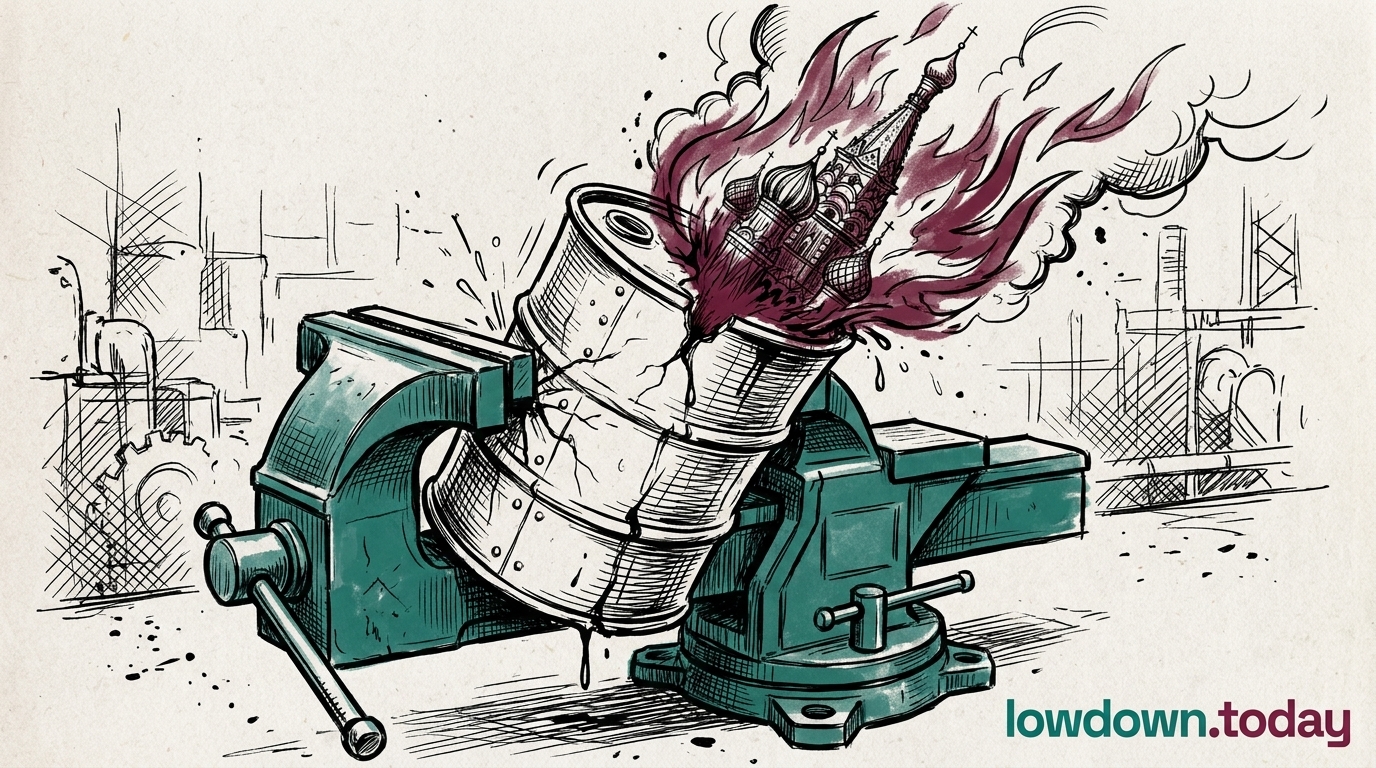
Rising oil prices could not prevent Russia's National Wealth Fund from haemorrhaging reserves as the business climate index turned negative for the first time in three years.

ConflictDeveloping
Key takeaway

Russia's financial buffers are shrinking despite oil prices above budget assumptions.

Russia's National Wealth Fund shed 400 billion roubles ($4.8 billion) in January and February 2026 1. The country's business climate index turned negative in March for the first time since October 2022. Fixed capital investment fell 2.3% in real terms during 2025.

The Urals benchmark has risen $11.30 to $73.24 per barrel, well above Russia's $59 budget assumption. Yet rising prices did not prevent the fund's decline. Russia is spending 38 to 40% of its federal budget on defence, the highest proportion since the Soviet era . Moscow dropped planned 10% cuts to non-military spending after the Iran-war oil price surge, only to face a revenue squeeze from the opposite direction: not low prices, but destroyed export capacity at Baltic ports.


Deep Analysis

In plain English

Russia has a 'rainy day fund' called the National Wealth Fund, similar to a national savings account. It lost $4.8 billion in just two months at the start of 2026, even while oil prices were high. Why? Russia is spending 38-40% of its entire government budget on the military, the highest proportion since the Soviet era. High oil prices were supposed to offset that. But Russia is spending the money faster than it earns it. Now the oil export damage from the Baltic port strikes compounds the problem: Russia has high oil prices but can't ship as much oil. The business climate index turned negative in March for the first time in years, suggesting the civilian economy is feeling the strain.

Deep Analysis
Root Causes

Russia's fiscal deterioration reflects the simultaneous pressure of three forces. First: record defence spending at 38-40% of the federal budget, consuming reserves faster than revenues replenish them.

Second: investment collapse, with fixed capital investment down 2.3% in 2025, meaning Russia is not building the productive capacity needed to sustain long-term revenue growth. Third: the Baltic port disruption now compressing both the volume and revenue sides of the oil export equation simultaneously.

The business climate index turning negative for the first time since October 2022 is the civilian economy signal. It precedes consumer confidence deterioration by two to three quarters. If sustained, it indicates Russian business investment is contracting under war conditions despite high nominal oil prices.

What could happen next?
  • Consequence

    At current NWF depletion rates, Russia may need to cut non-military spending or increase deficit financing within 12-18 months, creating domestic economic pressure on the war effort.

First Reported In

Update #9 · Ukraine halves Russia's Baltic oil exports

Moscow Times· 1 Apr 2026
Read original
Different Perspectives
Turkey
Turkey
Ankara hosts the NATO summit on 7-8 July, the next Western diplomatic convergence that Russia may target with a mass barrage based on the documented pattern of timing strikes to allied events; Turkey's role as the indispensable logistical intermediary between Kyiv and Moscow gives it standing to broker any ceasefire repair at Zaporizhzhia.
IAEA
IAEA
The IAEA's sixth brokered repair ceasefire at ZNPP collapsed within days of enabling initial work on the 750 kV Dniprovska line, leaving Europe's largest nuclear plant on a single 330 kV backup with 19 total blackouts recorded since the Russian occupation began.
European Union
European Union
The EU delayed the €9.1bn first tranche of its €90bn Ukraine loan on unmet technical conditions, while disbursing a separate €2.8bn Facility payment on 8 June; the G7 sanctions-to-talks linkage now runs parallel to EU enforcement.
United Kingdom
United Kingdom
Britain conducted its first maritime interdiction of the Russian shadow fleet, with Royal Marines seizing the Smyrtos in the English Channel on 14 June, and simultaneously announced a £210m Urenco uranium deal to break Ukraine's dependence on Russian nuclear fuel.
United States
United States
Trump called both Putin and Zelenskyy separately on 14 June, pledged to re-engage on Ukraine now the Iran deal is done, and the G7 tied future Russia sanctions to peace-talk progress, giving Washington leverage over both parties' negotiating posture.
Ukraine
Ukraine
Zelenskyy attended the G7 at Evian and proposed a direct Putin summit while 140,000 households in Kyiv lost power and the Lavra's Dormition Cathedral burned; Metropolitan Epiphanius called it an attack "against history, against Christianity." Kyiv's immediate priority is closing the PAC-3 export gap that left 19 of 34 Iskander-M ballistic missiles unintercepted.


