Skip to content
You can now search across every topic, entity and event.What's new
Russia-Ukraine War 2026
1JUN

North Korean rockets on Russian robots

2 min read
10:39UTC

ISW reported on 7 June the first sighting of North Korean Type-75 rocket artillery mounted on Russian unmanned ground vehicles in the Kharkiv direction.

ConflictDeveloping
Key takeaway

Russia mounted North Korean Type-75 rockets on crewless robots near Kharkiv, a first for DPRK artillery.

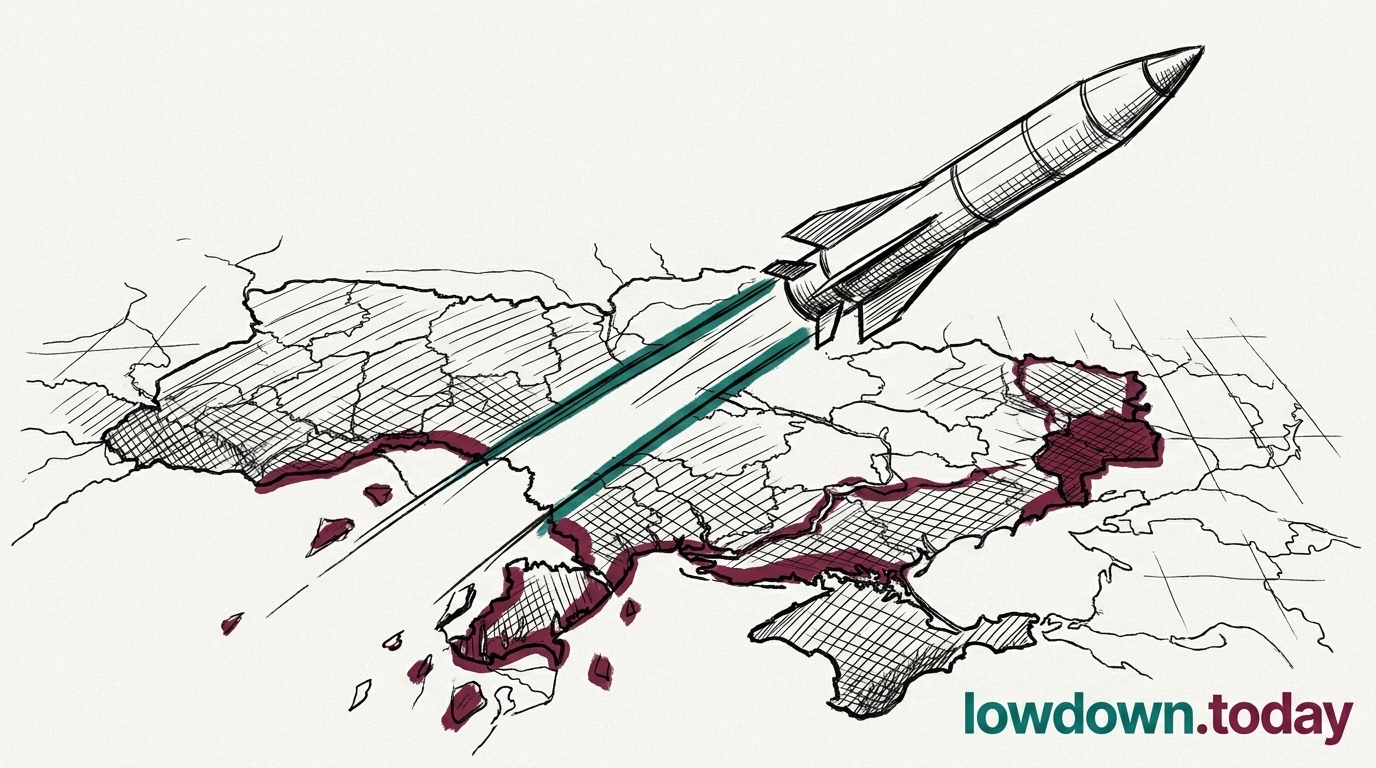
The Institute for the Study of War (ISW), a Washington think tank, reported on 7 June the first sighting of North Korean Type-75 107mm MLRS (multiple-launch rocket systems) mounted on Russian UGVs (Unmanned Ground Vehicles) in the Kharkiv direction 1. It is the first combat integration of DPRK (Democratic People's Republic of Korea) rocket artillery onto an autonomous platform.

The Type-75 is a North Korean copy of China's Type-63 launcher. The NRTK Kurier and Impulse robot vehicles add electric-drive aiming so the rockets can be laid remotely, putting a crewless launcher closer to Ukrainian positions than a manned vehicle would risk.

The sighting marks a new stage in the Pyongyang-Moscow supply line. North Korea has already sent Russia manpower and munitions, and Ukraine struck back at that pipeline directly in May, killing 65 drone cadets at a training facility . Mounting DPRK rockets on autonomous platforms turns a manpower contribution into a remote-fire capability that needs fewer of the troops Ukraine has been targeting.

Deep Analysis

In plain English

A UGV (unmanned ground vehicle) is a crewless, remotely controlled robot that can carry weapons. Russia has been testing these on the battlefield, because a robot can advance under fire where a soldier would die. The Type-75 is a North Korean rocket launcher, similar to a truck-mounted multi-barrel rocket system, but derived from a 1960s Chinese design. Putting North Korean rockets onto a Russian robot means a remote operator can fire a barrage of rockets without exposing any crew. ISW, a Washington-based think tank that tracks the war daily, confirmed the first sighting of this combination near Kharkiv on 7 June. The significance is the integration: two separate military supply chains, one from Pyongyang and one from Russian robotics firms, have been combined into a single weapons system.

Deep Analysis
Root Causes

North Korea began supplying Russia with artillery shells in late 2022 and escalated to troop deployments in late 2024 . The Type-75 MLRS transfer is the next step in a deepening DPRK-Russia defence supply relationship that exchanges Russian technology and economic relief for North Korean munitions and manpower.

Russia's UGV development accelerated after its infantry-assault attrition rates became untenable in 2024; the Kurier and Impulse platforms are part of a broader effort to substitute machines for soldiers in breach-and-clear roles.

Escalation

The Type-75 UGV combination is an escalation in the Russia-DPRK arms axis rather than on the Ukraine front line directly. If it proves effective, it creates a template for mounting other DPRK weapons on Russian platforms, deepening the two countries' military integration in ways that will concern Seoul and Tokyo.

What could happen next?
  • Consequence

    Ukraine's electronic-warfare units near Kharkiv must now counter remote-fire rocket platforms in addition to infantry-operated ones, expanding the countermeasure burden.

  • Precedent

    First combat integration of DPRK rocket artillery on autonomous ground platforms creates a template Russia can replicate with other North Korean weapons systems.

First Reported In

Update #19 · Ukraine burns the Baltic Fleet at Kronstadt

Institute for the Study of War· 9 Jun 2026
Read original
Causes and effects
This Event
North Korean rockets on Russian robots
It is the first combat integration of DPRK rocket artillery onto an autonomous platform, letting a crewless launcher edge toward Ukrainian lines without risking a crew.
Different Perspectives
Turkey
Turkey
Turkey, a major buyer of Russian diesel cargoes, loses that access under Moscow's first producer-binding export ban, in force from 8 July to 31 July. Ankara hosted the same week's NATO summit pledging EUR 70bn to Ukraine, sitting on both sides of the fuel-and-alliance ledger.
NATO
NATO
NATO leaders meeting in Ankara on 7 and 8 July pledged EUR 70bn in equipment, assistance and training for Ukraine across 2026, with a 2027 sustainment commitment and a $40bn Drone Edge counter-drone initiative. European allies now fund the vast majority of that package, filling the gap left by Washington's idled crude waiver.
India
India
India's state refiners continued buying discounted Urals crude as June's price fell to $63.18 a barrel, insulating New Delhi from the OFAC waiver gap still constraining Western buyers. Indian refiners could pick up diesel-export share as Russia's producer-binding ban shuts out its former customers.
China
China
China's independent refiners kept importing discounted Urals crude through June as the price fell to $63.18 a barrel, down 26% month-on-month per CREA. Beijing has said nothing on Moscow's new diesel ban, leaving Chinese refiners a likely beneficiary if Turkish and Brazilian buyers seek replacement cargoes.
United States
United States
No successor licence has been issued since General License 134C lapsed on 17 June, leaving a 26-day gap, the longest of the war, in the Russian crude waiver. Washington's silence is tightening the channel without any stated decision, as Treasury weighs whether to let it die.
Ukraine
Ukraine
Ukraine's long-range strike campaign shifted from refineries to seaborne fuel tankers crossing the Sea of Azov, cutting tracked vessel traffic 55% between 30 June and 11 July, per Starboard Maritime Intelligence. The shift targets Russia's export revenue directly rather than just domestic supply, adding pressure alongside the collapsing Urals price.
