Skip to content
Welcome, thoughtbot's Giant Robots listeners!Start here
Russia-Ukraine War 2026
3MAY

OPEC+ Seven agree 206k bpd June increase

4 min read
14:52UTC

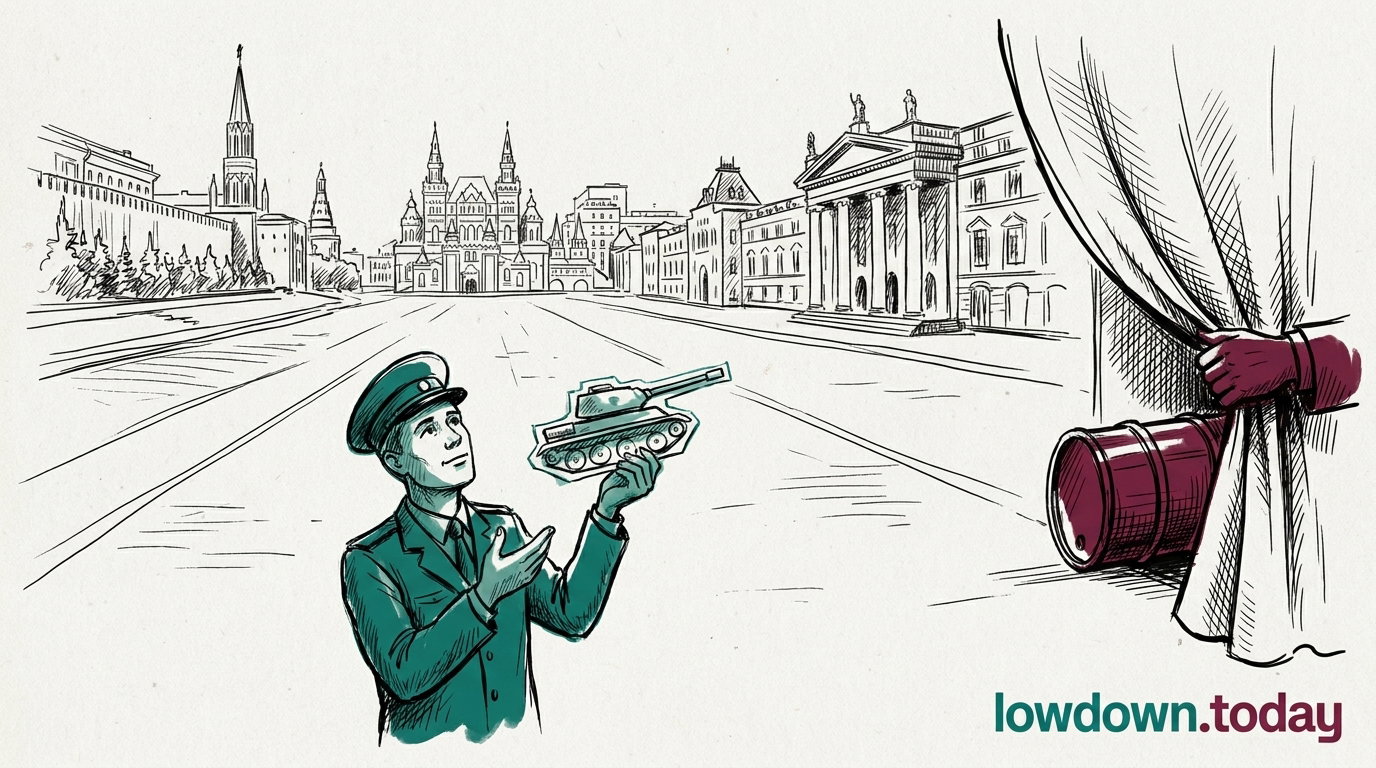
Seven OPEC+ members agreed a 206,000 bpd June 2026 production increase on 30 April 2026, with Saudi Arabia taking its share of the joint figure rather than lifting unilaterally after the UAE's exit took formal effect.

ConflictDeveloping
Key takeaway

OPEC+ agreed a 206,000 bpd June increase; the UAE's 5 mbpd capacity now sits outside any quota discipline.

Seven OPEC+ members, Saudi Arabia, Russia, Iraq, Kuwait, Kazakhstan, Algeria and Oman, agreed a 206,000 bpd June 2026 production increase on 30 April 2026⁠1. OPEC+ is the cartel grouping the Organization of the Petroleum Exporting Countries with allied producers including Russia. The figure is adjusted down to exclude the UAE's 18,000 bpd voluntary-cut share, the technical residue of a departing member. The UAE OPEC and OPEC+ exit took formal effect the same week, removing 5 million barrels per day of capacity from quota discipline overnight.

Saudi Arabia took its share of the 206,000 bpd joint figure rather than lifting production unilaterally. The Kingdom's $87/bbl budget breakeven means Riyadh faces no fiscal pressure to crash the spread by lifting harder; codifying the new arithmetic with the remaining six was the lower-risk move. Brent settled at $123 a barrel on Thursday, the wartime settle high; the 206,000 bpd signal did not budge it, suggesting the market reads the war risk premium as dominating the supply-side response.

OPEC+ has lost its second-largest spare-capacity holder. The UAE's 5 mbpd capacity now sits outside the quota frame altogether, with no mechanism to bring it back in. The next ministerial in Vienna is the test of whether Saudi Arabia breaks joint discipline with a unilateral lift above the 206,000 figure. The Brent-Urals spread widened to roughly $25, with Urals around $98 against Brent's $123, the disruption premium not flowing fully into Russian crude despite the supply-side opening.

Deep Analysis

In plain English

OPEC+ is a group of oil-producing countries that coordinate how much oil they pump in order to influence the global price. Think of it as a producer cartel: when they collectively pump less, prices go up; when they pump more, prices go down. On 30 April 2026, the seven remaining core members of OPEC+ agreed to increase oil production by 206,000 barrels per day starting in June. That sounds like a lot, but the world uses about 100 million barrels a day, so it is barely a rounding error. The UAE, one of the biggest oil producers, had just left OPEC+ entirely, effective 1 May. So the seven remaining members are agreeing a tiny increase while a major producer is now free to pump as much as it likes without any group constraint. Meanwhile, Brent Crude settled at $123 a barrel on 30 April, a new wartime high, because the Hormuz blockade is still stopping tankers from leaving. The OPEC+ increase does not come close to offsetting the disruption.

What could happen next?
  • Consequence

    Saudi Arabia's participation in the joint 206,000 bpd figure rather than acting unilaterally signals Riyadh will not use a production flood to collapse the wartime oil price premium in the near term.

  • Risk

    The UAE's 5 mbpd capacity outside quota discipline could offset the OPEC+ Seven increase by mid-2026 if Abu Dhabi ramps toward its 2027 production target, leaving the net supply impact close to zero.

First Reported In

Update #85 · "Not at war": three claims, no treaty

ROGTEC Magazine· 1 May 2026
Read original →
Different Perspectives
Bulgarian government
Bulgaria's Prime Minister, Rumen Radev, said the sinking of HS Dignity "benefits the Russian Federation" while saying Bulgaria lacked solid evidence to accuse anyone, and Defence Minister Dimitar Stoyanov asked NATO for air defence on 16 October. The request comes from a government that stopped state military aid to Ukraine in June.
Radoslaw Sikorski
Radoslaw Sikorski
Poland's foreign minister challenged Elon Musk on X after SpaceX capped Ukraine's Starshield terminals on 14 October. Poland pays about $50m a year for Ukraine's Starlink subscriptions, so Warsaw speaks as the paying customer as well as the ally.
Andy Burnham
Andy Burnham
Burnham fast-tracked £10m of a £45m air-defence missile delivery when Zelenskyy visited London on 14 October, and his ministers are lobbying allies to ban maritime services for Russian liquefied natural gas. The measure targets insurers and shipowners, many of them in London, rather than the gas itself.
Ministry of External Affairs (India)
India's foreign ministry said after the 16 September House vote that New Delhi would take all necessary measures to protect its trade.
European Council
European Council
EU leaders on 15-16 October rejected a US idea to hand Washington the roughly €200bn of frozen Russian assets held in Europe, and Kaja Kallas said the decision belongs to Europeans. The same summit put off a decision on financing Ukraine, saying leaders "will revert to the issue in a timely manner".
Donald Trump
Donald Trump
Trump signed the 16 October order that sets the Graham Act's duties and waives them under section 115(a), with a certification sent to Congress. He says the United States has not stopped sharing intelligence with Ukraine, and on 11 October he said both sides had agreed to halt attacks on energy infrastructure.

Written with AI from Lowdown's published reporting. Not individually reviewed by an editor. Editorial standards.
