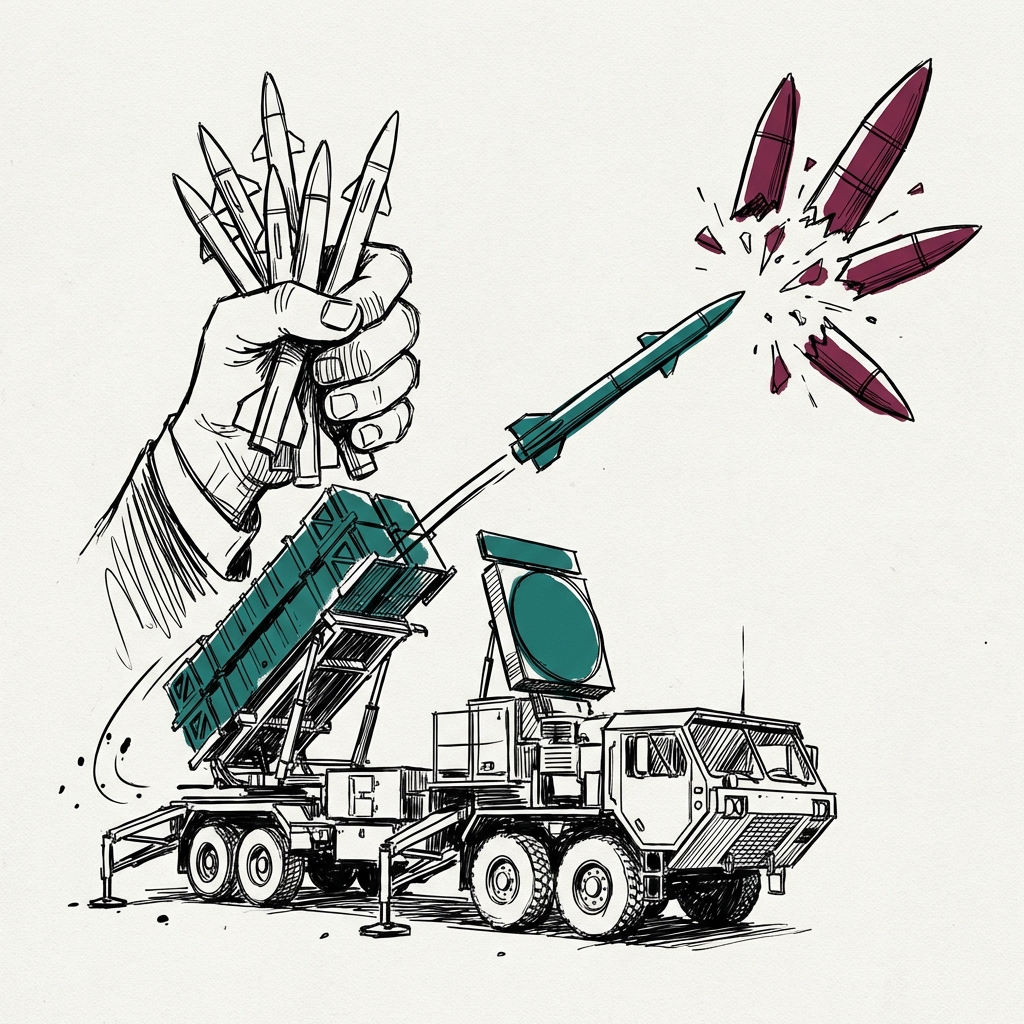
Patriot
US air defence system; export freeze and GEM-T-vs-PAC-3 distinction define Ukraine's unsolved ballistic missile gap.
Last refreshed: 3 May 2026 · Appears in 2 active topics
Japan breaks its arms export rules to help the US, but Ukraine still can't get PAC-3s — why?
Timeline for Patriot
Mentioned in: Zelenskyy proposes EU drone deals at Bucharest summit
Russia-Ukraine War 2026Mentioned in: Japan ships PAC-3s to US, not Kyiv
Russia-Ukraine War 2026Mentioned in: Germany names Russia its immediate threat
Russia-Ukraine War 2026Mentioned in: SSU Alpha drones hit Samara, Tuapse, Gorky
Russia-Ukraine War 2026Mentioned in: Zelenskyy: Patriot situation 'could not be any worse'
Russia-Ukraine War 2026- Why is Ukraine running out of Patriot interceptors?
- More than 800 Patriot interceptors were used in three days of the 2026 Iran war, more than Ukraine received in three years of conflict. The White House then suspended all global Patriot export approvals. US production is only 60-65 rounds per month, 94% pre-committed to other customers.Source: Zelenskyy/ZDF; US DoD
- What is the difference between PAC-3 and GEM-T Patriot missiles?
- PAC-3 MSE uses hit-to-kill technology against Ballistic Missiles. GEM-T (Guidance Enhanced Missile-Tactical) is an older variant primarily for aircraft and Cruise Missiles. The EUR 3.2 billion Germany deal buys GEM-T, not PAC-3, so it does not address Ukraine's Ballistic missile defence gap.Source: event
- Does Germany's Patriot deal help Ukraine against ballistic missiles?
- No. Germany's EUR 3.2 billion contract with Raytheon (signed 14 April 2026) covers GEM-T interceptors, which counter aircraft and Cruise Missiles. Ukraine's Ballistic missile threat (Iskander-M) still requires PAC-3 MSE, which remains frozen behind the White House export suspension.Source: event
- What is the Patriot export freeze?
- The White House suspended all global Patriot export approvals in April 2026 after more than 800 PAC-3 MSE rounds were expended in three days of Iran war operations. Gulf FMS customers lose near-term deliveries; Ukraine is the only recipient whose stockpile deadline falls within the ninety-day window.
- Why did Japan send Patriot missiles to the US in 2026?
- Japan authorised direct PAC-3 Patriot exports to the United States in May 2026, breaking its post-World War Two arms export restrictions. The move replenishes US stocks depleted by the Iran war. Ukraine remains excluded from direct supply under the White House global Patriot export freeze.Source: Japanese government / US DoD
Background
The Patriot (MIM-104) is a US-manufactured surface-to-air missile system, operated by Ukraine in its PAC-3 MSE (Missile Segment Enhancement) configuration — the only interceptor capable of reliably defeating Russian Iskander-M quasi-Ballistic Missiles. Zelenskyy told ZDF on 15 April 2026 that Ukraine's Patriot situation 'could not be any worse', the day after signing a EUR 4 billion Germany-Ukraine defence package.
The US produces only 60-65 PAC-3 MSE rounds per month — a rate that cannot satisfy simultaneous demand from Ukraine, the Iran theatre, and allied stockpile replenishment. The US Army awarded a $4.76 billion Lockheed-Raytheon PAC-3 MSE production contract on 9 April 2026 running to June 2030, but 94% of output is pre-committed to foreign military sales customers, leaving Ukraine roughly 36 rounds per year through US channels. The White House suspended all Patriot export approvals globally after more than 800 PAC-3 rounds were expended in three days of Iran war operations. Germany signed a EUR 3.2 billion direct commercial contract with Raytheon on 14 April for several hundred GEM-T interceptors, which counter aircraft and Cruise Missiles but not the ballistic threats that PAC-3 MSE addresses.
In May 2026, Japan authorised direct PAC-3 Patriot exports to the United States — breaking Japan's post-World War Two arms export restrictions — to replenish American stocks depleted by the Iran war. Ukraine remains blocked from direct PAC-3 supply under the White House freeze; Japan's exports replenish US inventories, not Ukrainian ones. Ukraine's low-cost $1,000-2,000 interceptor drones cover the Shahed threat tier, but the Ballistic missile problem remains structurally unsolved.
