Skip to content
Briefings are running a touch slower this week while we rebuild the foundations.See roadmap
Russia-Ukraine War 2026
11APR

Baltic strikes cut Russian oil by 43%

2 min read
16:48UTC

Four drone strikes on Baltic terminals collapsed Russia's seaborne crude shipments by 43%, costing Moscow roughly $1 billion in seven days.

ConflictDeveloping
Key takeaway

Ukraine physically halved Russian oil exports in one week, replacing weakened sanctions with infrastructure destruction.

Ukrainian drones struck Ust-Luga and Primorsk, Russia's two largest Baltic oil export terminals, at least four times between 22 and 31 March. Together these ports handle roughly 60% of Russia's seaborne oil flow. Weekly crude exports fell from 4.07 million barrels per day to 2.32 million bpd, a 43% collapse 1. Bloomberg data shows this is the steepest single-week drop in modern Russian export history. Revenue fell from $2.45 billion to $1.44 billion.

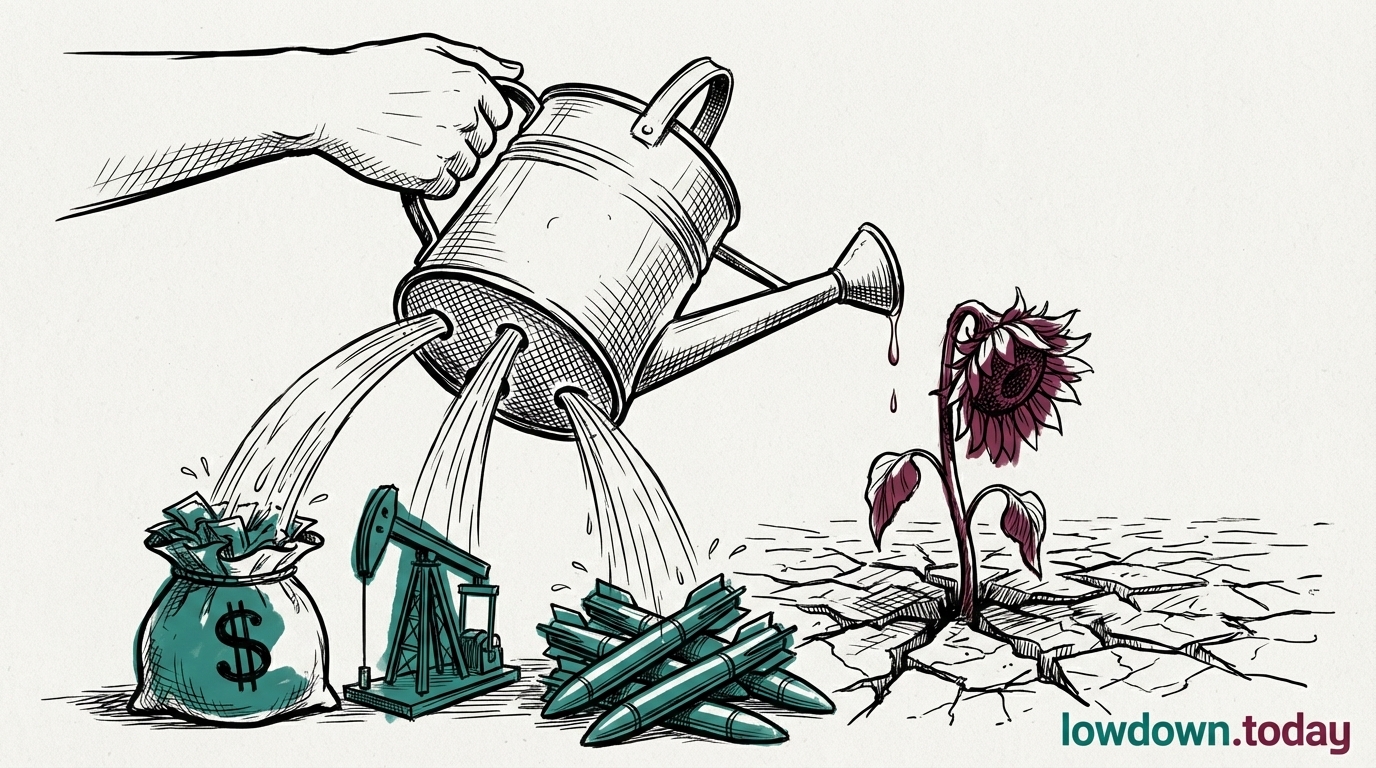
On 26 and 27 March, no ships recorded loading oil at any of Russia's three Baltic ports. Two consecutive zero-loading days had not occurred since 2022. President Zelenskyy framed the campaign as deliberate policy: "Unlike most countries, Ukraine has its own sanctions: its long-range capabilities." The logic is strategic. On 12 March, the US Treasury waived sanctions on approximately 124 million barrels of Russian oil at sea , valued by Zelenskyy at roughly $10 billion. That waiver expires on 11 April. When international enforcement weakens, Ukraine destroys the pipes.

The contrast with the revenue picture two weeks earlier is sharp. CREA data showed Russia earning €510 million per day in fossil fuel revenues during the Iran war's first fortnight . The Urals benchmark has since risen $11.30 to $73.24 per barrel, well above the $59 budget assumption. High prices mean nothing if tankers cannot load. Ukrainian strikes on the Labinsk oil depot targeted inland storage; the Baltic campaign targets the revenue stream itself.

Deep Analysis

In plain English

Russia earns most of its money from selling oil and gas. The two big Baltic Sea oil ports, Ust-Luga and Primorsk, are where roughly 60% of Russia's oil tankers fill up before sailing to buyers in India, China, and elsewhere. Ukraine struck those ports with drones at least four times in ten days. For two days in a row, not a single tanker loaded oil at any Russian Baltic port. In one week, Russia's oil shipments fell by 43%, costing Moscow roughly $1 billion. Why target these ports? Three weeks earlier, the US government had temporarily waived oil sanctions, allowing Russia to sell oil that had been blocked. Ukraine is destroying the ports that ship that oil, compensating for weakened financial pressure with physical damage.

Deep Analysis
Root Causes

Ukraine's decision to target Baltic export infrastructure stems from the 12 March US Treasury sanctions waivers, which released 124 million barrels of Russian oil and provided an estimated $10 billion in revenue. Zelenskyy explicitly linked the two: if international mechanisms cannot enforce financial pressure, Ukraine will enforce it physically.

The tactical opportunity arose from Russia's post-2022 export concentration. Having lost European pipeline markets, Russia routed 60% of seaborne crude through Ust-Luga and Primorsk. That concentration, a consequence of Western sanctions forcing rerouting, created the target Ukraine exploited.

Escalation

Ukraine has escalated from striking military and logistics targets to directly targeting Russia's primary hard-currency revenue stream. This crosses a threshold. Russia's asymmetric response options include intensified grid attacks on Ukraine's own energy export capacity and accelerated Shahed barrages, but neither matches the $1 billion weekly revenue impact.

What could happen next?
  • Consequence

    Russia's seaborne crude export capacity may remain suppressed for months if Ust-Luga and Primorsk cannot resume full operations before the 11 April sanctions waiver expires.

    Short term · 0.75
  • Risk

    Russia may retaliate against Ukrainian energy export infrastructure, including Odesa port facilities, to impose a symmetric revenue cost.

    Immediate · 0.65
  • Precedent

    Ukraine has established that drone strikes on export infrastructure can substitute for sanctions enforcement, a model other non-state and state actors may adopt.

    Long term · 0.7
First Reported In

Update #9 · Ukraine halves Russia's Baltic oil exports

Bloomberg via Moscow Times· 1 Apr 2026
Read original
Different Perspectives
Rafael Grossi, IAEA Director General
Grossi's Update 349 of 7 May recorded a drone strike on ZNPP's radiation monitoring laboratory on 3 May. Rosatom's 17 May public attack on the Secretariat's neutrality degrades the diplomatic ground Grossi needs for the sixth repair ceasefire at day 60 on the single backup line.
Indian Government / Embassy Moscow
The Indian Embassy in Moscow confirmed on 18 May that an Indian national was killed and three hospitalised at a refinery construction site in the 17 May barrage. India is among the largest buyers of discounted Russian crude; the fatality forces a diplomatic protest without changing the purchasing posture.
Recep Tayyip Erdogan, Turkish President
Erdogan met Zelenskyy in Ankara for nearly three hours on 15 May before the Istanbul session, recovering Turkey's 2022 mediator role and reducing Trump's leverage by hosting bilateral talks without Washington in the room. Turkey hosts the NATO Ankara summit on 7-8 July; the Istanbul format gives Erdogan standing at both tables simultaneously.
Viktor Orban / Hungarian Government
Budapest's new cabinet, formed 12 May, holds the institutional veto point on the EU tranche disbursement ahead of the first-half June window. Hungary has previously leveraged EU loan tranches to extract bilateral concessions; the combination of a fresh cabinet and a tight disbursement timeline makes Budapest the single highest-leverage actor in the EU track this fortnight.
European Council / Commission
The Commission is preparing a three-document disbursement package for the 9.1-billion euro first tranche of the EU loan to Ukraine, targeting first-half June, but delivery depends on the Magyar cabinet, which formed on 12 May, not blocking the mechanism. The 20th sanctions package remains in force against Russia.
Donald Trump / US Treasury
Treasury issued GL 134C with a 48-hour gap after GL 134B expired, confirming the waiver series functions as permanent monthly management rather than a wind-down instrument. Washington was absent from the Istanbul room; Treasury Secretary Bessent framed the Cuba carve-out as protecting 'most vulnerable nations', maintaining the fiction that the 30-day bridge has a humanitarian rationale.
