Skip to content
You can now search across every topic, entity and event.What's new
Russia-Ukraine War 2026
18MAR

Drones raze 18 tanks at Labinsk depot

2 min read
11:41UTC

Eighteen of twenty storage tanks destroyed at Labinsk in Krasnodar Krai — the deepest strike in a week of systematic Ukrainian attacks on Russia's southern fuel network.

ConflictDeveloping

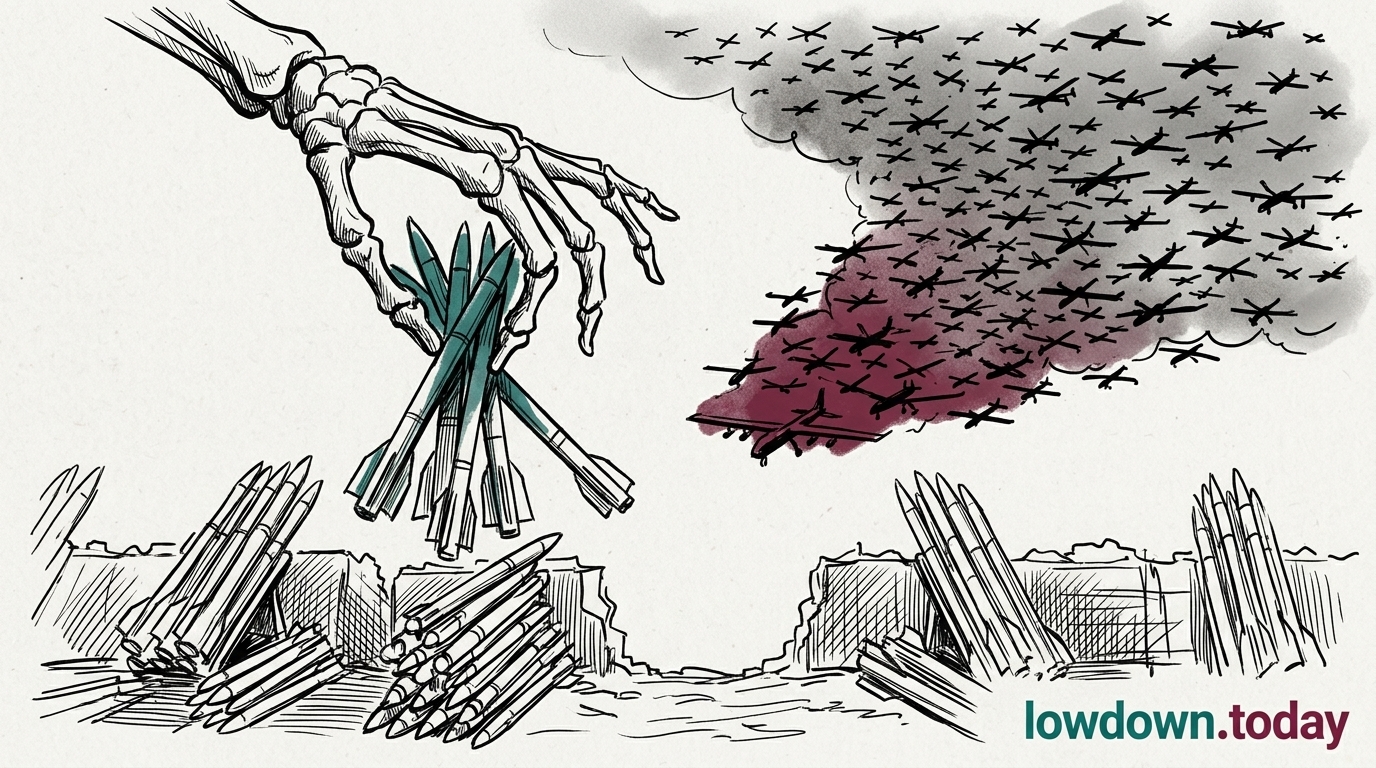
Ukrainian drones struck the Labinsk oil depot in Krasnodar Krai on 16 March, destroying 18 of 20 storage tanks — nine gasoline, nine diesel — and seven fuel tankers 1. Fire consumed approximately 3,000 square metres. The facility sits 500 km from the front line, deep in the interior of Russia's southern logistics corridor.

At that range, Labinsk is beyond the reach of conventional artillery or shorter-range systems. Ukraine's long-range drone capability can now hit infrastructure deep enough in Russian territory to have operated with lighter air defences than forward logistics bases. The fuel distribution network in Krasnodar Krai feeds Russian operations across southern Ukraine and Crimea — the same region where Commander-in-Chief Syrskyi identified Zaporizhzhia as Russia's primary axis of operations on 15 March. The near-total destruction ratio raises questions about Russian air defence effectiveness at depth. Russia's Ministry of Defence claimed 87 drone interceptions during the Afipsky refinery operation two days earlier , yet enough drones reached their targets across four Krasnodar Krai facilities within five days to inflict heavy damage at each. Either The Intercept figures are overstated, or Ukraine is launching salvos large enough to absorb the losses and still deliver effective payloads.

The timing is operationally deliberate. Syrskyi reported "large numbers of troops and resources" concentrating in Zaporizhzhia. Degrading the fuel supply behind that concentration while Russian forces are massing — before they disperse into combat operations — maximises the disruption per strike. Armoured vehicles, logistics trucks, and generators consume diesel at rates that cannot be sustained when pumping stations and depots across the supply chain are burning simultaneously.

Russia's daily fossil fuel revenues during the Iran conflict provide the financial capacity to rebuild. But storage tanks take weeks to replace; refinery processing units take months. The operational question is whether Ukraine can sustain this strike tempo long enough for the logistical degradation to constrain Russian combat operations in the south at the moment Moscow is committing its heaviest forces there.

First Reported In

Update #5 · Trump frees 124m barrels; Russia earns €6bn

Ukrainian Ministry of Defence (mod.gov.ua)· 18 Mar 2026
Read original
Causes and effects
This Event
Drones raze 18 tanks at Labinsk depot
Extends Ukraine's demonstrated deep-strike interdiction range to 500 km from the front line, targeting fuel distribution infrastructure feeding Russian troop concentrations in Zaporizhzhia at the moment Russia has designated it as its primary operational axis.
Different Perspectives
Turkey
Turkey
Turkey, a major buyer of Russian diesel cargoes, loses that access under Moscow's first producer-binding export ban, in force from 8 July to 31 July. Ankara hosted the same week's NATO summit pledging EUR 70bn to Ukraine, sitting on both sides of the fuel-and-alliance ledger.
NATO
NATO
NATO leaders meeting in Ankara on 7 and 8 July pledged EUR 70bn in equipment, assistance and training for Ukraine across 2026, with a 2027 sustainment commitment and a $40bn Drone Edge counter-drone initiative. European allies now fund the vast majority of that package, filling the gap left by Washington's idled crude waiver.
India
India
India's state refiners continued buying discounted Urals crude as June's price fell to $63.18 a barrel, insulating New Delhi from the OFAC waiver gap still constraining Western buyers. Indian refiners could pick up diesel-export share as Russia's producer-binding ban shuts out its former customers.
China
China
China's independent refiners kept importing discounted Urals crude through June as the price fell to $63.18 a barrel, down 26% month-on-month per CREA. Beijing has said nothing on Moscow's new diesel ban, leaving Chinese refiners a likely beneficiary if Turkish and Brazilian buyers seek replacement cargoes.
United States
United States
No successor licence has been issued since General License 134C lapsed on 17 June, leaving a 26-day gap, the longest of the war, in the Russian crude waiver. Washington's silence is tightening the channel without any stated decision, as Treasury weighs whether to let it die.
Ukraine
Ukraine
Ukraine's long-range strike campaign shifted from refineries to seaborne fuel tankers crossing the Sea of Azov, cutting tracked vessel traffic 55% between 30 June and 11 July, per Starboard Maritime Intelligence. The shift targets Russia's export revenue directly rather than just domestic supply, adding pressure alongside the collapsing Urals price.
